Get Full Government Meeting Transcripts, Videos, & Alerts Forever!
Get email alerts on the Transportation Infrastructure topic
No spam. Unsubscribe anytime.
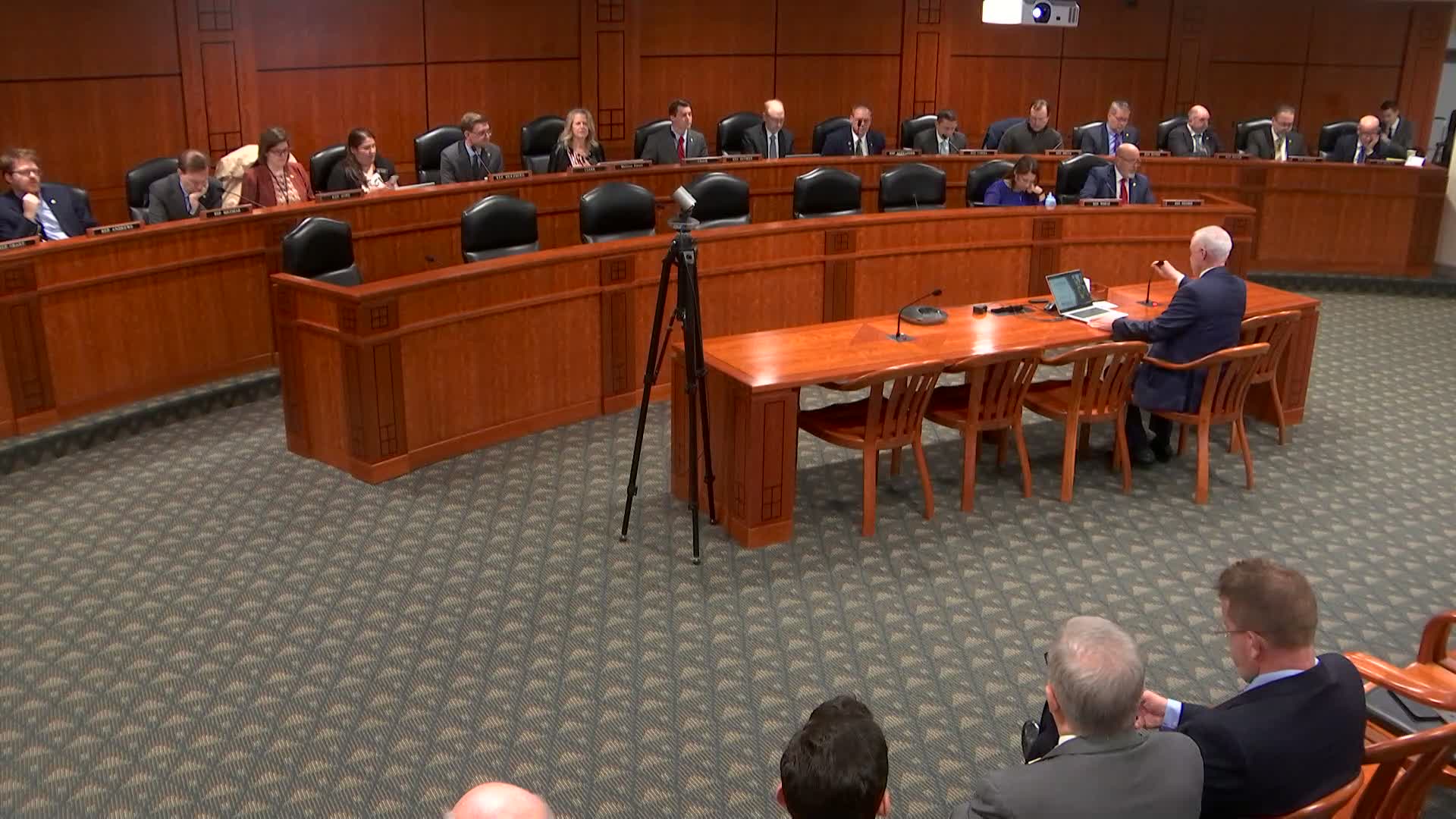
MDOT director outlines agency structure, multimodal priorities and funding picture
Summary
Michigan Department of Transportation Director Bridal Rieferch briefed the House Transportation and Infrastructure Committee on the department's responsibilities, funding sources and contracting approaches and answered lawmakers' questions about cost control, asset management and permitting.
Director Bridal Rieferch, Michigan Department of Transportation, told the House Transportation and Infrastructure Committee that MDOT is shifting from a narrow emphasis on pavement and bridges to a broader, multimodal approach that prioritizes people, communities and the economy.
Rieferch said the department manages the trunk line system (about 8% of statewide road mileage) that nevertheless carries more than three-quarters of commercial traffic and more than half of all vehicle miles traveled on the state’s roadways. She said the state system includes more than 20,000 miles of roadway and about 11,000 bridges spread across more than 600 jurisdictions, with roughly 9,000 trunk‑line miles and almost 5,000 trunk‑line bridges under MDOT oversight.
MDOT’s funding picture, Rieferch said, includes the Michigan Transportation Fund (MTF) — roughly $4 billion in recent years — and about $1.7 billion in federal aid. By statute (Act 51), federal aid for roads is split about 75/25 between state highways and local roads and the state splits the MTF between trunk lines and local governments, she said.
Rieferch outlined MDOT programs across several modes: passenger transportation (the Office of Passenger Transportation, OPT), aeronautics, marine and rail. She said MDOT does not generally operate transit or airports but provides regulatory oversight, grant administration and technical assistance; MDOT works with Amtrak, class I railroads and local operators under contracts for operation and safety oversight.
On contracting and delivery, Rieferch said most MDOT work is procured under low‑bid contracts; the department also uses design‑build and a newer progressive design‑build model on complex projects. MDOT retains some in‑house design work and consults with private engineering firms to balance capacity and maintain institutional expertise. She described limited public–private partnerships for complex or specialty services, citing recent freeway lighting and I‑75 projects as examples.
Rieferch also described MDOT’s maintenance arrangements: MDOT maintains direct forces and garages in 31 counties and uses contracts with county road agencies and municipalities in about 60 counties to reduce redundancy. She highlighted active transportation initiatives (bicycle lanes, paved shoulders, U.S. bicycle routes) and said MDOT seeks a “complete streets” approach when it reconstructs or resurfaces roads.
Committee members focused questions on cost control, procurement methods and environmental/permitting timelines. Rieferch said MDOT emphasizes innovation and performance metrics to get value for money and uses asset‑management principles to choose “right fix, right time” treatments (preventive maintenance versus rehabilitation or reconstruction). On procurement, she explained the practical difference between low‑bid and design‑build procurement: low‑bid projects are built from final plans with the lowest qualifying bidder awarded the work; design‑build lets a contractor–designer team complete plans and offer qualifications plus price and can compress schedule on complex projects.
On environmental reviews and permitting, Rieferch said MDOT follows the National Environmental Policy Act (NEPA) and coordinates with state agencies such as EGLE and the DNR. She said MDOT holds standing meetings with permitting agencies to limit delays but acknowledged there is room to streamline while preserving review value. She offered to follow up with committee members on studies and data regarding trade‑offs between investments in transit, rail and freight versus pavement preservation.
Rieferch closed by inviting further questions and follow‑up; the committee thanked her and moved on to bills and testimony on a proposed road‑funding package.