Get Full Government Meeting Transcripts, Videos, & Alerts Forever!
Get email alerts on the Transportation Funding topic
No spam. Unsubscribe anytime.
House Fiscal Agency briefed committee on Michigan transportation budget, funding mix and shortfall
Summary
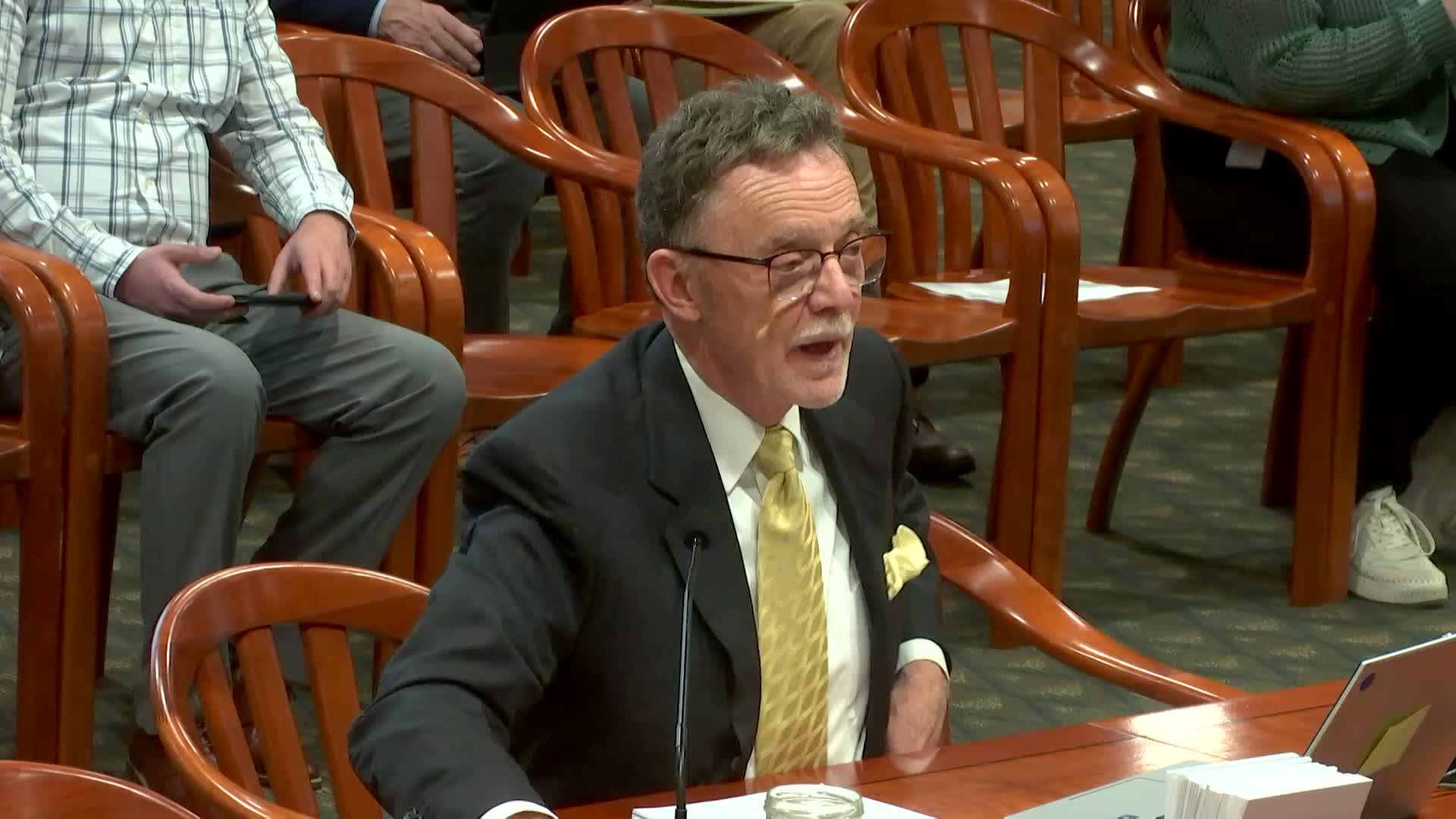
William Hamilton, senior fiscal analyst for the Michigan House Fiscal Agency, told the House Transportation and Infrastructure Committee the current state transportation budget totals about $6.8 billion in gross appropriations and that most funding comes from state‑restricted revenue credited to the Michigan Transportation Fund.
William Hamilton, senior fiscal analyst for the Michigan House Fiscal Agency, briefed the House Transportation and Infrastructure Committee on the current state transportation budget, the main revenue sources that support it and longer-term funding challenges.
Hamilton told the committee the current gross appropriation for state transportation is about $6.8 billion and that roughly two-thirds of that comes from state‑restricted revenue while about one‑third is federal money. "Vehicle registrations are actually the biggest contributor to state restricted transportation revenue," Hamilton said, and he added that motor fuel taxes, vehicle registration fees and earmarks into the Michigan Transportation Fund are the largest single revenue stream for transportation programs.
Hamilton emphasized how the Michigan Transportation Fund (MTF), established by statute, distributes most of the state restricted funds. "Of the $4.2 billion in state restricted funds, $3.9 billion is credited to and distributed from the Michigan Transportation Fund," he said, and he cited Public Act 51 of 1951 as the statute that governs that distribution.
Why this matters: the budget supports state and local road and bridge programs, capital and operating assistance for about 80 public transit systems and capital aid for publicly owned airports. Hamilton said about 83% of the transportation appropriations go to road and bridge programs, roughly 12% to public transit and the remainder to aviation and administration.
Hamilton walked committee members through recent revenue trends. He said vehicle registration receipts and motor fuel taxes together now account for the majority of MTF receipts; an income tax earmark and a recreational marijuana excise tax also are credited to the MTF. The current motor fuel tax rate (gasoline and diesel) is 31¢ per gallon following increases included in the November 2015 road funding package, and Hamilton said those taxes have been adjusted for inflation several times since 2022.
Hamilton also reviewed longer-term funding pressures. He summarized MDOT pavement performance modeling and said MDOT has indicated it needs an additional investment on the order of $2.5 billion per year for the state trunk line system (pavement and related capital needs) to achieve and sustain a performance goal MDOT has used since the late 1990s. "They need an additional investment for the state trunk line system of $2,500,000,000 a year," Hamilton reported, citing MDOT projections upon which his slides were based.
Committee members asked specific follow-ups. Representative Brock asked whether Michigan is a net "donor" state for federal highway dollars; Hamilton replied that the traditional donor/receiver analysis is complicated by the sizable amount of federal general fund support in modern federal transportation programs and said, "not really. We're not really a donor state in the way you're thinking about." Representative Preston asked about the motor fuel tax trajectory and the effect of electric vehicles; Hamilton said he does not do revenue forecasting but noted motor fuel consumption peaked around 2002 while the per‑gallon tax rate has increased since 2017, and he cited current vehicle‑registration totals and the still‑small share of electric/hybrid registrations as context: "There are 12,000,000 vehicle registrations each year. Currently, only about 100,000 are electric or hybrid," he said.
Hamilton closed by reminding members that HFA publications and the slide deck are available on the House Fiscal Agency website and said staff would follow up on requests for lane‑mile and bond‑authority detail.
Committee chair Altman thanked Hamilton for the briefing; the presentation and the question‑and‑answer period took the bulk of the meeting’s time.
Ending: Hamilton provided members with HFA materials and offered to coordinate follow‑up data (lane‑mile breakdowns, bond schedules and MDOT technical estimates) as requested by representatives during the Q&A session.