Get Full Government Meeting Transcripts, Videos, & Alerts Forever!
Get email alerts on the Public Art Mural topic
No spam. Unsubscribe anytime.
Palestine meeting approves mural artist with masonry inspection, paint consultant and liability waiver
Summary
City meeting voted to approve artist Diana Pickett’s mural proposal for 310 West Oak Street, contingent on a masonry inspection, paint-consultant recommendation and a property-owner exclusion of liability in perpetuity; discussion focused on wall integrity, paint type and long‑term maintenance.
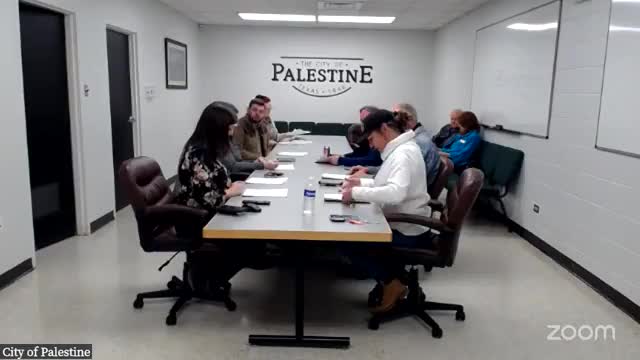
At a Palestine city meeting, members approved a motion to proceed with artist Diana Pickett’s proposal to paint a mural on the west-facing wall at 310 West Oak Street, contingent on a masonry inspection, a paint‑type recommendation from a paint consultant and acquisition of an exclusion-of-liability agreement from the property owner in perpetuity.
The vote follows public comment and staff presentation about two competitive proposals received for the site. One proposal, from Diana Pickett, was for $18,000; the other, from Michael Terrell, listed $239,025. Staff said the city’s culture project account had about $45,000 available. Casey (staff member) moved to approve Pickett’s proposal with the listed contingencies; Christie (member) seconded, and the motion passed.
Why it matters: Council or committee approval would commit public grant funding and city oversight to a large, visible downtown mural. Speakers raised technical and financial questions about the wall’s structural readiness, the expected longevity of paint on the existing surface, and who would bear costs or liability if the mural or the masonry failed after installation.
Discussion and supporting details: Public commenters and members pressed multiple points before the vote. A resident suggested limiting painted area and leaving the bottom six feet in solid paint to reduce maintenance issues, saying, “leave the bottom 6 feet solid paint,” and noted parked cars often block portions of the wall. Others described prior deterioration, peeling paint and masonry cracks visible on the site.
Several speakers described prior inspections. Casey reported that the property owner had given written permission and that some repairs had already been made. Members cited a masonry specialist, Alan Pennington, who had inspected buildings downtown and told attendees that, in his view, the particular wall might not be ready for a mural without additional work. Casey and others recommended a formal masonry inspection to verify the wall’s integrity before painting.
Members discussed paint materials and primers. Staff and commentators referenced Loxon, a Sherwin‑Williams brand product recommended by a masonry/paint specialist as a suitable primer for difficult masonry surfaces. The Pickett proposal stated she would apply one or two coats of primer by roller or sprayer and that premium exterior paints might not require an additional sealer; some speakers questioned whether Pickett’s materials list (which mentioned an interior latex in portions of the submission) matched best practice for an exposed exterior wall.
Liability and maintenance concerns dominated debate. Speakers repeatedly urged that the city require the property owner to assume responsibility for preparing and maintaining the wall and to provide a written waiver: “If you wanna take the risk to power wash it and remove the face or the mortar or cause any future damage … then, yes, we’ll grant the funds,” a member said summarizing the view that liability should lie with the property owner. The motion that passed required an “exclusion of liability in perpetuity” from the owner as a condition of release of city funds.
Budget and procurement: The city staff noted the culture/grant account had about $45,000 remaining; Pickett’s bid was $18,000 and the competing bid was far higher. Members discussed that Pickett has previously completed projects that generally came in on budget, while the out‑of‑town proposer had not viewed the wall and proposed a more expensive scope that included mockups and anti‑graffiti coatings. Speakers also warned that change orders are common in mural work and that firms that had not inspected the wall could later request additional funds.
Directions and next steps: The approved motion directs staff to (1) retain or consult a paint consultant to recommend appropriate paint and primer for the existing masonry surface, (2) obtain a masonry inspector’s written verification that the wall is structurally suitable for painting, and (3) secure from the property owner a signed exclusion of liability in perpetuity (a waiver) before contracting or releasing funds. If a masonry inspector determines the wall cannot be safely or durably painted, the motion contemplates cancelling the project rather than proceeding.
Votes at a glance: Motion to approve Diana Pickett’s mural proposal with contingencies (mover: Casey; seconder: Christie) — outcome: approved (voice vote; no roll-call tally recorded in the transcript).
Ending: Staff will return to the group with the masonry inspection report, a paint‑consultant recommendation and the signed property‑owner liability exclusion before the mural installation moves forward.