Get Full Government Meeting Transcripts, Videos, & Alerts Forever!
Get email alerts on the Downtown Revitalization topic
No spam. Unsubscribe anytime.
Palestine Main Street board adopts family-friendly, accessibility-focused transformation strategy
Summary
The Palestine Main Street Advisory Board voted to approve a 2024–2025 transformation strategy that emphasizes a family-friendly downtown and accessibility/connectivity improvements, formalizing goals tied to ongoing sidewalk and infrastructure work.
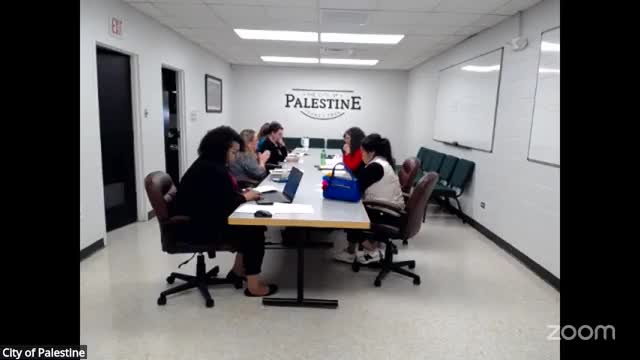
The Palestine Main Street Advisory Board approved a 2024–2025 transformation strategy on Jan. 28, 2025 that sets “family-friendly downtown” and “accessibility and connectivity enhancements” as its guiding priorities.
Main Street Coordinator Mary Ann Headbauer said the strategy reframes the program’s work to focus on families and on infrastructural improvements that will make downtown easier to navigate. "Palestine Main Street envisions a culturally rich and economically vibrant downtown that is inclusive, accessible and family friendly," Headbauer said during the meeting.
The board’s vote formalizes work already underway: sidewalk and utility upgrades funded by the city, a downtown connectivity enhancement project tied to a $5,000 Anna Reed grant for the Farmers Market Pavilion, and an expanded programming emphasis on family-oriented events. Headbauer and other board members described the strategy as a way to align Main Street priorities with recent demographic analysis showing more local families and younger households than previously assumed.
Board members discussed measurable outcomes and next steps. Headbauer said the work plan will remain a living document: staff will continue community vetting through surveys and public outreach and will coordinate with the Palestine Economic Development Corporation (PEDC) and city leadership on complementary projects. One board member said a cohesive, voted work plan helps with grant applications; Headbauer and the board noted that documented goals supported recent funding wins.
A motion to accept the transformation strategy work plan as presented was moved by a board member and seconded by Headbauer. The board voted in favor and approved the plan.
The adoption does not itself authorize new city funding or specific contracts; Headbauer said individual projects and grant applications will follow separate processes and may require additional approvals.
Board members identified next steps including defining measurable year-end success criteria, conducting community surveys to refine priorities, and continuing coordination with city staff on implementation timing and funding.
The board meeting lasted about 40 minutes and covered multiple routine agenda items; the transformation strategy item was the principal policy action taken at the session.