Get Full Government Meeting Transcripts, Videos, & Alerts Forever!
Get email alerts on the Transportation topic
No spam. Unsubscribe anytime.
Bastrop council hears feasibility pitch for rideshare vouchers to fill transit gaps
Summary
City staff presented a preliminary plan Feb. 11 to study whether Bastrop should adopt a city-subsidized rideshare voucher program to supplement existing transit and extend mobility after the local CARTS on-demand service hours.
City staff presented a preliminary plan Feb. 11 to study whether Bastrop should adopt a city-subsidized rideshare voucher program to supplement existing transit and extend mobility after the local CARTS on-demand service hours.
The program would pair vouchers paid by the city with Transportation Network Companies (TNCs) such as Uber or Lyft and would be managed through a consultant and an online portal. The presenter described a draft budget scenario in which a $10-per-ride subsidy with 10 vouchers per eligible household would cost about $95,831 annually just for the subsidy, not including consultant or marketing costs.
The proposal was framed as a way to meet demand outside CARTS’s 7 a.m.–7 p.m. service window and to serve areas CARTS does not reach. “We actually provide over a hundred trips a day,” the presenter said, summarizing CARTS usage, and added the city’s preliminary analytics show an estimated population of 12,286 with roughly 9,583 people age-eligible to use TNC services.
Council members focused on feasibility and driver supply. Councilperson Lisonbee said she wanted to see data demonstrating that rideshare drivers would be available and profitable in a small city: “When people are the drivers of Uber and Lyft, they're in it to make money,” she said, warning that nearby urban markets could draw drivers away and leave long waits in Bastrop.
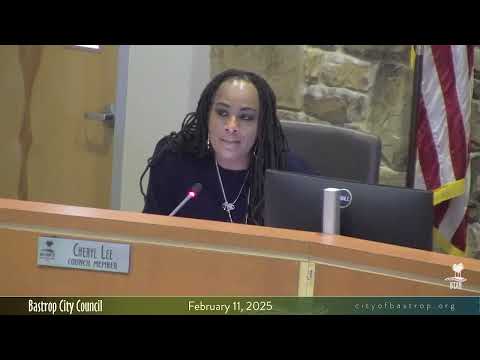
Councilperson Lee and others asked staff to examine whether the program should be geofenced to city limits (the presenter said many municipal voucher programs are geofenced) and whether the city should subsidize trips only during hours CARTS does not operate. The assistant city attorney, Stan Springerly, told council that in his experience some vendors provided donated rides on holidays and that voucher programs were commonly treated as public-purpose subsidies that can reduce risk and assist law enforcement by giving an alternative to potentially impaired drivers.
Councilmembers also discussed pilot and targeting options: staff suggested a pilot year and using the program’s analytics dashboard to direct limited vouchers to priority groups (seniors, medical trips or special events). Several councilmembers asked staff to collect comparative metrics — per-day trip counts, driver availability and average ride distances — from similar-size Texas cities and from Lyft/Uber before returning with a recommendation.
The city manager and staff said they would research costs, driver-supply statistics and contract approaches and report back. “I can definitely look at different cities that are about our population,” the presenter told council, and later, “I will do some more research and come back with an update.”
Next steps: staff will gather usage and supply data from TNCs and peer cities, scope an RFP for a consultant to design and negotiate a voucher program if council wants to proceed, and return with options that specify hours, voucher limits and budget impact.