Get Full Government Meeting Transcripts, Videos, & Alerts Forever!
Get email alerts on the Parks And Open Space topic
No spam. Unsubscribe anytime.
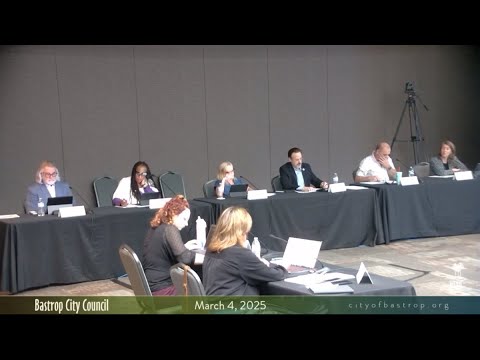
Council backs parkland-dedication rules and $500-per-unit park enrichment fee on first reading
Summary
On first reading the council approved an ordinance establishing parkland dedication requirements and a citywide $500-per-dwelling-unit park enrichment fee, plus an in-lieu fee option and geographic rules for how those funds can be spent.
The Bastrop City Council on March 4 approved on first reading a new parkland dedication and park enrichment ordinance that would require developers to dedicate parkland or pay fees in lieu.
Under the proposal presented by staff, subdivisions must dedicate one acre of parkland for every 100 proposed single-family dwelling units (and one acre per 200 proposed multifamily units). When dedicated land is required the ordinance calls for a minimum contiguous parkland parcel of three acres where feasible; staff cited existing small parks (Delgado Park, Fairy Park, Fireman's Park) as reference sizes. The proposed ordinance also limits the amount of park parcel area that can be located in the 100-year floodplain or floodway to 20 percent of the dedicated land so that parkland is usable and not purely floodplain mitigation.
Separately, the ordinance creates a park enrichment fee of $500 per proposed dwelling unit (staff and the Planning & Zoning Commission recommended $500). The park enrichment fee is not tied to a specific development area and can be used to improve existing parks across the city; staff said Bastrop's relatively compact geography makes citywide use appropriate. The ordinance also establishes a fee-in-lieu fund for developers who prefer to pay rather than dedicate land; funds are to be geographically managed by development areas with a 10-year window for expenditure, after which unspent money would be returned proportionally to the payer.
City staff noted alternative methods of compliance for developers who dedicate and improve parkland in ways that fulfill the ordinance's objectives; those arrangements would be negotiated with the city manager. The council approved the first reading unanimously and placed the ordinance on the March 11 consent agenda for final action.
Councilmembers asked about eligible uses and whether improvement work done by a developer on a dedicated or nearby park could substitute for fees; staff confirmed the ordinance allows negotiated alternative compliance but requires demonstrated, qualifying park improvements tied to dedications.
The item passed on first reading and will return for formal adoption on March 11.