Get Full Government Meeting Transcripts, Videos, & Alerts Forever!
Get email alerts on the Clinical Dispensing Policy topic
No spam. Unsubscribe anytime.
House panel hears bill to let patients take postoperative eye drops home
Summary
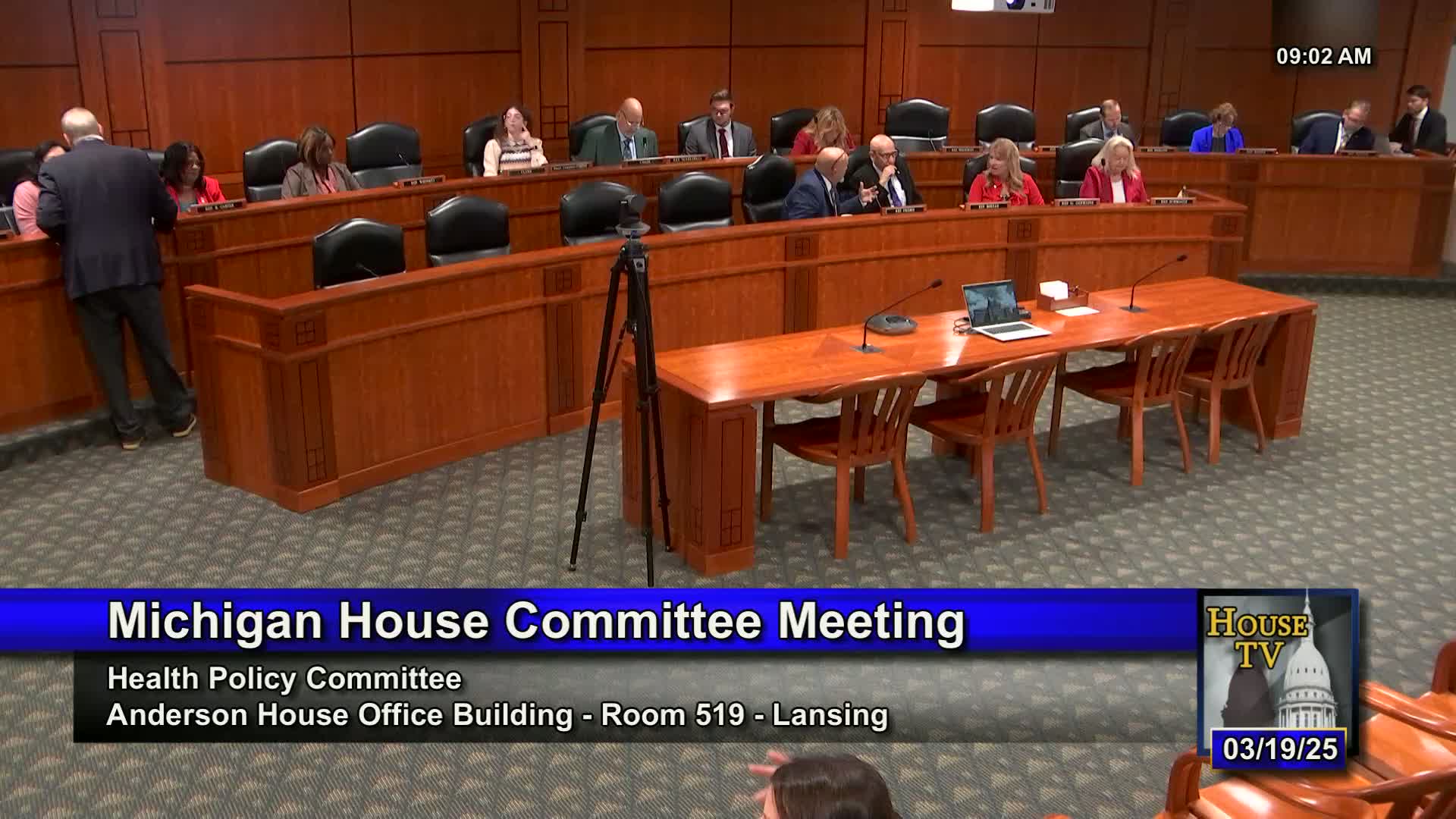
Representative Karen Steckloff introduced House Bill 4072 to the Michigan House Health Policy Committee, asking the panel to allow patients to take home topical eye medications—such as dilating drops, antibiotics and anti-inflammatories—administered during a hospital, emergency-department or outpatient-surgery encounter.
Representative Karen Steckloff introduced House Bill 4072 to the Michigan House Health Policy Committee, asking the panel to allow patients to take home topical eye medications—such as dilating drops, antibiotics and anti-inflammatories—administered during a hospital, emergency-department or outpatient-surgery encounter.
The measure aims to reduce what supporters described as routine waste and financial burden. “Let's employ some common sense here and modify our regulations to permit patients to take home their eye drops and ointments when they have already been prescribed them starting use during their medical care,” Steckloff told the committee, noting the bill had passed the House previously.
Why it matters: Ophthalmologists and specialty groups told the committee that bottles opened and partially used during procedures are often discarded when patients leave, forcing patients to return to pharmacies for the same medicines. Dr. Scott Westhouse, a retina specialist testifying on behalf of the Michigan Society of Eye Physicians and Surgeons, said the practice raises costs and can delay critical treatment in urgent cases such as acute glaucoma. “This bill will ensure that topical eye medicines or drops that are used for patient care within the hospital, emergency room, or surgery center can be taken home with a patient if they need it for their continuing care,” Westhouse said.
Supporters cited three common situations that the bill targets: routine post‑operative prescriptions after cataract surgery, emergency‑department treatment for acute glaucoma that requires frequent dosing, and inpatient stays where a partial bottle is opened and the remainder discarded at discharge. Westhouse referenced a 2019 ophthalmology analysis estimating substantial national waste following cataract surgery and said allowing patients to keep the remainder would improve adherence and cut waste and costs.
Committee members asked about contamination risk and existing legal barriers. Representative Lauren Thompson, a registered nurse, noted the traditional concern that a dropper that touches a patient could be contaminated. Westhouse replied that the proposal applies to a single patient’s bottle and would not change standard counseling and labeling practices. Representative Bonafontaine asked whether current law forbids the practice; witnesses said Michigan’s pharmaceutical dispensing rules limit volume dispensed outside licensed dispensing channels and that the bill would change that treatment‑setting restriction.
No formal vote on the bill was recorded during the hearing. Several professional groups filed written support cards or offered testimony; others were listed as not wishing to speak but submitted their positions for the record. Committee business (minutes adoption) proceeded by unanimous consent and the committee adjourned.
Procedure and next steps: Committee members asked witnesses to supply additional state comparisons (several witnesses referenced Illinois’s 2021 change and Virginia as examples). The bill’s sponsors and medical groups offered to provide implementation safeguards and protocol language to address safe dispensing and labeling if lawmakers move the measure forward.