Get Full Government Meeting Transcripts, Videos, & Alerts Forever!
Get email alerts on the Civil Remedies Intimate Images topic
No spam. Unsubscribe anytime.
Subcommittee advances civil-remedies bill for unauthorized disclosure of intimate images; AI-morphed coverage to be clarified
Summary
House Bill 3049, which would create a civil cause of action for victims of nonconsensual disclosure of intimate images, received a favorable report. Members agreed to work on an amendment to clarify whether AI-morphed or digitally altered images are explicitly covered.
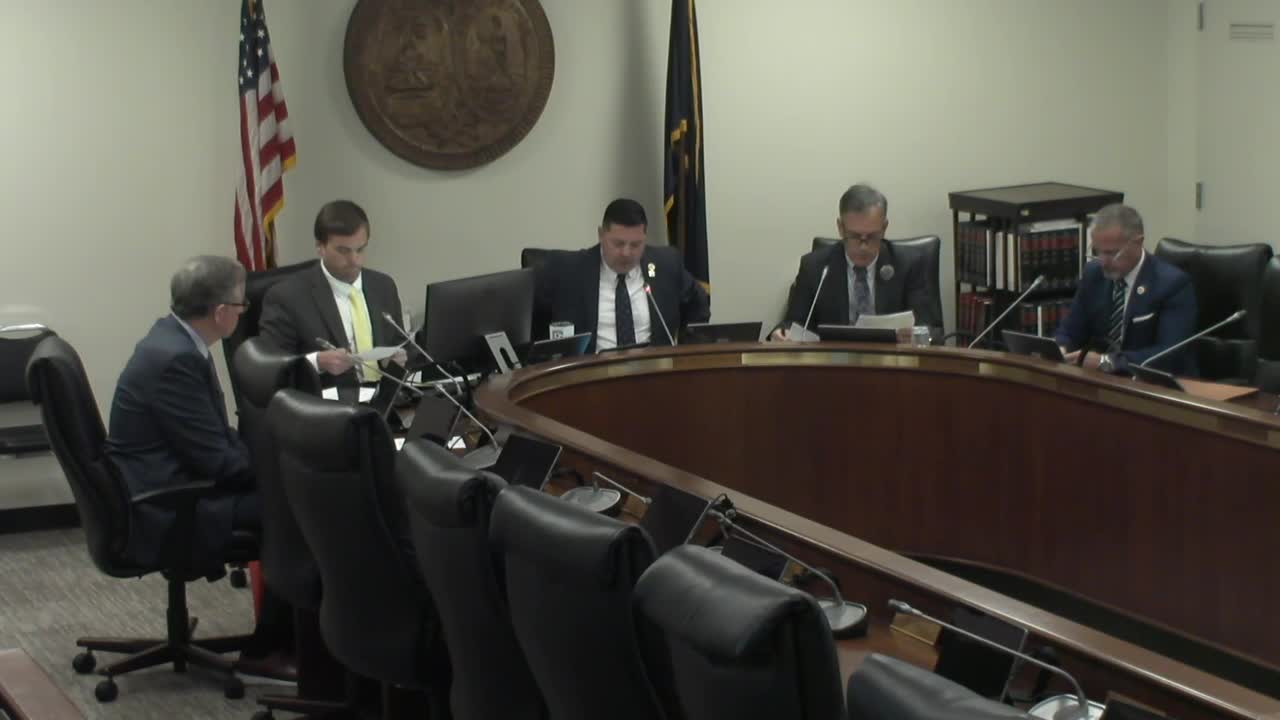
The Artificial Intelligence, Cybersecurity and Special Laws Subcommittee issued a favorable report for House Bill 3049, a measure establishing civil remedies for victims whose private intimate images are disclosed or threatened to be disclosed without consent.
House Bill 3049 would allow a plaintiff to recover economic and noneconomic damages, statutory damages up to $10,000, any monetary gains the defendant obtained from the disclosure, and punitive damages where appropriate. The bill also permits award of attorney's fees and injunctive relief, and it sets a three-year statute of limitations for unauthorized disclosures and a four-year limit for threats to disclose; if the depicted individual was a minor at the time of a threatened disclosure, the limitations period does not begin until the minor turns 18.
The draft defines "intimate image" as a photograph, film, video recording or similar medium showing an identifiable person's uncovered intimate bodily areas or depicting an individual engaged in sexually explicit conduct. The bill clarifies that consent to the creation of an image or prior disclosure does not imply consent to further dissemination, and it preserves exceptions for disclosures to law enforcement, court proceedings, medical contexts and matters of public concern. The draft also notes that it does not alter South Carolina's sovereign immunity and provides language to ensure compliance with federal law.
During the hearing, members discussed whether the bill's current definitions clearly cover digitally forged or AI-morphed images. Committee members noted the companion criminal bill, House Bill 3058, includes language explicitly covering images "generated or substantially modified using machine learning techniques or other computer generated means," and members agreed to consider adopting similar language in H 3049 to ensure consistency.
Representative Travis Moore said the civil bill "ensures an individual retains a reasonable expectation of private privacy even if the image was taken in public as long as they did not consent," and staff acknowledged the draft does not explicitly name AI-morphed images but uses the phrase "similar medium" which might capture them. The subcommittee agreed to report H 3049 favorably while working with staff to prepare a definitional amendment to add machine-learning or AI language to the bill's definition of intimate image.
On roll call, Representative Travis Moore voted aye; Representative Ryan McCabe voted aye; Representative Paul Wickenheimer voted aye. With three in favor and none opposed, House Bill 3049 received a favorable report from the subcommittee.