Lompoc chief stresses AB 54 limits as residents press council to endorse protections for undocumented neighbors
Loading...
Summary
Police Chief Kevin Martin reiterated departmental limits on immigration enforcement under California law during public comment on a community petition; advocates urged the City Council to formally back a five-point proposal protecting undocumented residents and asked the council to place the item on a future agenda.
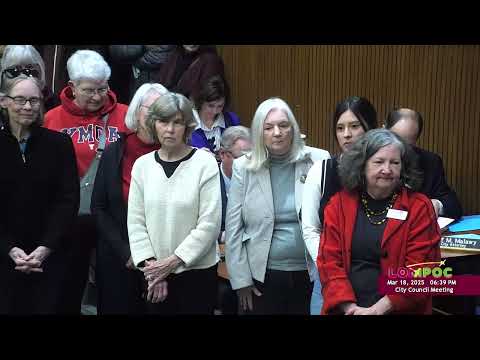
Police Chief Kevin Martin told the City Council on March 18 that Lompoc police do not ask about or report immigration status and will not transfer people to federal immigration authorities except under narrow, law-defined conditions. The comments came as several neighborhood and advocacy groups urged the council to adopt a five-point local policy to protect undocumented residents and asked elected officials to put the item on a future agenda.
The chief said the department follows California Assembly Bill 54 and its own policy on transfers to immigration authorities, reading the policy language aloud and citing Government Code sections referenced in the policy. “Our role is to enforce state and local laws, not federal immigration laws,” he said, adding that officers “do not detain individuals based solely on immigration status.”
Advocates from a group identified in testimony as Voces/Voces Sin Fronteras (referred to in places during the meeting as Voices Without Borders or Voces Sembrunteras) asked the council to adopt a resolution endorsing five specific protections, including limits on immigration agents’ access to schools and a public statement of the council’s stance. Speakers said the measures are within the city’s authority and framed the request as a public-safety and community-trust measure.
“We would love to be able to continue working to unite our community,” said Andrea Palacio, who identified herself as one of the group’s leaders and urged the council to “pass a resolution with signatures to solidify your stance.” Angelica Torralba, who identified herself as a Lompoc youth organizer, urged the council to support SB 48 protections for schools and to place the proposal on the April 1 agenda. Multiple speakers — including faith leaders and long-time residents — said they support the proposal and stressed the economic and social contributions of immigrant residents.
Some members of the public opposed the local measures, arguing enforcement of federal immigration law should be left to federal agencies and expressing concern about public-safety implications. One speaker invoked the 2016 death of Marilyn Farris and said she opposed the requested stance; another Lompoc resident who identified herself as a veteran and former colleague of Ferris later said that invocation was inappropriate.
Council members and the mayor did not take a formal vote on the proposal during the meeting. Councilmember Patrick Ball asked that the item be returned to the council agenda so elected officials can make “their stance known to the community.” Ball said he wants the council to put its official position on record; the council did not adopt a resolution at this meeting.
Chief Martin also described the department’s bilingual staffing — six bilingual dispatchers, 20 bilingual officers, two jailers and three professional staff — and urged community members to report crimes and use available legal pathways for immigration when appropriate. He said the department’s written policy on transfers to immigration authorities is available on the city website, and he encouraged people seeking residency pathways to obtain reputable legal assistance.
The public comments stretched across the oral-communications period; speakers repeatedly asked the council to act and requested a return to the docket with a council-led discussion rather than a staff-only review. Councilmember Ball formally requested that the council schedule the matter for an upcoming meeting so the body can consider the petition and, if desired, place its name on a resolution.
The council did not schedule a specific date during the March 18 meeting; members discussed timing and the right forum for changes that could require legal review. No formal direction to staff or adoption of a policy took place at the meeting.