Get Full Government Meeting Transcripts, Videos, & Alerts Forever!
Get email alerts on the Blight Parking Sidewalk Accessibility topic
No spam. Unsubscribe anytime.
Bradford residents press council on parking rules, blight and sidewalk repairs during public comment
Summary
During public comment at a Bradford City Council meeting, residents urged stricter enforcement of parking changeover rules and property-maintenance codes, raised safety concerns about a stop sign sightline, and asked for more sidewalk accessibility and anti-blight action.
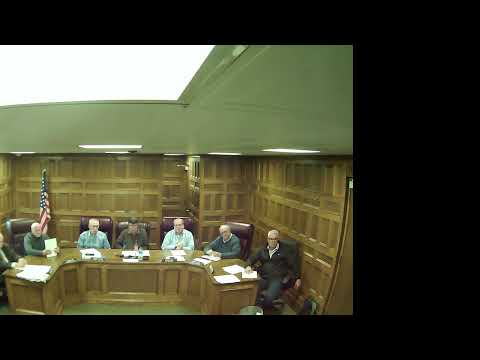
Residents used the public-comment period at the Bradford City Council meeting to press elected officials for clearer enforcement of Thursday parking changeover rules, faster action on blighted houses, and repairs to sidewalks that residents said block access for people with mobility needs.
Those concerns formed the core of a longer turn by a resident who did not give a name, who said the neighborhood’s street-sweeper schedule and enforcement were inconsistent and that people who cannot move cars weekly are repeatedly ticketed. The resident said the city’s street sweeper is often broken and asked, “if they cannot clean the streets on Thursday ... why did the residents have to have their cars off the street on Thursday?”
The resident also described what she called dangerous sightlines at a stop sign on Main/High Street and a recent minor collision that she said happened when a truck backed up: “I was waiting for the car in front of me to go ... the truck is making too much noise. Next thing I know, he plows right into me.” She urged the council to review the sign placement and traffic controls at that intersection.
The speaker pressed the council to enforce property-maintenance ordinances and to accelerate demolition or rehabilitation of dilapidated houses. She said “over a hundred” houses have been torn down over time in Bradford and asked why enforcement and upkeep have not prevented the loss of tax-producing properties. Council members responded during the meeting that many vacant houses have structural problems or unclear ownership, and that the city has increased activity on blight in recent months, including working with a nonprofit and spending grant funds.
Thompson, a Bradford resident who identified himself as director of elections in Philadelphia and secretary of the Green Party in Pennsylvania, said he had recently been housed by the McKean County Housing Authority and urged investment in downtown sidewalks and accessible infrastructure. “We lost a lawsuit because our sidewalks were not in the condition for ADA accessibility,” Thompson said, arguing that repairs to sidewalks would help residents who use mobility aids and encourage more people to use downtown businesses.
City staff and councilors responded in part: one councilor noted the city had invested in Congress Street under an earlier program, and another official explained that the city is conducting more board-of-health meetings and using a mix of funding sources, including donor money and grant funding, to address blight and demolition priorities.
Why it matters: speakers linked the maintenance and enforcement issues to public safety, accessibility for people with disabilities, and the city’s tax base. Several commenters said fixed-income residents face particular strain when they must pay fines or arrange for sidewalk shoveling.
The council moved on to its agenda items after the public-comment period ended; several residents said they would follow up with staff after the meeting.
Ending: Councilors did not take immediate new action on the specific street-sweeper schedule or alter the stop-sign placement during the meeting; city staff said they would continue enforcement and pursue demolition and rehabilitation projects through existing funding channels.