Get Full Government Meeting Transcripts, Videos, & Alerts Forever!
Get email alerts on the Funding Meals On Wheels topic
No spam. Unsubscribe anytime.
Federal funding uncertainty leaves Meals on Wheels programs short; department explores reallocations
Summary
At a legislative oversight hearing, the South Carolina Department on Aging told senators it has received about half of expected federal funds and that several area agencies face shortfalls for meal delivery; officials described limited carry-forward funds, restrictive uses, and possible short-term reallocation options.
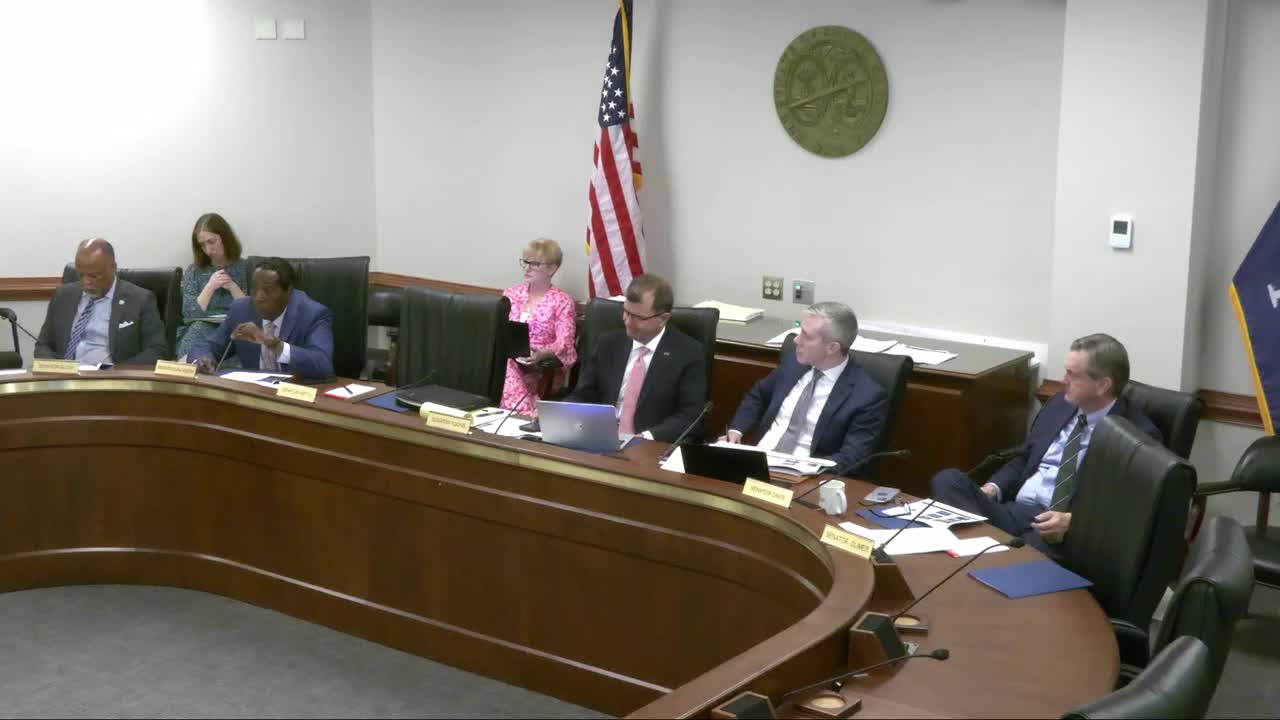
Columbia — The South Carolina Department on Aging told a legislative oversight subcommittee on Oct. 12 that it has received roughly 50% of its expected federal funding for the year, creating short-term stress on Meals on Wheels and other Older Americans Act services in some regions.
"So far this year, we've seen about 50% of our federal funds come through," Sayeda Galman, finance director for the South Carolina Department on Aging, told the committee. "Usually, we see about $24,000,000 in funding, and we have about 12 [million] right now."
Galman and Director Munn said the department has already sent carry-forward funds to area agencies on aging and that most remaining agency cash balances are restricted for specific purposes. Galman said the department has set aside an agency contingency to sustain operations while federal guidance is uncertain.
The committee raised concerns that several regional councils of governments (COGs) reported running short of funds for meal delivery for the remainder of the fiscal year. Senators asked whether the department could reallocate unused funds from one COG to another or claw back unobligated carry-forward amounts to cover shortfalls.
"We administer and distribute the money through a funding formula," the department said, noting the formula factors include regional population (including those 85 and older) and other demographic considerations. The department said it generally encourages area agencies to recategorize spending within allowable categories as a first short-term response and is researching historical practices—such as limited "clawback" redistributions—that have been used in prior years.
Committee members pressed for a rapid solution for regions facing immediate shortages through June 30. The department’s staff said they have been in contact with the federal awarding agency, the Administration for Community Living (ACL), and are awaiting further guidance after a continuing resolution (CR) passed the prior Friday.
Senators also asked whether discretionary grants—such as a prior HUD minor modification grant used for home repairs—are at risk. The department clarified that the HUD grant in question has ended and the state now runs a similar program from state funding, so that prior HUD award is not currently at risk from federal grant freezes.
The subcommittee asked the department to return to a future hearing with (1) an analysis of whether any COGs hold unobligated Meals on Wheels funds that could be temporarily reallocated, (2) a list of carry-forward balances and their legal restrictions, and (3) options and legal limits for short-term redistribution or emergency assistance to cover meal-delivery gaps.
The committee adjourned with members emphasizing the need for a prompt departmental review and follow-up on the 2020 Legislative Audit Council review at a later date.