Get Full Government Meeting Transcripts, Videos, & Alerts Forever!
Get email alerts on the Crime Victim Services Consolidation topic
No spam. Unsubscribe anytime.
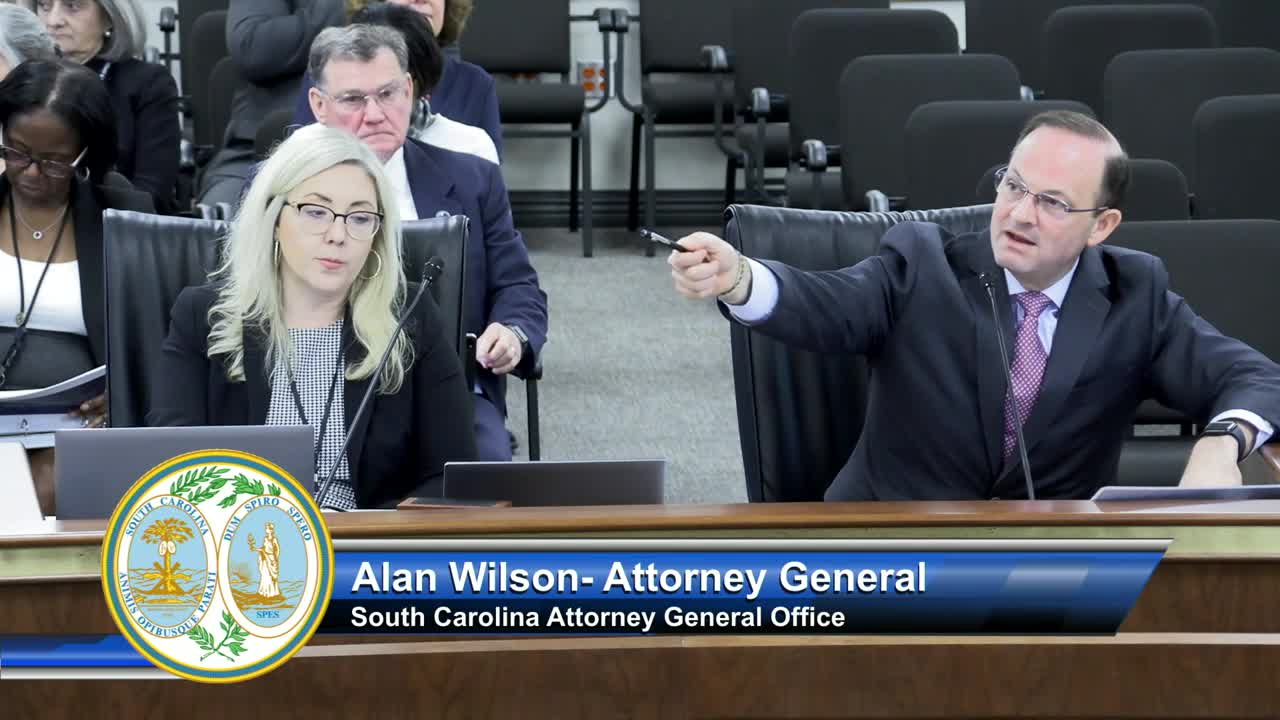
Attorney General says Crime Victim Services now housed in AG’s office after 2017 consolidation
Summary
The attorney general told the oversight panel that the state moved crime victim services under the Attorney General’s Office in 2017, making the AG the chief victims advocate and consolidating grant and certification functions under a director in the office.
The attorney general told a Senate oversight subcommittee that the state's Crime Victim Services programs were consolidated under the Attorney General's Office following legislation and administrative action in 2017.
The shift matters because it moved grant administration, training and victim-rights complaint processes into the AG’s office and, the attorney general said, made the attorney general the state’s chief victims advocate for victim-service providers and direct victims.
The attorney general described how, prior to 2017, victim-service grants and training functions were administered across several governor’s-cabinet agencies and the Department of Public Safety. He said the consolidation moved those functions to a single director within the Attorney General's Office and named BJ Nelson as the director of crime victim services, who was present during the hearing.
He said Crime Victim Services now handles frontline victim-service provider certification, distributes grant funds and maintains complaint processes tied to the victims’ bill of rights. The attorney general emphasized the statutory placement of crime victim services as reporting directly to the attorney general rather than through the chief deputy.
The attorney general also referenced recent additions such as an address-confidentiality program placed under the office last year. He characterized the consolidation as intended to improve coordination and training for victim-service providers and to centralize grant oversight.
No formal action was taken during the oversight hearing; the presentation described past statutory change and current program responsibilities.