Get Full Government Meeting Transcripts, Videos, & Alerts Forever!
Get email alerts on the Concurrent Jurisdiction Juveniles topic
No spam. Unsubscribe anytime.
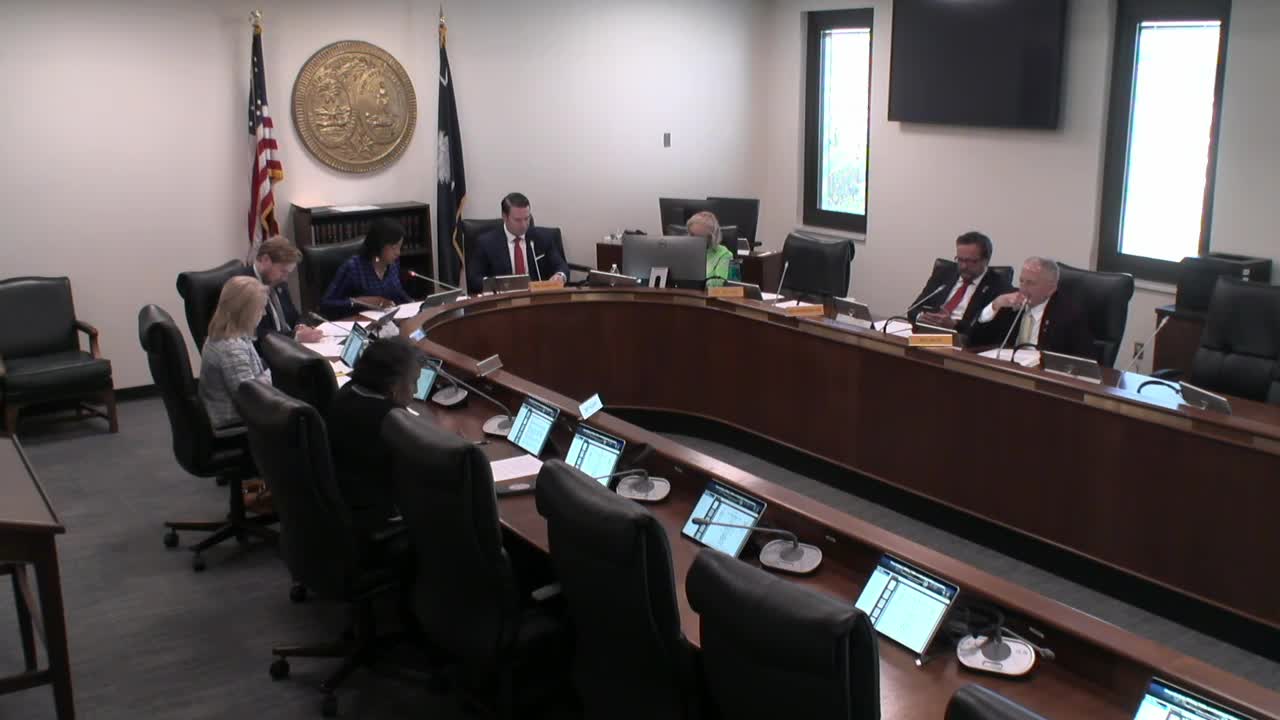
Subcommittee advances bill allowing state concurrent jurisdiction for juveniles committing crimes on military installations
Summary
House Bill 3910 would let South Carolina accept concurrent jurisdiction over juvenile offenses on federal military installations when the U.S. Attorney waives exclusive jurisdiction and the act also violates state law; the subcommittee voted favorably
Columbia, S.C. — The House Subcommittee on Veterans and Military Affairs voted Wednesday to recommend House Bill 3910, a measure that would establish a procedure for South Carolina to accept concurrent jurisdiction over certain juvenile offenses that occur on U.S. Department of Defense installations in the state.
Under the bill, the state may accept concurrent jurisdiction for a juvenile alleged to have violated federal law on a military installation if two conditions are met: (1) the United States Attorney for the District of South Carolina waives exclusive federal jurisdiction, and (2) the alleged offense is also a crime under South Carolina law.
Sponsor testimony noted the bill is intended to provide a juvenile-appropriate process for military families and avoid treating adolescents as adults under federal procedures when a state response is available. Representative Celeste Davis said the measure gives prosecutors and families more options: "So this is something that's helping out the military family during a stressful time and gives a lot of it doesn't force them to do this, but it gives the option to take care of them in a certain way depending on the circumstance."
The committee recorded a unanimous roll call in favor of the bill and the subcommittee forwarded the measure with a favorable recommendation.
Background: Versions of this bill passed the House unanimously in prior sessions but were held up in the Senate; committee testimony referenced earlier passage and technical changes since then.
Next steps: The bill will advance with a favorable recommendation for further House consideration.