Get Full Government Meeting Transcripts, Videos, & Alerts Forever!
Get email alerts on the Behavioral Health Restructuring topic
No spam. Unsubscribe anytime.
Committee hears testimony on bill to create Department of Behavioral Health and Developmental Disabilities
Summary
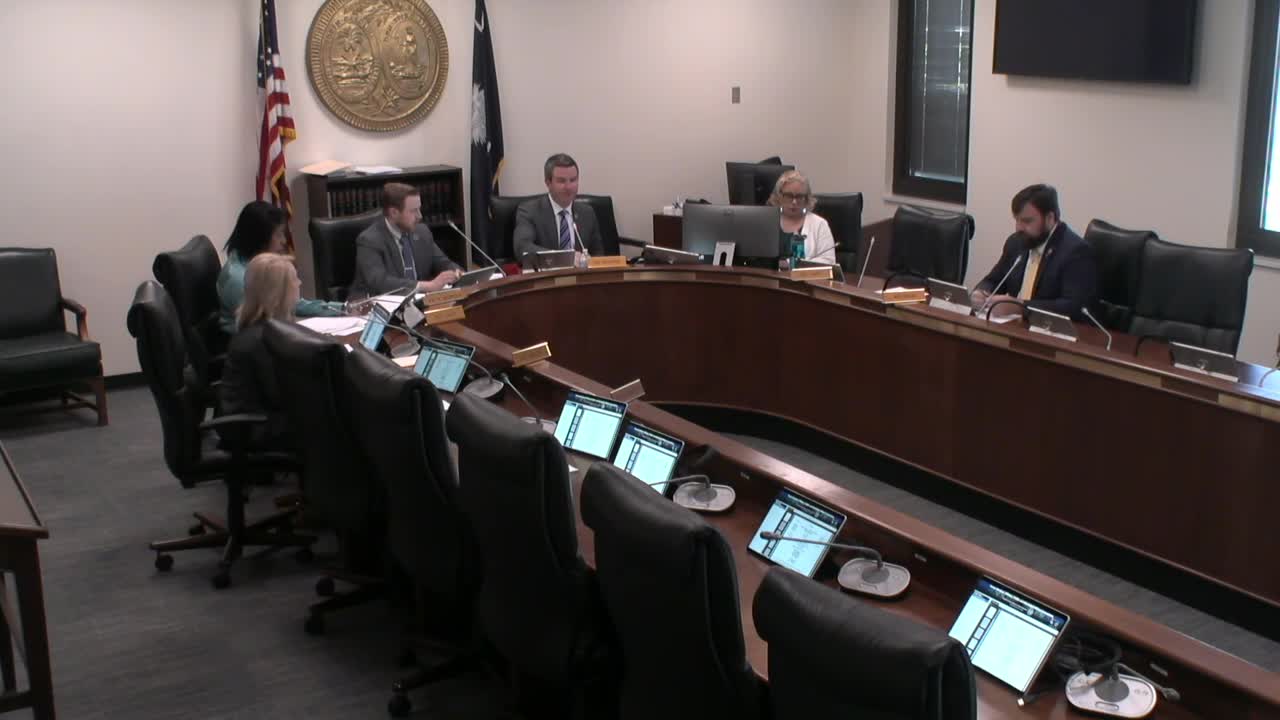
A House medical subcommittee heard testimony during a morning session on Senate Bill 2, which would create a Department of Behavioral Health and Developmental Disabilities by consolidating three state agencies.
A House medical subcommittee heard testimony during a morning session on Senate Bill 2, which would create a Department of Behavioral Health and Developmental Disabilities (DBHDD) by consolidating the Department of Disabilities and Special Needs, the Department of Mental Health and the Department of Alcohol and Other Drug Abuse Services.
The bill’s sponsors and witnesses told the committee the measure is intended to reduce duplication across agencies that serve overlapping populations, require a single cabinet director appointed by the governor and confirmed by the Senate, and mandate an Olmstead implementation plan to respond to pending federal litigation. Because the committee lacked a quorum, members heard testimony but took no vote and recessed to reconvene later in the day.
Trey (committee staff) summarized the bill for the panel: “S 2 establishes the Department of Behavioral Health and Developmental Disabilities within the executive branch by consolidating the Department of Disabilities and Special Needs, the Department of Mental Health, and the Department of Alcohol and Other Drug Abuse Services.” He told members each new component office would keep its statutory duties but would operate under oversight from a DBHDD director appointed by the governor and confirmed by the Senate.
Senator Davis described the measure as a continuation of past restructuring efforts intended to move more executive authority into the governor’s cabinet. “We’re known colloquially as the legislative state,” Senator Davis said, tracing earlier changes to a 1993 restructuring and a 2023 Act 60 that split DHEC into the Department of Public Health and a Department of Environmental Services. He said consultants and interviews found the most fragmented delivery of care involved the three agencies named in S 2 and that consolidation could improve coordination for people served by multiple programs.
Committee members pressed staff and the sponsor on costs. Representative Thomas Beach said he wanted a clearer fiscal picture before supporting a consolidation. Trey and Senator Davis said some startup costs are likely — for example, unified information systems and the Olmstead implementation plan — but that longer-term savings are hard to quantify in advance because they depend on staffing, organizational choices and future appropriations.
Committee members and witnesses referenced Section 15 of the bill, which requires the agencies to develop an Olmstead implementation plan in response to ongoing federal litigation. Senator Davis said the plan would require one‑time standup funding and that the General Assembly would need to appropriate money to implement it; a committee member noted a fiscal-office estimate of about $375,000 associated with that work. Representative Beach also gave a rough, informal figure for the combined current budgets of the three agencies of about $1.2 billion, saying he needed a ballpark to take back to constituents.
Two witnesses spoke in favor of consolidation. Orin Smith of the Palmetto Promise Institute said the change would reduce duplication and improve outcomes for families with complex needs. “The merger of these 3 agencies is a reform whose time has come,” Smith told the committee. Beth Franco, executive director of Disability Rights South Carolina, said families regularly encounter barriers when a person has both developmental disabilities and mental health or substance‑use conditions; “it’s like a ping pong match,” she said, describing clients being shifted between agencies while seeking services.
Senate and House members also noted that health‑freedom provisions originally attached to the measure were removed and handled in separate legislation, after subcommittee review determined combining restructuring with those policy provisions risked violating the single‑subject rule.
Because three members were absent, the committee recorded no formal vote on S 2. Chair Heath Sessions said the panel would recess and reconvene an hour after adjournment of the House, estimating the afternoon reconvening around 2:00–2:30 p.m. for further consideration.
Next steps for S 2 include additional committee consideration when the subcommittee reconvenes and eventual floor action if a quorumable committee vote is taken; committee members said they want clearer fiscal benchmarking and outcome measures to review after any consolidation is implemented.