Get Full Government Meeting Transcripts, Videos, & Alerts Forever!
Get email alerts on the Education And Youth topic
No spam. Unsubscribe anytime.
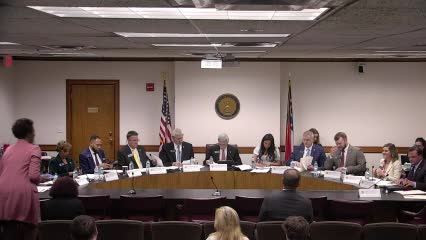
Committee passes bill adding accessible-playground standards, a grades 2–5 writing pilot and school access for youth civic groups
Summary
The Senate Education and Youth Committee approved LC 620204S, a multi-part education measure that sets enhanced accessibility standards for new elementary-school playgrounds beginning in 2027, establishes a three-year immersive writing pilot for grades 2–5, and encourages schools to permit youth civic organizations to use facilities for civics education.
The Senate Education and Youth Committee approved a multi-part education bill (LC 620204S) that sets new accessibility standards for elementary-school playgrounds, establishes a three-year immersive writing pilot for second through fifth graders and adds language encouraging schools to permit youth civic organizations to use facilities for civics education.
State Representative Deborah Bazemore presented the measure to the committee and described three primary provisions. Section 1 would require that, beginning July 2027, any new elementary school with a playground meet enhanced minimum standards for accessible play spaces so students of differing physical and intellectual abilities have opportunities to participate. Section 2 directs the State Board of Education to establish a three-year immersive writing program for grades 2–5, aligned to existing writing standards, and provides that schools must apply to participate in the pilot. Section 3 encourages schools to permit recognized youth civic organizations—examples cited in testimony include Boy Scouts and Girl Scouts—to promote civics education to students and requires a written reason if a system chooses to refuse access.
Cade Cullifor of Troutman Strategies, representing the Atlanta Area Council of the Boy Scouts, told the committee that the bill’s language narrows federal lists to "youth organizations" and is intended to include groups that provide civic and service activities rather than unrelated observances. Cullifor said the language aims to capture organizations that typically engage in civics activity while excluding irrelevant entries on the federal list.
Committee members asked whether Section 1 duplicated language already adopted earlier in the session; senators noted identical or similar language had been considered under House Bill 371 and discussed whether to narrow the current bill to avoid duplication. Sponsors said the language was added as a friendly amendment in the House and that keeping it in the current bill was intended to ensure the policy is enacted if one vehicle advances and the other does not. Several members indicated agreement to leave the language in place to improve the bill’s chance of enactment.
Committee members also asked for precision on terms such as "pathway" used to connect school buildings to playgrounds; supporters said they will revisit definitions to ensure sidewalks or paved routes are provided where intended. After discussion and brief testimony, the committee approved the bill as presented.
The committee vote approved the bill; the transcript records the committee raising hands and approving the measure, but does not provide a roll-call tally in the record.
The bill now proceeds as the committee-approved version for further floor or committee consideration.