Get Full Government Meeting Transcripts, Videos, & Alerts Forever!
Get email alerts on the Dmv Modernization topic
No spam. Unsubscribe anytime.
South Carolina DMV seeks $100 million modernization; proposes fee change tied to proviso 82.2
Summary
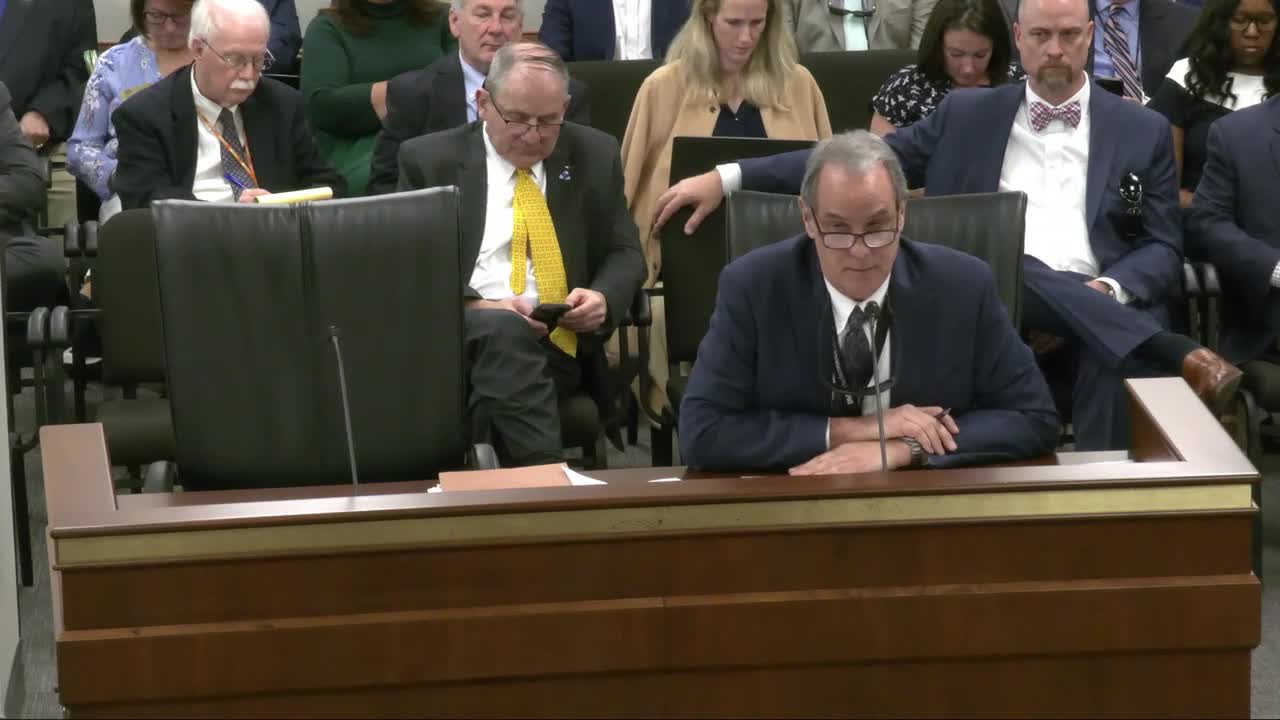
South Carolina Department of Motor Vehicles Director Shwedo told the Senate Finance Committee’s Transportation Regulatory Subcommittee that the DMV needs an additional $42.73 million in nonrecurring funding and about $7 million in recurring annual funds to complete a planned $100 million modernization of its IT systems.
South Carolina Department of Motor Vehicles Director Shwedo told the Senate Finance Committee’s Transportation Regulatory Subcommittee that the DMV needs an additional $42.73 million in nonrecurring funding and about $7 million in recurring annual funds to complete a planned $100 million modernization of its IT systems.
Shwedo said the department has roughly $44 million appropriated and on hand but cannot obligate those carryforward dollars to a single large contract because of federal/state contracting rules and the Anti-Deficiency Act. He told senators that changing Proviso 82.2 — the proviso that caps certain DMV product fees at the rates charged in February 2001 — would let the DMV retain revenue above the $6 baseline for specific products and use the difference to fund modernization and sustainment costs. "We need 42.73 additional million of nonrecurring dollars, and then to sustain the system over time, it would require $7,000,000 recurring once it was up and operating," Shwedo said.
Why it matters: Shwedo said the DMV’s systems run on legacy code and that modernization is a multi-year effort with security and vendor-selection risks. He told the committee an implementation timeline of about five years: roughly one year to conduct a competitive procurement (RFP), two years to upgrade driver-services components and two years for vehicle-services components. He said the first $6 collected for the named products would continue to flow to the Department of Transportation; any increase tied to a proviso change would allow the DMV to fund modernization without reducing DOT’s base share.
Details and options presented: Shwedo offered three funding approaches and said he favored the proviso change adopted by the House that would give the DMV discretion to raise fees for certain products (he used the example of driver-history records). Under the scenarios he described: - Nonrecurring development/implementation need: $42.73 million (additional to existing carryforward). - Recurring sustainment need after implementation: $7 million annually (kick-in after implementation; the director said the recurring sustainment would be realized once the system is in production). - Timeline: roughly one year for a competitive procurement process, then about four years of phased implementation (two years driver services, two years vehicle services).
Shwedo described two illustrative fee models for driver- and vehicle-history products: raising the current $6 product fee to $10 would make the DMV roughly average with Southeastern peers; a $12 fee would cover additional contract- and security-related costs so the agency would likely not need additional increases for several years. He said the House had adopted a proviso model authorizing fee increases; if the Senate adopts the same approach the DMV would not need the $42.73 million lump sum the Senate could otherwise consider providing.
Procurement and risk: Shwedo said the DMV has used outside contractors to scope the RFP and build a procurement that focuses on demonstrated performance; he warned other states have lost large IT projects by choosing unqualified vendors. He told senators the procurement will be administered with the State Department of Administration and estimated it takes about a year to complete a competitive procurement. He also recommended identity-mitigation measures (roughly $5 million recurring in his materials) to reduce fraud risk, which would increase the recurring funding need if included.
Questions and follow-up: Senators asked for a breakdown of the product fees that would be affected and projections of revenue under the proviso change. Senator Rice requested a list showing current fees and the projected impact of changing the proviso; Shwedo said he would provide that information. Several senators pressed on why the DMV could not obligate the carryforward funds immediately; Shwedo said the agency cannot obligate partial amounts for a large multi-year contract under applicable contracting rules.
Next steps: The subcommittee did not vote on funding at the hearing. Shwedo said the House version of the proviso had passed the House side and asked the Senate to consider the proviso change or provide a nonrecurring appropriation sufficient to let the DMV proceed with a competitive contract and later return for recurring sustainment funding if necessary.
Ending: The director emphasized security as a top priority and urged timely action to avoid further vendor and maintenance cost increases.