Get Full Government Meeting Transcripts, Videos, & Alerts Forever!
Get email alerts on the Market Structure topic
No spam. Unsubscribe anytime.
Retail ‘industrial choice’ debate resurfaces as utilities and co‑ops warn of cost shifts
Summary
Lawmakers debated whether large industrial customers should be allowed to buy electricity from outside incumbent providers, with cooperatives warning that retail choice could strand investments and shift costs to residential and small‑business customers.
A discussion about whether large industrial customers should be permitted to contract for power outside their incumbent provider resurfaced during the energy subcommittee hearing, with electric cooperatives and other local interests warning federal obligations and transmission structure mean wholesale retail “choice” risks shifting costs to captive residential and small‑business customers.
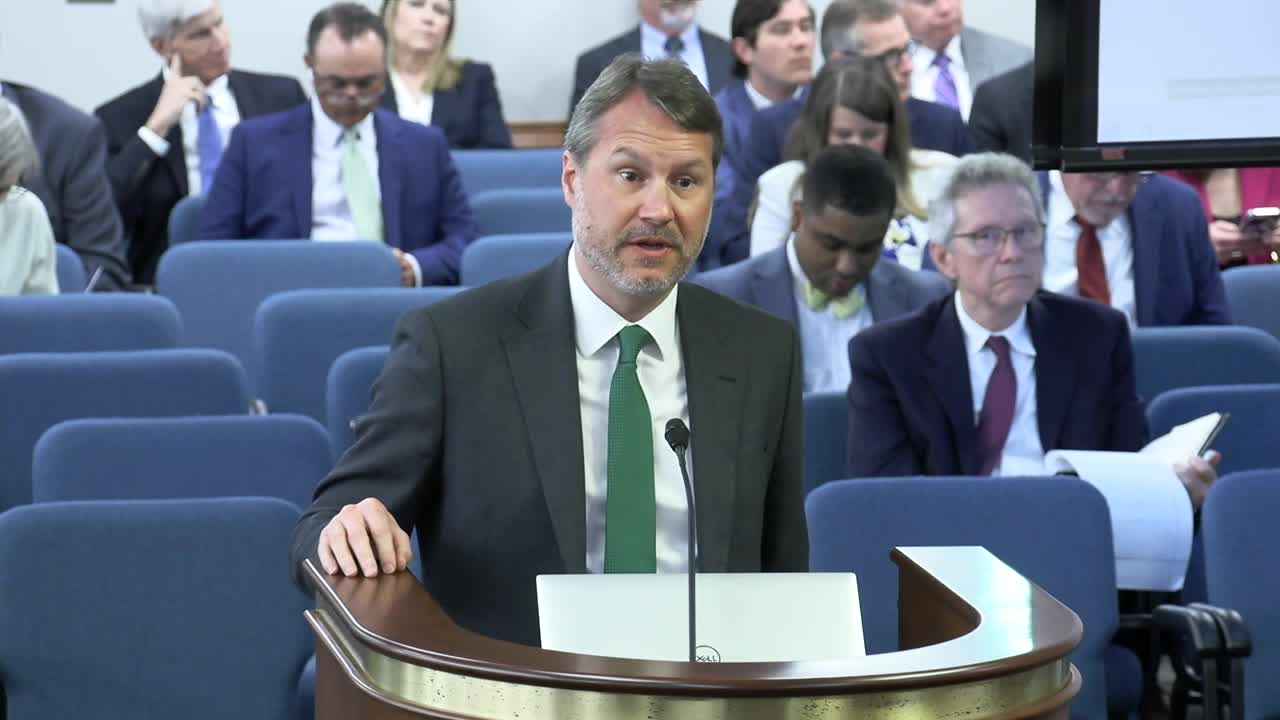
John Frick, representing the Electric Cooperative of South Carolina, told the subcommittee that co‑ops and other local utilities have invested to attract industrial load and that allowing those customers to take service from an outside provider can create stranded costs and raise rates for the remaining customer base. Frick and others said structural issues — radial distribution in many rural areas and higher wheeling charges for co‑ops — would make their territories comparatively uncompetitive under a broad retail choice model.
Federal reliability constraints
Bernard L. McNamee, a former Federal Energy Regulatory Commission commissioner who participated remotely, told the panel the federal regime — FERC tariffs and NERC reliability standards — imposes obligations on balancing authorities and transmission providers to maintain instantaneous supply‑demand balance. He cautioned lawmakers that those federal obligations could limit how far retail choice can be implemented without undermining reliability or forcing balancing authorities to backstop supply.
Industry and economic development concerns
Speakers said rates and economic‑development strategies are linked: co‑ops and utilities pointed to past regulatory changes and historical rules (for example, a prior “7/50” rule discussed in testimony) to show how planning and service territories affect site‑selection and job creation. Frick said multiple, independent analyses conducted by utilities converged on combined‑cycle natural gas as the next most economic resource for the Colleton County region — an argument supporters used to back S.3309’s joint authorization.
Where the debate stands
Committee members did not take immediate action specifically on retail choice; the discussion informed broader deliberations about S.3309, S.446 and other measures. Witnesses from cooperatives urged legislators to require wholesale market reforms and careful structural fixes — for example, shared transmission planning or changes to wheeling arrangements — before permitting broad retail shopping by large load customers.