Get Full Government Meeting Transcripts, Videos, & Alerts Forever!
Get email alerts on the Veterans Services topic
No spam. Unsubscribe anytime.
S.C. Veterans Affairs secretary outlines veterans‑home expansion, seeks county oversight authority
Summary
Major General Todd McCaffrey told the Legislative Oversight Subcommittee the Department of Veterans Affairs has taken on most state veterans homes, is pursuing three more facilities, and is asking the General Assembly for inspection authority and a minimum staffing requirement for county veterans offices to reduce uneven service across the state.
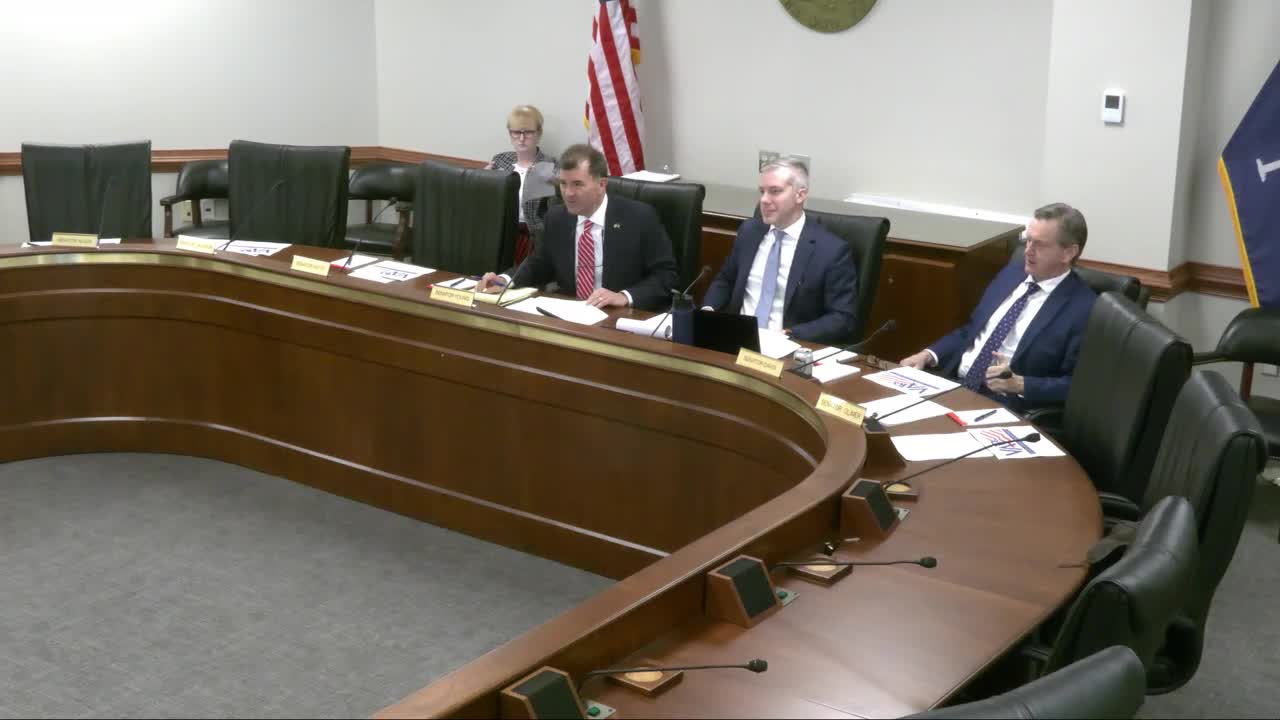
Major General Todd McCaffrey, Secretary of the South Carolina Department of Veterans Affairs, told the Legislative Oversight Subcommittee on Oct. 12 that the department is taking on oversight of the state veterans home enterprise, pursuing three additional veterans homes, and seeking legislative authority to inspect county veterans affairs offices and require minimum county staffing.
McCaffrey said the agency has assumed responsibility for five of six operating state veterans homes after a transfer from the Department of Mental Health and will assume the final facility, Stone Pavilion in Columbia, on July 1, 2025. "This is exactly the right thing to do for veterans," he told the panel, while noting that third‑party vendors operate direct resident care at the homes.
The department told lawmakers it has federal grant applications for three additional homes. Two applications are approved and placed on the federal prioritization list for a 104‑bed home in Horry County and a 104‑bed home in Orangeburg; the agency has submitted a third application for a Lexington County replacement for Stone Pavilion. McCaffrey said the State has appropriated the required 35% match for those projects and that the match funds are held in interest‑bearing accounts.
Why it matters: the federal Department of Veterans Affairs limits VA grant funding for state home beds in South Carolina to 1,089 beds. McCaffrey said the combination of current homes and the planned builds will meet that 1,089 VA‑funded cap. That cap shapes whether and where the state can obtain federal construction dollars for future homes and replacements.
Lawmakers pressed McCaffrey on uneven service across South Carolina’s 46 county veterans affairs offices. McCaffrey described wide variation tied to local resources and staffing: he said 11 counties now operate with one or fewer full‑time staff dedicated to veterans services and said he supports pending legislation that would require a minimum of two full‑time employees in each county office. He also said the department is seeking authority to inspect county offices and report results to the General Assembly and delegations in order to promote a uniform standard of service. "We need the authority to inspect and report back to the delegation," McCaffrey said.
Committee members discussed technology and claims processing. McCaffrey said the department licenses a vendor platform called VetPro and provides that license to counties at no charge; some counties instead purchase other software (he named a competitor, Vetrospect). He said a majority of counties use the state‑provided platform but that he did not have the exact count in the briefing. McCaffrey described inspection authority as largely a tool to identify counties needing assistance rather than a punitive measure.
On home siting and demand, McCaffrey said the General Assembly and the Joint Bond Review Committee play roles in approving applications and siting, and that the federal VA’s prioritization process determines which projects receive grants and when. He cited current census‑based VA projections and demographic trends as factors and said South Carolina’s veteran population is declining about 1% per year (nationally about 1.6% per year). He said there are roughly 373,000 veterans in South Carolina and that about 45% are over age 65. McCaffrey also noted one facility, the home in Gaffney (Palmetto Patriot), currently has a waitlist of 74 veterans.
McCaffrey described an organizational shift at the department since its rebirth in 2020: the agency now has six directorates and several new staff roles to manage the larger fiscal and operational portfolio of the veterans home enterprise. He said 27 full‑time positions transferred from DMH as part of the move of homes into the department. On workforce and economic objectives, he told the committee the department is increasing focus on veteran employability and entrepreneurship and cited an estimated $34.3 billion annual economic impact from active military presence tied to installations and posts that touch South Carolina.
On federal funding risk for construction projects, McCaffrey told senators he saw no immediate risk and pointed to a federal proposal that would direct significant funds to state veteran home construction; he said he continues to monitor congressional activity that could affect priorities. He also described pending legislation to rename the state military base task force the Military Affairs Advisory Council and to add members.
The department said it will provide the committee and General Assembly with further demographic analysis and strategic recommendations on siting and future needs. There were no formal votes or regulatory actions reported at the hearing; the presentation was followed by questions from multiple senators and committee discussion.
The subcommittee adjourned after the briefing; McCaffrey said the department will continue to report to lawmakers on the veterans home enterprise and county‑office oversight.