Get Full Government Meeting Transcripts, Videos, & Alerts Forever!
Get email alerts on the Public Safety topic
No spam. Unsubscribe anytime.
Senate advances overhaul of criminal-gang and racketeering laws; adds youth-prevention fund amendment on floor
Summary
The committee advanced S.76, an updated criminal gang and racketeering bill that sponsors say will make state law enforceable and align it with federal models; a separate amendment to create a youth violence-prevention fund tied to fines was proposed for floor consideration and was held for further fiscal detail.
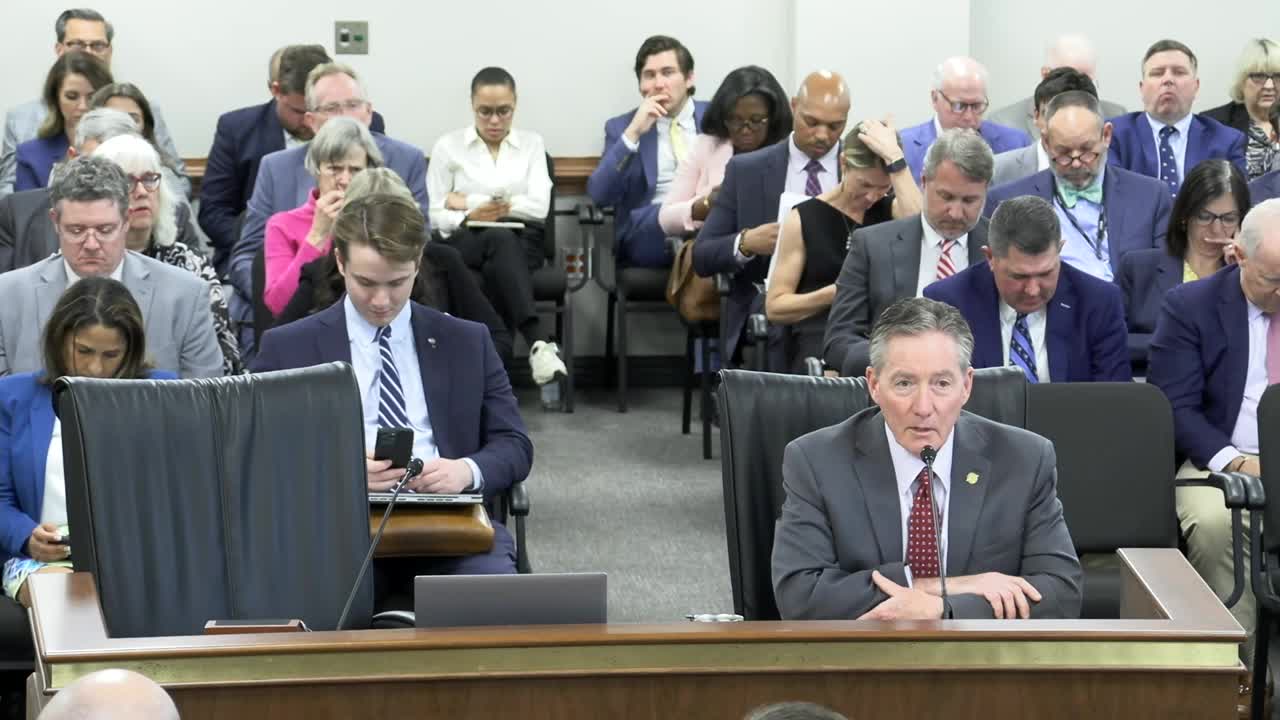
The Senate Judiciary Committee reported S.76 — legislation to modernize South Carolina’s criminal-gang and anti-racketeering law — out of committee after a lengthy review that sponsors said draws on federal RICO models and work by multiple legislators.
Senator Hembree, sponsor of the bill, told the committee the prior criminal-gang statute had been “virtually unenforceable” and that staff and outside experts used an FBI survey of model elements to draft the current proposal. The bill contains separate sections for a criminal-gang statute and a state-level racketeering (RICO-style) measure and partially mirrors federal racketeering law so courts can rely on an established body of precedent, Hembree said.
Jimmy Staten, president and CEO of Santee Cooper, testified at the committee that the measure would enable Santee Cooper to partner with investor-owned utilities to build generation at existing brownfield sites — specifically singling out the Kennedy's site as a candidate — and that a joint plant could lower overall customer costs. Keller Kasam of Dominion Energy South Carolina and Tiger Wells of Duke Energy also described the bill’s provisions affecting permitting, procurement and large generation projects.
The subcommittee added technical edits requested during review, including updates to terminology (for example replacing “retail theft” with “organized retail crime” following changes earlier in the session) and changing references to agencies (a transcript speaker asked to change an older reference to the Department of Health and Environmental Control to the Department of Environmental Services). The subcommittee also narrowed the joint-ownership authorization for Santee Cooper so that it applied specifically to a proposed natural-gas plant at Kennedy's rather than a broader, indefinite authority.
Senator Devine offered an amendment to establish a “Youth Violence Prevention and Reduction Fund” to be housed at the Department of Public Safety. Under the amendment, 2.5% of fines collected under the new criminal provisions would be deposited in the fund and used for grants supporting youth violence prevention and gang-prevention activities; the fund would begin the fiscal year after the act’s effective date and would cap at $1.5 million. Devine agreed to hold the amendment for floor consideration and to supply additional fiscal estimates requested by other senators.
Committee members also discussed the statutory definition of racketeering activity. Senator Edgefield questioned language that cross-referenced federal law; an exchange on the record noted citations to 18 U.S.C. § 1961 in the proposed state definition. Supporters said the inclusion was intended to align state and federal definitions and rely on federal case law, though some senators suggested clarifying language to avoid confusion.
After debate and the subcommittee’s technical edits, the committee voted to report the bill favorably; the transcript shows a voice vote with no recorded opposition.
The transcript records broad policy testimony from industry and state law enforcement witnesses; it also shows the sponsor agreed to carry certain technical changes to the floor. Senator Hembree and others emphasized the bill’s goal of providing prosecutors and police workable tools to address expanding gang activity and cross‑state criminal networks.