Get Full Government Meeting Transcripts, Videos, & Alerts Forever!
Get email alerts on the Healthcare Workforce topic
No spam. Unsubscribe anytime.
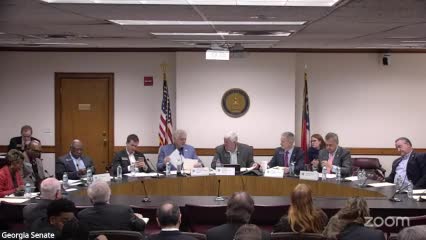
Senate committee tables bill to license radiologist assistants after debate on supervision, timing
Summary
The Senate Regulated Industries & Utilities Committee heard hours of testimony on House Bill 571 to create state licensure for radiologist assistants, including workforce and patient-access arguments, but voted to table the measure so sponsors and members can refine language on supervision and effective dates.
The Senate Regulated Industries & Utilities Committee on an administrative motion tabled House Bill 571, a measure to create state licensure for radiologist assistants, after more than an hour of testimony and questions exploring scope, supervision and implementation timelines.
Supporters told the committee licensure would create a career pathway for radiologic technologists and ease a radiology workforce shortage that delays diagnostic results. Opponents and some rural-practice physicians warned that parts of the bill as written could restrict after-hours access if the law requires on-site (direct) supervision rather than allowing general supervision in some settings.
Representative Hawkins, the bill sponsor before the committee, said the measure formalizes an existing role and addresses a growing demand in Georgia: “We had this bill last year, 434, that passed through this committee and was, unfortunately, left on the table,” he told senators while explaining the bill’s history and goals. He said the change aims to license people who already perform many radiology tasks so hospitals can hire them more readily.
Becky Ryals, speaking for the Georgia Radiological Society and the Georgia Society for Radiologic Technologists, told the committee that RAs have existed in Georgia for years but that hospitals and imaging groups hesitate to hire them without licensure. “There are imaging groups, there are hospitals who would like to hire radiologist assistants, but they're reluctant to do so without licensure,” Ryals said. She described the training path: initial radiologic technologist education, then two additional years of advanced clinical training for those who become radiologist assistants.
Dr. Bill Harrington, a long‑time radiologist and former American College of Radiology official, said licensure would mirror other mid-level career paths and noted federal recognition steps already taken by Medicare. “This is an upward path for the radiologic technologists who wanted to give higher level care,” Harrington said, adding that hospitals commonly require credentialing or privileges before granting on-site authority to treat patients.
By contrast, Dr. Ali Sheikh, a practicing radiologist in Houston County, said the bill’s current language is “very restrictive and will be detrimental to the citizens of Houston County and the surrounding counties that we service.” Sheikh asked the committee to allow general supervision for many procedures so that rural hospitals could continue to rely on RAs after hours when radiologists are not on site.
Committee members pressed sponsors on two implementation questions: the meaning of “may” versus “shall” in the board’s licensing language and whether the composite medical board could create the advisory structure and process in time for a July 1, 2025 effective date included in the draft. Multiple senators said they worried the July 1 date might not give the board time to form advisory groups and process licenses for existing RAs.
The committee recorded multiple proposed amendments in members’ folders, including one from Senator Kennedy intended to address supervision and procedure lists and another from staff suggested by Ryals to add informed-consent and procedure‑list details. Committee leaders asked the bill sponsor to work with members and said they would reconvene the item at a later meeting; the committee then voted to table the bill for further refinement.
Quotes in this story are taken from testimony and committee remarks recorded in the committee transcript.