Get Full Government Meeting Transcripts, Videos, & Alerts Forever!
Get email alerts on the Pediatric Neuropsychiatric Treatment topic
No spam. Unsubscribe anytime.
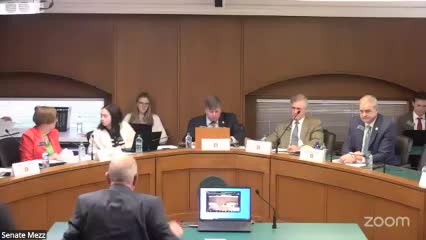
Committee hears bill to require insurance coverage for PANS/PANDAS treatment for children
Summary
House Bill 124 would require major medical insurance to cover health care services for pediatric autoimmune neuropsychiatric syndromes (PANS/PANDAS) in accordance with nationally recognized clinical guidance; testimony focused on early diagnosis and standard treatments and noted lack of consensus on some advanced therapies
Representative Mitchell Scoggins told the Senate Insurance and Labor Committee he introduced House Bill 124 (LC520603) to require insurance coverage for health care services for children diagnosed with pediatric acute-onset neuropsychiatric syndromes (PANS) and pediatric autoimmune neuropsychiatric disorder associated with streptococcal infections (PANDAS).
The sponsor described PANS and PANDAS as neuropsychiatric conditions that typically affect children ages roughly 3–13 and said early treatment—often antibiotics and other standard measures—can prevent long-term effects. “The trick to this is getting early treatment to PANS and PANDAS and getting them to a doctor, getting them on antibiotics, because early treatment prevents long term effects,” Representative Scoggins said.
Why it matters: supporters told the committee the bill aligns state coverage with nationally recognized clinical recommendations and would help families obtain timely care for a condition most physicians rarely see. Scoggins said he brought the bill in part because it affected his family: he described an eight-year-old granddaughter who improved after evaluation and treatment.
Clinical standards and limits: witnesses and committee members discussed the state of the evidence. Representative Michelle Au, a practicing physician who trained in pediatrics, said the bill raises awareness and aims to incorporate the current standard of care as it evolves. Committee members referenced a March 2025 clinical report (American Academy of Pediatrics) that notes a lack of consensus among physicians about optimal treatment and that randomized controlled trials did not demonstrate benefit for IVIG (intravenous immunoglobulin) in some study populations; several witnesses said the bill does not mandate IVIG and that the draft ties coverage to nationally recognized clinical practice guidelines.
Support and questions: Scoggins said he included letters from experts and that other states have introduced or passed similar laws; he cited a recent Virginia enactment. Committee members pressed for clarity about which treatments would be covered and about the evidence base for advanced immunotherapies. The transcript shows the treatment emphasis in the draft is early antibiotics and conservative measures; advocates noted some specialty centers (testimony referenced Children’s Healthcare of Atlanta) are running limited pilot programs for more intensive therapies.
Procedure and next steps: the committee held the bill for discussion; no vote occurred. Members asked for additional clinical guidance and for staff to review the March 2025 clinical report that committee members added to the record.
Ending: Supporters said the bill is intended to ensure insurance will cover recognized, guideline-based care so children who develop PANS or PANDAS can receive timely evaluation and early treatment.