Get Full Government Meeting Transcripts, Videos, & Alerts Forever!
Get email alerts on the Health Insurance Prosthetics topic
No spam. Unsubscribe anytime.
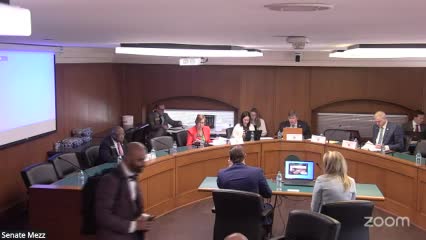
Senate committee hears bill to require private insurers to cover secondary prosthetics and orthotics
Summary
Representative David Clark introduced House Bill 87, which would require private health plans issued or renewed after Jan. 1, 2026, to cover medically necessary secondary prosthetic and orthotic devices for activities of daily living.
Representative David Clark (House District) introduced House Bill 87 to the Senate Insurance and Labor Committee during a hearing that had no quorum and no vote. The bill would require private health benefit policies issued or renewed after Jan. 1, 2026, to cover orthotic and prosthetic devices that are “medically necessary” to perform specified activities of daily living, including bathing, toileting, playing and exercising.
The measure’s sponsor said the change does not create a new state program but would ensure private plans cover devices insurers currently deem not medically necessary. “This bill will make sure that people get the medical devices they need, not by adding new government programs, but by giving people the chance to live full independent lives,” Representative David Clark said during his remarks.
Why it matters: supporters said the bill would reduce long-term health problems and improve quality of life for people with limb loss or limb differences. Rachel Oyer, team lead for the Georgia Society of Orthotists and Prosthetists and organizer of the So Everybody Can Move initiative, told the committee that current policy language bars coverage for devices used for certain daily activities and that the bill would expand coverage while preserving medical-necessity review by insurers.
Supporters included medical providers and patients. Abigail Thompson Garcia, director of government relations and advocacy at the Shepherd Center, said the bill includes parameters for fiscal responsibility, reporting and data collection and that the eligible population is small. Parent Susie Barrett and her son Elliot, a 6-year-old who uses prosthetics, described the family expense of buying a running blade priced in testimony at about $70,000 and urged the committee to consider future affordability when the child ages off parental coverage.
Key clarifications from testimony: witnesses said the bill, as drafted, excludes the State Health Benefit Plan and Medicaid; Representative Clark confirmed the exclusion and said discussions about adding state plans remain underway. Testimony also noted that prosthetists and orthotists in Georgia practice under licensure overseen by a gubernatorial board and must work in conjunction with physician referrals under current Georgia code language. Advocates said the bill would allow prosthetists and orthotists to document specific activities of daily living as part of medical necessity determinations, which is currently restricted by insurer policies.
Cost and scope: witnesses gave a range of device costs. A running prosthesis for athletics was described in testimony as billed at $70,000 in one instance; a so-called “shower leg” was described as roughly $2,000. Committee members asked whether insurers could already cover these items; the answer from industry supporters was that current policy language limits coverage and insurers typically deny claims for devices used primarily for activities such as showering.
Procedure and next steps: the committee held the matter as a hearing only and did not take a vote. Committee members asked staff and the sponsor to follow up on fiscal impacts and final language, and the sponsor said he and stakeholders had worked with Georgia insurers on the draft language and planned additional discussions about state plans.
Ending: Because the committee convened for a hearing only, no formal action was taken. If the committee advances the bill later, supporters said they expect the measure will hinge on final language about definitions of medical necessity, the use of existing clinical standards (witnesses referenced VA best practices), and whether state plans are included.