Get Full Government Meeting Transcripts, Videos, & Alerts Forever!
Get email alerts on the Waste Management topic
No spam. Unsubscribe anytime.
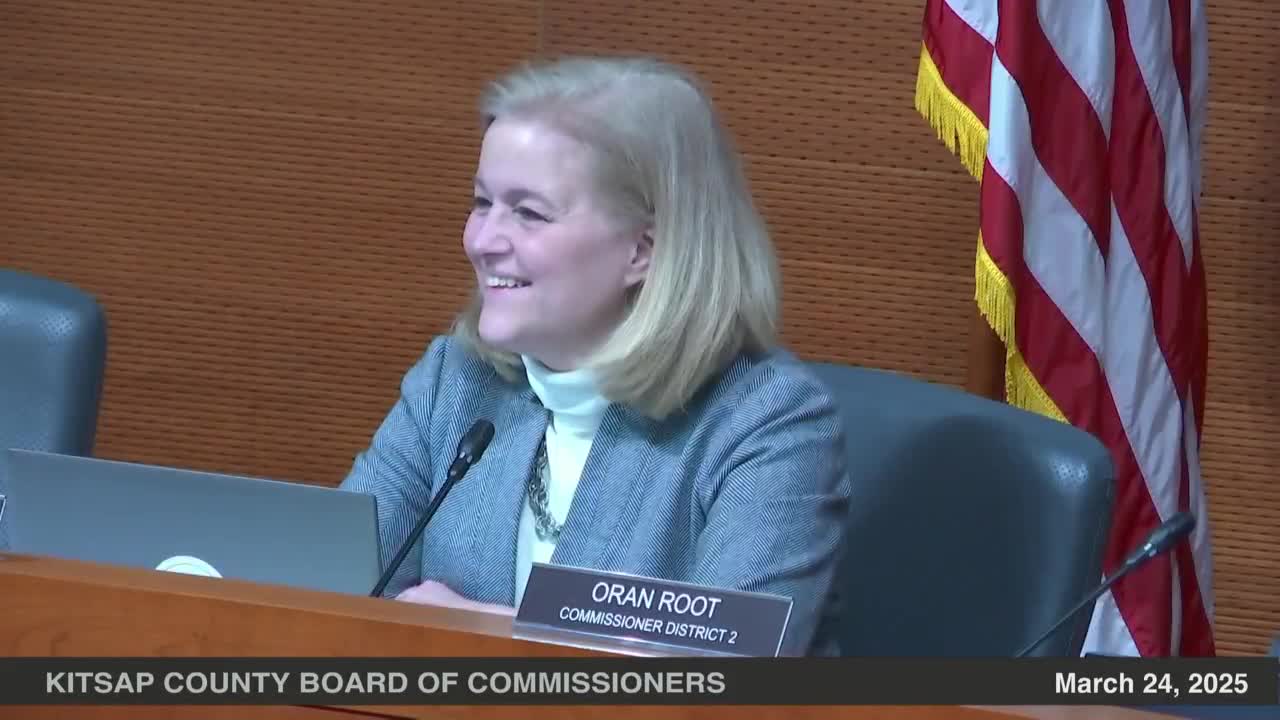
Kitsap commissioners adopt resolution declaring April 7–13 Food Waste Prevention Week
Summary
The Kitsap County Board of Commissioners unanimously adopted a resolution designating April 7–13, 2025, as Food Waste Prevention Week, following a presentation from Solid Waste staff on food-waste impacts and local outreach plans.
The Kitsap County Board of Commissioners adopted a resolution recognizing April 7–13, 2025, as Food Waste Prevention Week after a presentation from Hannah Vineyard of the county solid waste division.
Hannah Vineyard, a solid waste program specialist, told the board that food makes up about 14% of material sent to landfills and that households waste on average $1,500 a year on food that spoils before it is eaten. Vineyard described Food Waste Prevention Week as a national campaign that promotes small behavior changes—meal planning, creative use of leftovers, donating edible food—to reduce waste and food insecurity. She said Kitsap organizations such as food banks, gleaners and soup kitchens recover edible food from stores, farms and home gardens.
The resolution, read aloud during the meeting, cites statewide and national food-waste figures and encourages residents to compost inedible food and to support local food-recovery programs. Vineyard said the county will post prevention tips on Kitsap County social channels and continue distribution of compost toolkits with storage and freshness guidance.
Commissioner Reid moved to approve the resolution; the chair seconded the motion and the board voted in favor by voice vote. The chair announced the motion carried and the resolution was adopted.
The board did not attach funding or an implementation directive to the proclamation; Vineyard described the action as a public-recognition effort and outreach opportunity rather than a regulatory change.
The county noted partnerships with Washington State University and local nonprofits for outreach and food-recovery work; Vineyard specifically acknowledged Paisley Gallagher of WSU, who was present.