Get Full Government Meeting Transcripts, Videos, & Alerts Forever!
Get email alerts on the Transmission Reconductoring topic
No spam. Unsubscribe anytime.
Senate committee hears bill to speed reconductoring by creating categorical SEPA exemption for certain upgrades
Summary
House Bill 1819 would create a categorical exemption under the State Environmental Policy Act for reconductoring or rebuilding existing power lines within existing rights‑of‑way in previously disturbed lands, while requiring tribal and archaeological notifications; utilities and conservation groups testified in support.
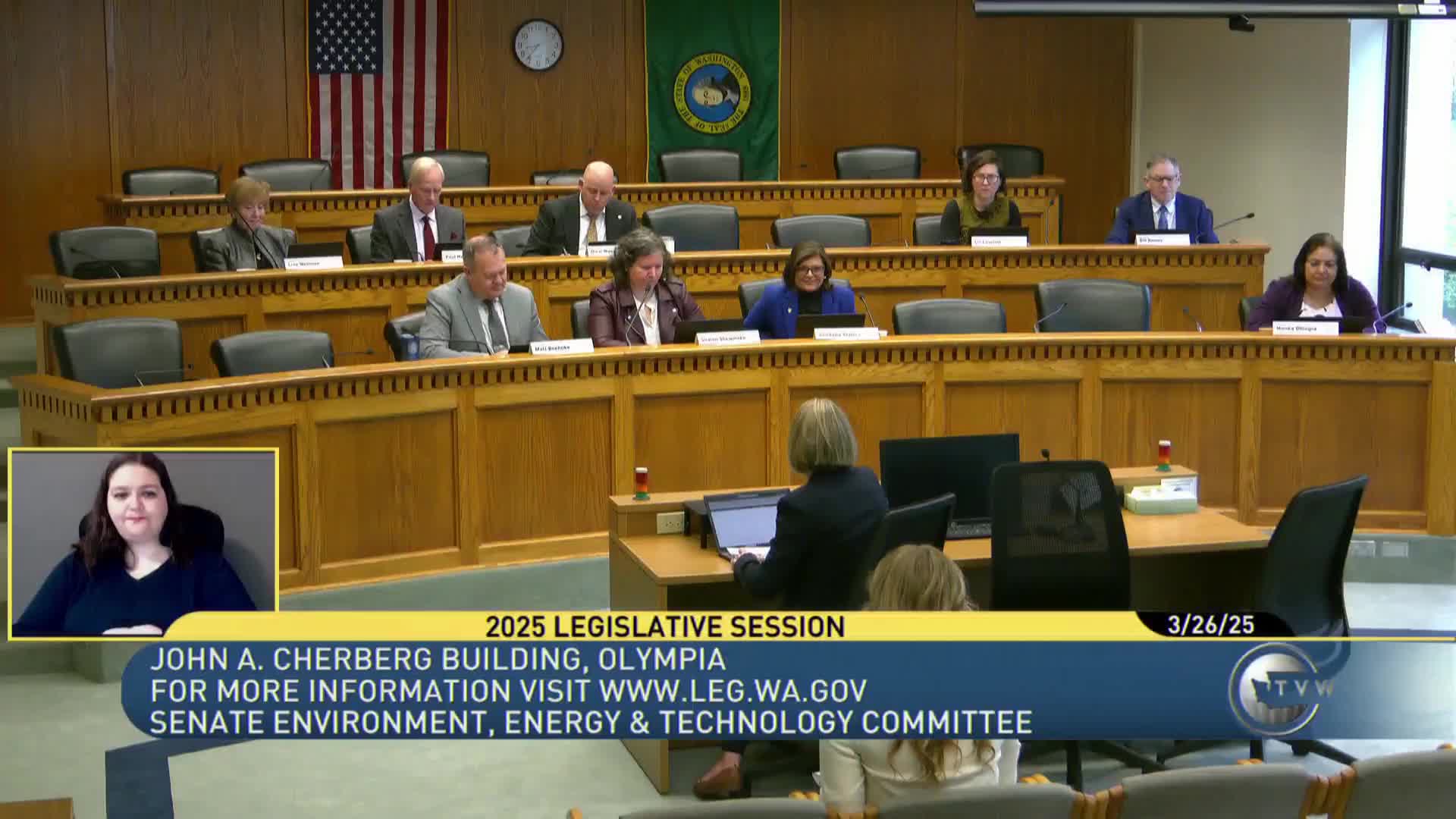
The Senate Environment, Energy & Technology Committee heard public testimony on Engrossed Substitute House Bill 1819, which would add a categorical exemption to the State Environmental Policy Act (SEPA) for certain utility actions that upgrade or rebuild existing electric power lines within existing rights‑of‑way or previously disturbed lands.
Committee staff explained the exemption covers upgrading or rebuilding lines, including limited relocations or right‑of‑way widening to meet current electrical standards, provided the work occurs in previously disturbed or developed lands. Staff described exceptions: the exemption would not apply where a series of exempt actions together have a probable significant adverse environmental impact, where work occurs in lands covered by water, or where related actions collectively require environmental review. For categorically exempt projects, utilities must notify the Department of Archaeology & Historic Preservation and federally recognized tribes where the right‑of‑way exists; DAHP may require surveys and consultation.
Sponsor Rep. Stephanie Barnard framed the bill as a near‑term tool to increase transmission capacity more quickly than building new lines, citing studies that reconductoring can double capacity on existing rights‑of‑way in 18–36 months. Multiple utilities and public‑power groups testified in support, describing transmission shortfalls and saying reconductoring is among the fastest, least‑cost ways to add capacity. Puget Sound Energy said reconductoring helps meet growing demand and that reconductoring projects already occur frequently; representatives asked for follow‑up on how much time SEPA relief would save in practice. The Nature Conservancy supported the approach and urged pairing it with broader transmission policies; CTC Global (an advanced‑conductor manufacturer) requested language to encourage use of advanced carbon‑composite conductors to maximize capacity gains and mitigate sag and wildfire risk.
Public Utility Districts and business groups also supported the bill; several witnesses estimated reconductoring could advance project completion by roughly two years compared with current permitting timelines. The hearing record shows many registered proponents and no recorded opponents; staff closed the public hearing with no committee vote recorded in the transcript.