Get Full Government Meeting Transcripts, Videos, & Alerts Forever!
Get email alerts on the Thermal Energy Networks topic
No spam. Unsubscribe anytime.
Committee hears bill to bring thermal energy networks under UTC oversight, with opt‑ins and exemptions
Summary
Second substitute House Bill 1514 would bring thermal energy companies into regulatory jurisdiction of the Utilities and Transportation Commission, with exemptions for very small systems and those in development before July 1, 2025; sponsors and utilities testified in support.
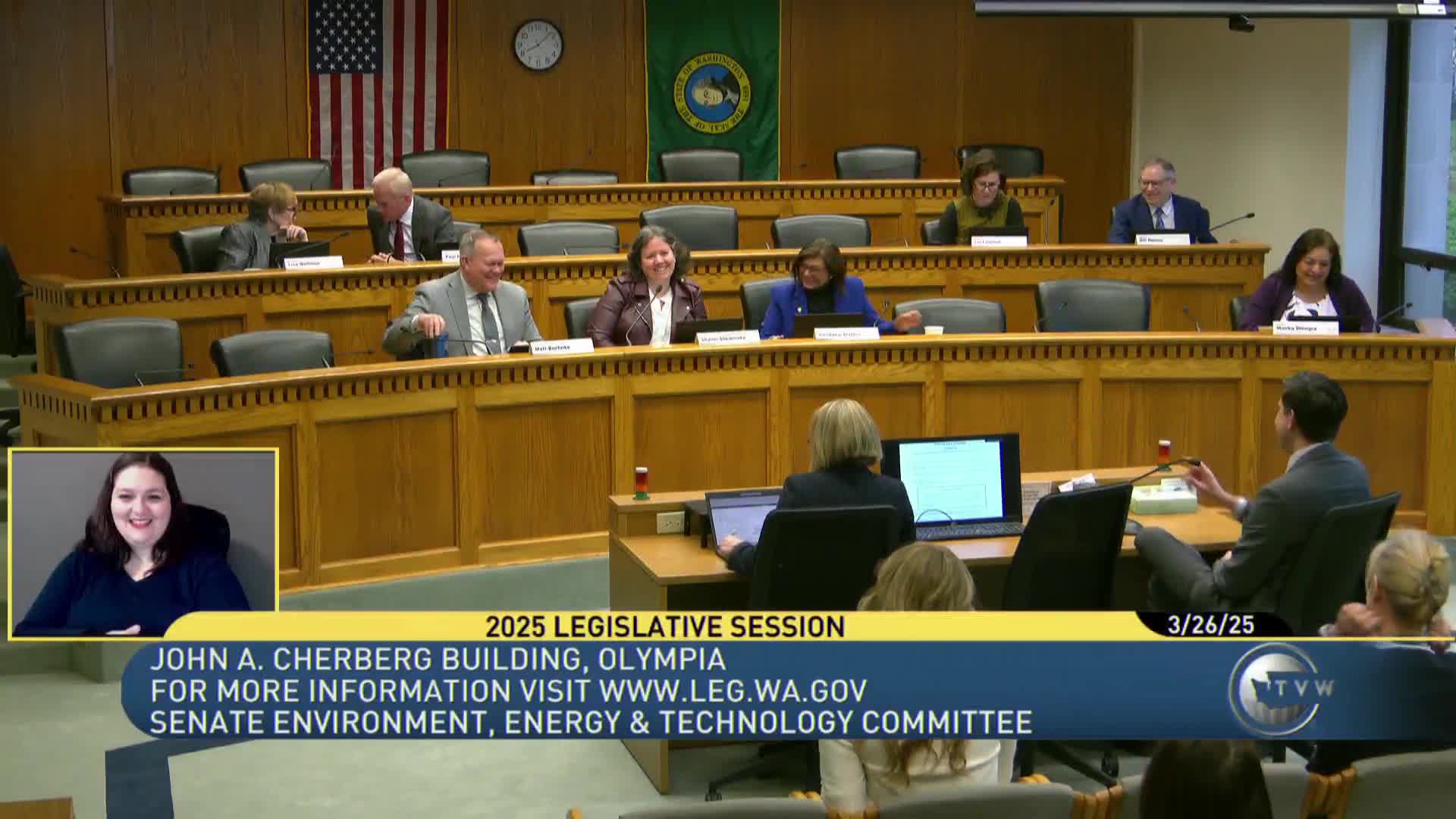
Staff briefed the Senate Environment, Energy & Technology Committee on second substitute House Bill 1514, which encourages deployment of low‑carbon thermal energy networks and proposes a regulatory pathway under the Utilities and Transportation Commission (UTC) for thermal energy companies.
Kim Cushing, staff to the committee, described thermal energy networks as ‘‘piped noncombustible fluids that transfer heat into and out of buildings’’ and said the bill authorizes UTC oversight while carving out exemptions for systems with fewer than five independent customers or fewer than 250 households, and for systems already in operation or under development before July 1, 2025. The bill would also allow companies not subject to UTC regulation to opt in in writing and then remain regulated.
Rep. Alex Ramel, the sponsor, said thermal energy networks combine district heating concepts with heat‑pump technology to create high efficiencies and provide a potential pathway for workers and firms in fossil‑fuel trades to participate in clean energy jobs. ‘‘One unit of electricity turns into six units of heat,’’ Ramel said in describing efficiency gains observed elsewhere.
Municipal and industry proponents told the committee they support UTC oversight as a means to guarantee fair rates and consumer protections. Michael Hogan of the Port of Bellingham described the waterfront district energy connection in his city and said the lack of UTC oversight created complications for rate structures and ratepayer representation; the port joined a private operator that now owns and operates the system. John Rothlin of Avista and other utilities said the bill preserves flexibility while creating a pathway for regulation. Representatives of Puget Sound Energy and Avista said the technology can deliver clean energy at scale and that pilot programs are underway.
No final committee vote was recorded in the hearing transcript; staff closed the public testimony after numerous proponents and hundreds of registered parties who did not testify were noted.