Get Full Government Meeting Transcripts, Videos, & Alerts Forever!
Get email alerts on the Facilities topic
No spam. Unsubscribe anytime.
Kent School District presents capital projects update and draft capital facilities plan; levy funds described
Summary
District staff gave the board an update on bond and levy projects, an inventory of projects from prior bond measures and a draft capital facilities plan required to collect school impact fees.
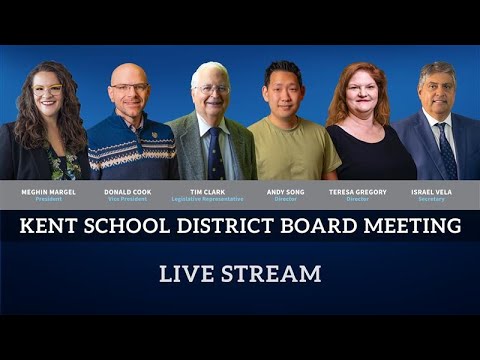
Assistant Director of Capital Projects Brett Scribner and Executive Director of Operations Dave Buzzard presented an update on the district’s capital projects and the draft Capital Facilities Plan (CFP) at the board’s March 26 meeting.
Scribner told the board the district tracks multiple measures: the 2016 bond (102 projects broken into 106 tracked items including court separations and a property purchase), the 2018 bond/levy (originally 307 projects with 6 added) and the 2024 capital and technology levy approved by voters for $97 million, of which $73 million is allocated to capital projects. He said 90 of the older projects are complete, 14 are in progress and two not yet started; the team expects to complete the 2016 bond projects by the end of fiscal 2025–26 and the 2018 projects by fiscal 2026–27.
Buzzard presented the district’s CFP draft and explained why the district must maintain an adopted CFP to collect school impact fees under the Growth Management Act and King County code. The CFP includes the district’s educational program standards, inventory of seats, enrollment projections, capacity analyses and a financing plan. Buzzard noted the district cannot collect impact fees unless it has an adopted plan and advised the board the district has not been eligible to collect impact fees since 2023.
The presentation included enrollment and capacity context: post‑COVID enrollment declines have reduced growth projections in many places; however, the district faces aging facilities — average school age about 40.6 years, with the oldest at 86 and the newest at four years. Buzzard also outlined upcoming levy-funded priorities, including energy-management upgrades, ventilation work, backflow and drainage replacements, select bus loop and parking upgrades, and site specific projects such as a Scenic Hill multimedia center and Meadowridge fire alarm work.
Board members asked about project budgets, whether bond funds are tied to particular locations, how the district coordinates with Kent and Covington planners about development pipelines (including the Lake Point large‑lot development), and how impact-fee student generation rates have changed. The district’s consultant has observed a decline in student generation rates for multifamily housing (from roughly 22 students per 100 units to about 14 per 100 units), which reduces projected new-student counts from new multifamily developments. Buzzard said the district will continue monthly and then biweekly CFP work cycles, present a draft to King County for technical review by May 12, and bring an adopted CFP to the board for approval in July.
Scribner thanked the community for past support of bond and levy measures and noted the district anticipates completing the levy-funded projects by the end of fiscal 2028–29. Buzzard urged ongoing community engagement through the district’s KSD Together group as the district develops bond and levy proposals for the 2027–2028 cycle.