Get Full Government Meeting Transcripts, Videos, & Alerts Forever!
Get email alerts on the Covenant Homeownership topic
No spam. Unsubscribe anytime.
Committee recommends changes to covenant homeownership loan-forgiveness provisions but rejects narrowing amendment
Summary
The Senate Housing Committee advanced House Bill 1696, modifying the Covenant Homeownership Program to raise eligibility AMI caps and authorize loan forgiveness under conditions; the committee rejected an amendment that would have limited forgiveness eligibility to children and grandchildren of certain historically excluded residents.
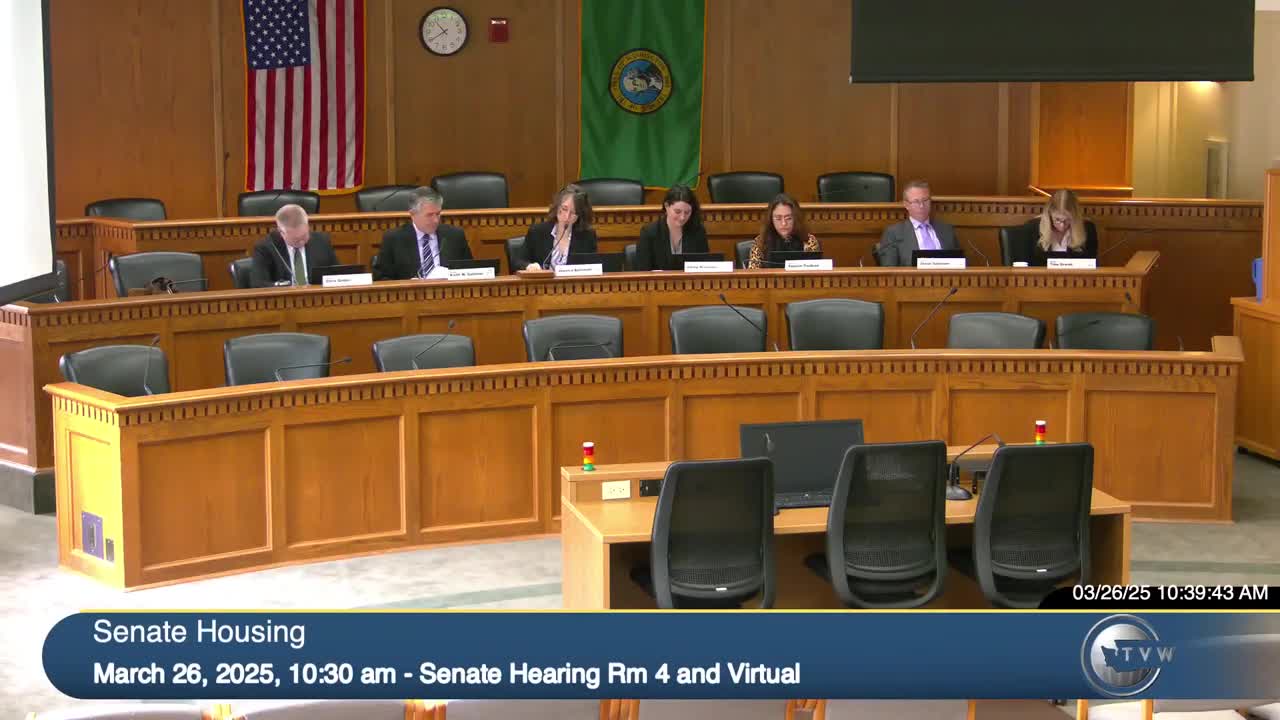
Second Substitute House Bill 1696, which would modify the Covenant Homeownership Program by raising area median income eligibility to 120% and authorizing loan forgiveness in certain circumstances, received a due-pass recommendation from the Senate Housing Committee on March 26.
Melissa Van Gorka, staff to the committee, summarized the bill and noted that while a fiscal note showed no immediate state fiscal impact, expanding eligibility and authorizing loan forgiveness could reduce loan repayments that currently replenish the Covenant Homeownership account.
Why it matters: The program is designed to expand homeownership opportunities, particularly for populations harmed by historic discriminatory covenants; changes to eligibility and loan-forgiveness terms would affect who can access the program and the program’s long-term sustainability.
Amendment debate and outcome: Senator Gildan offered amendment C to require that the loan forgiveness program expire once the children and grandchildren of Washington residents who were excluded from homeownership by racially restrictive covenants on or before April 11, 1968, have been served; the amendment would also require the oversight committee to review program activities and report the date the loan forgiveness program would conclude. Gildan framed the amendment to narrow and clearly define the beneficiary group, saying she wanted to “change it from descendants to children and grandchildren” so the universe of eligible people could be measured. Committee leadership questioned whether limiting eligibility in that way was appropriate at committee stage; the committee voted not to adopt C (voice vote; amendment not adopted).
Senator Trudeau urged continued work on the program’s goals and described the measure as a government response to historical harms: “When government causes harm, we also have a responsibility to respond and repair it,” he said.
Outcome and next steps: The committee rejected amendment C and then gave the bill a due-pass recommendation to Ways and Means. The transcript records the bill as having passed subject to signatures; numeric roll-call tallies for the committee actions were not provided.
Implementation notes: Staff flagged that the loan-forgiveness component could reduce repayments into the program account, potentially affecting sustainability; the oversight committee would be required to review activities if amendments like C were adopted. The bill contains an amendment (C) that was not adopted; program details and any sunset/termination mechanics depend on final enacted language.
Ending note: Lawmakers expressed support for addressing historical exclusion from homeownership while debating how to define and limit the beneficiary population and how to preserve program sustainability.