Get Full Government Meeting Transcripts, Videos, & Alerts Forever!
Get email alerts on the Housing Rent Stability topic
No spam. Unsubscribe anytime.
Senate panel advances rent-cap bill with amendments after divided debate
Summary
The Senate Housing Committee moved engrossed House Bill 1217, which caps annual rent increases and adds tenant protections, to Ways and Means after adopting a striking amendment; an attempt to broaden the amendment failed earlier in the session.
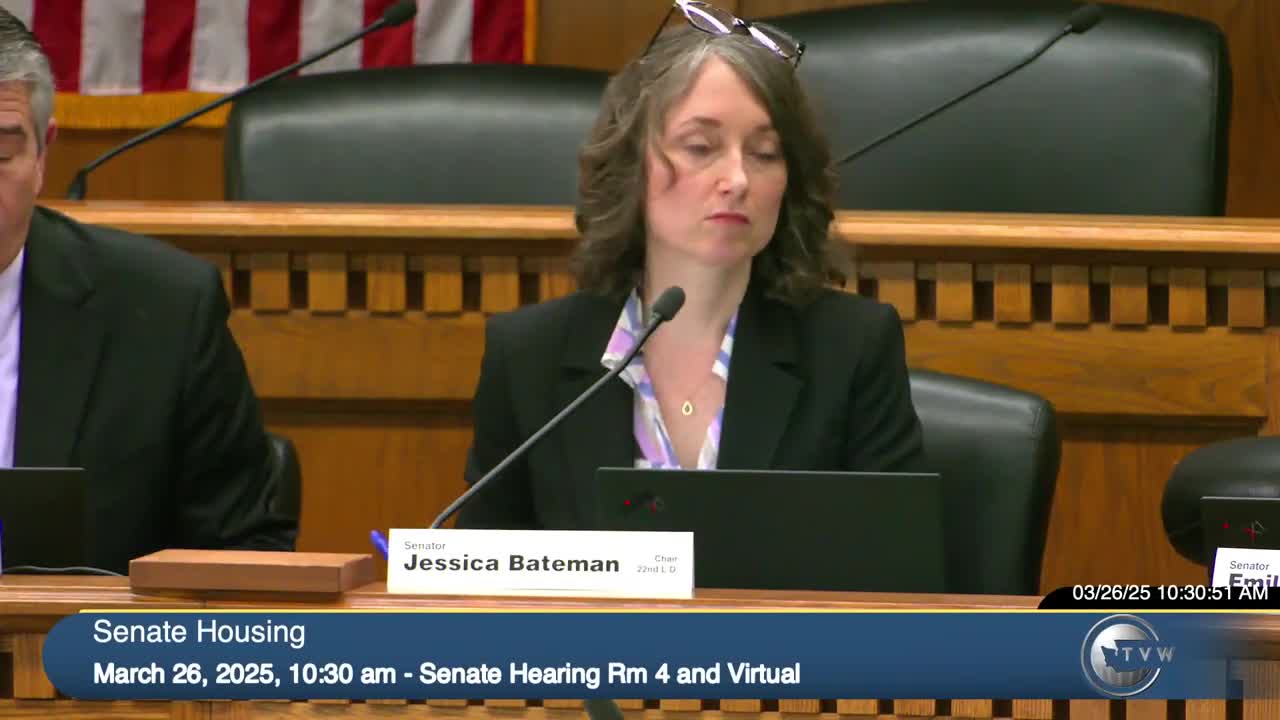
Engrossed House Bill 1217, a measure to limit annual rent increases and add other tenant protections, received a due-pass recommendation from the Senate Housing Committee on March 26 and was sent to the Ways and Means Committee.
The bill would cap annual rent increases at 7% for most rental properties, prohibit rent increases during the first 12 months of tenancy and during any subsequent 12-month period, and require at least 90 days' written notice before landlords raise rent. The measure also specifies penalties and enforcement mechanisms, including private causes of action and authority for the Attorney General to bring enforcement actions and seek civil penalties.
Bill Fosbury, staff to the committee, summarized the bill for members and described the scope of the proposed limits and exemptions. He said, “This bill caps annual rent increases at 7% for most rental properties and prohibits rent increases during the first 12 months of tenancy and during any 12 month period thereafter.”
Why it matters: Committee members framed the measure as an attempt to stabilize housing costs for tenants while balancing owners’ interests. Supporters said the bill provides predictability for households facing rising rents; opponents warned of unintended consequences for property owners and the housing supply.
Key provisions and debate: The bill as presented would: - Cap most rent increases at 7% per year and bar increases within the first 12 months of a tenancy and in any subsequent 12-month period. - Require 90 days' written notice before a rent increase; allow landlords to increase rent without restriction when a unit is vacated. - Prohibit landlords from reporting tenants to screening services for nonpayment attributable to an unlawful rent increase. - Exempt newly constructed buildings (up to 12 years), owner-occupied properties with small rental units (single-family with up to two rental units and duplexes/triplexes/fourplexes where the owner lives on-site), and certain regulated affordable housing units. - For manufactured/mobile home tenancies, allow a one-time rent increase under some transfers and set deposit and late-fee rules specific to those laws. - Allow tenants or the Attorney General to sue for violations; courts may award up to three months of unlawfully charged rent plus attorney fees and costs.
Committee discussion centered on the scope of exemptions and enforcement. Senator Gaynor moved an amendment (A.1) that would have removed certain exemptions for nonprofits and public housing authorities to make the policy uniformly apply to all providers. Gaynor argued: “If this is a good policy, it should apply to all.” Senator Gildan urged a no vote, saying public housing authorities and nonprofit organizations operate under federal rules that could conflict with a statewide cap. The committee rejected Gaynor’s amendment (voice vote; outcome recorded as nay and the motion was not adopted).
Senator Alvarado offered a striking amendment (the committee’s primary amendment), which staff summarized as removing the perjury requirement for landlord notices, setting a July 1, 2045 expiration date for the bill’s first three sections, directing a 10-year review by the Joint Legislative Audit and Review Committee, clarifying allocation of damage awards and attorney fees depending on the filer of a suit, authorizing the Attorney General to pursue penalties up to $7,500 per violation and to issue civil investigative demands, and modifying how the rent-cap interacts with manufactured/mobile home law (including changing a 7% cap to 5% in some manufactured-home provisions in the amendment). Alvarado described the amendment as seeking compromise and operational fixes.
Supporters and opponents reiterated broader concerns. Senator Alvarado said the bill “lets landlords set the rent at however they would like” while providing guardrails that “balance a little bit with the interest of the tenant who relies on that housing.” Senator Gaynor and others warned of conflicts with other policy proposals (for example, changes to property-tax rules) and urged caution about regulatory impacts on private housing providers.
Outcome and next steps: The committee adopted the striking amendment and gave the bill a due-pass recommendation to the Ways and Means Committee; the committee then recorded that the bill “has passed, subject to signatures.” The transcript does not list roll-call tallies for the committee vote. The bill previously passed the House 53–42, according to staff.
What remains uncertain: The final enacted text will depend on further floor actions and any changes adopted by the full Senate or in conference. The department-level implementation item in the bill (a social vulnerability assessment by the Department of Commerce) was made subject to availability of funds in the committee’s summary and the striking amendment removed the requirement that the Department contract with an independent third party for that assessment.
Ending note: Committee debate reflected a balance between tenant-stability goals and concerns about impacts on housing providers and regulatory complexity; lawmakers flagged a 10-year review and a 2045 sunset on parts of the act to allow future reexamination.