Get Full Government Meeting Transcripts, Videos, & Alerts Forever!
Get email alerts on the School Improvement topic
No spam. Unsubscribe anytime.
Three elementary schools report improved mid‑year literacy and math growth after UVA PLE partnership
Summary
Principals and teachers from Peir/Peyer, Rosenau (Roseno) and Waters schools reported mid‑year gains in I‑Ready assessments and described second 90‑day action plans developed through the University of Virginia Partnership for Leaders in Education.
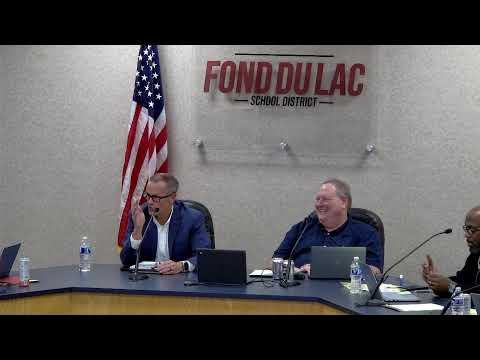
Principals and teacher teams from three Fond du Lac elementary schools told the district board on Jan. 27 that instructional changes made as part of the University of Virginia Partnership for Leaders in Education (PLE) have produced measurable mid‑year gains and concrete short‑term plans for continued improvement.
At Peir/Peyer School, leaders said a focus on collaborative instructional planning, exemplar lesson plans, scaffolding and active monitoring has increased both typical and stretch growth in literacy and math as measured by I‑Ready. Presenters reported that teachers expanded the depth of lesson planning beyond math to include literacy and that they are using a shared spreadsheet to track targeted instruction and exit‑slip assessments.
At Rosenau, leaders reported a mid‑year increase in reading proficiency from 36% to 42% and math proficiency from 32% to 40%, putting the school on track for its year‑end goal of raising proficiency by 7 percentage points. Rosenau described a schoolwide emphasis on observation of high‑performing teachers, teacher collaboration and data‑driven instructional planning.
At Waters, presenters said district coaching and weekly data‑driven instruction (DDI) meetings have supported significant gains. Waters reported an increase in students at or above grade level in reading from 29% in the fall to 43% mid‑year; math rose from 22% to 43% mid‑year. Speakers highlighted targeted lit and win time, CKLA coaching cycles, collaborative learning walks and monthly progress monitoring that includes special education and EL staff.
Board members and administrators praised the leadership teams and highlighted the district's focus on disaggregated data and closing gaps for student groups, including students with IEPs and English learners. Presenters said some gaps persist for emerging bilingual students and described plans to add targeted walkthroughs and coaching with EL staff.
The board received the presentations without a formal vote; administrators said they will continue to monitor i‑Ready and other measures through the second semester and report back.