Get Full Government Meeting Transcripts, Videos, & Alerts Forever!
Get email alerts on the Hearing Examiners Local Government topic
No spam. Unsubscribe anytime.
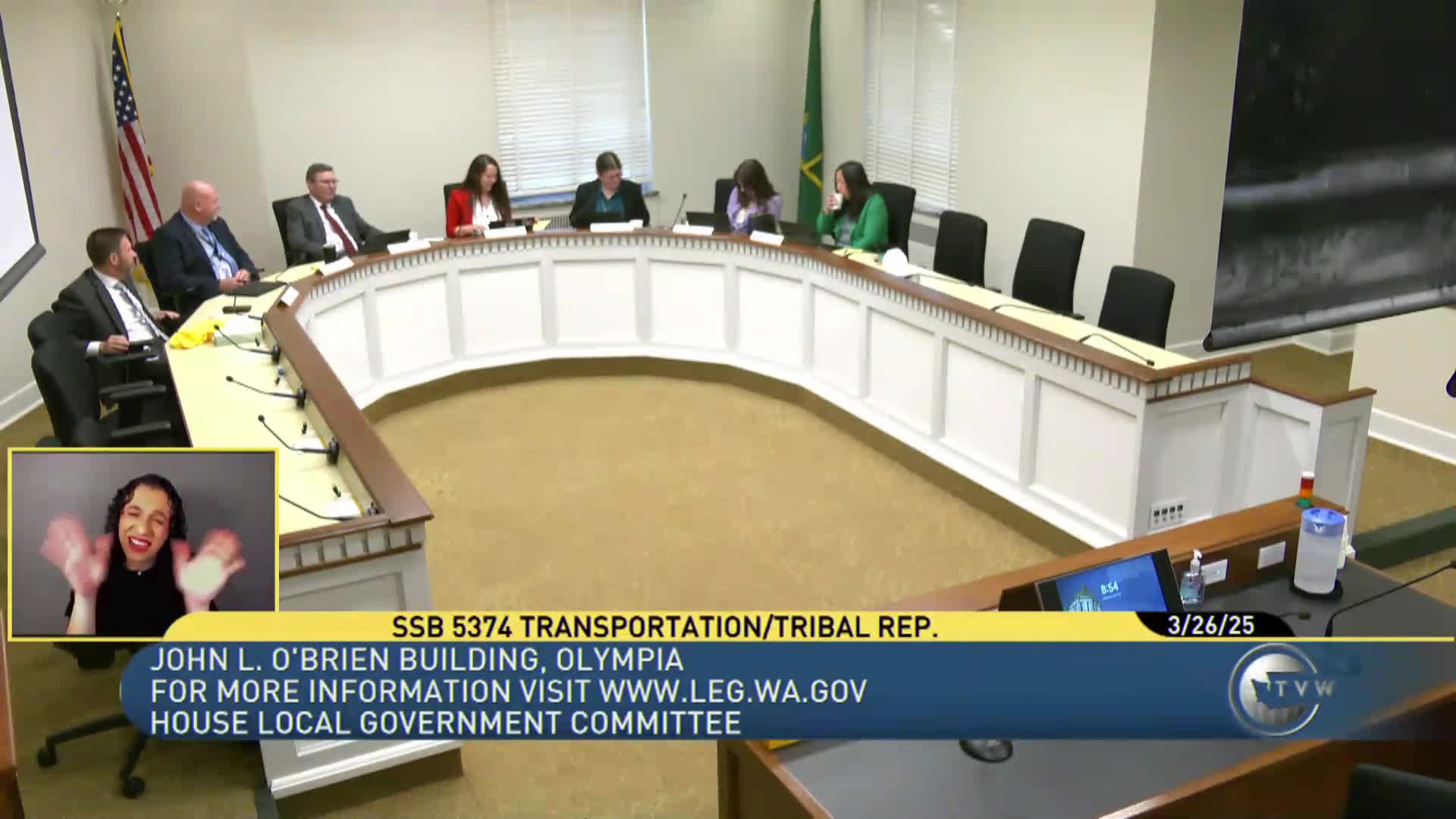
Committee adopts amendment and reports bill on hearing examiners out of committee; vote splits along procedural lines
Summary
Engrossed substitute Senate Bill 5719, which revises hearing‑examiner requirements and replacement procedures for cities and counties, was amended and reported out of committee with a due‑pass recommendation.
The committee considered engrossed substitute Senate Bill 5719, which makes changes to statutory requirements for required hearing examiner systems in cities and counties and clarifies who may act in the place of a hearing examiner when one is not available.
Kellen Wright, committee staff, summarized two proposed striking amendments and a follow‑on amendment that would: exempt certain rural counties from the hearing‑examiner requirement; define “rural county;” and allow the county legislative authority or city legislative body to assume duties of a hearing examiner when none is available, subject to specified findings and conditions. The striking amendment that was adopted also removed plat approval from the list of applications that must be heard by a required hearing examiner.
A motion to report the bill out of committee with a due‑pass recommendation was moved by Vice Chair Farshley and seconded. The committee then adopted the striking amendment AMH LG h2039 as amended by Rick 405. Representative Clicker moved Rick 405, which would exempt rural counties that plan under the Growth Management Act from the hearing‑examiner requirement; the committee adopted that amendment.
The committee voted on final passage to report SB 5719 out of committee with a due‑pass recommendation. The roll-call recorded the following votes as read into the record: Representative Doer — Aye; Representative Partially — Aye; Representative Clicker — Nay (no recommendation); Representative Stevie — Nay (no recommendation); Representative Griffey — Nay (do not pass); Representative Hunt — Aye; Representative Zahn — Aye. Staff announced the tally as four ayes and three nays; the bill was reported out of committee with a due‑pass recommendation.
The committee’s discussion emphasized a policy preference for hearing examiners to relieve elected officials of quasi‑judicial duties but inserted flexibility recognizing workforce and capacity challenges in smaller jurisdictions. Several members signaled continued concerns about mandatory changes for counties with limited staff or resources.