Get Full Government Meeting Transcripts, Videos, & Alerts Forever!
Get email alerts on the Cannabis Market Structure topic
No spam. Unsubscribe anytime.
Hearing on bill to close management-agreement loophole that allows retailers to exceed five-license cap
Summary
Engrossed Substitute Senate Bill 5403 would bar arrangements that give entities a financial interest in more than five retail cannabis licenses; supporters said the change would protect small retailers and producers, while some witnesses urged broader, open approaches to future competition.
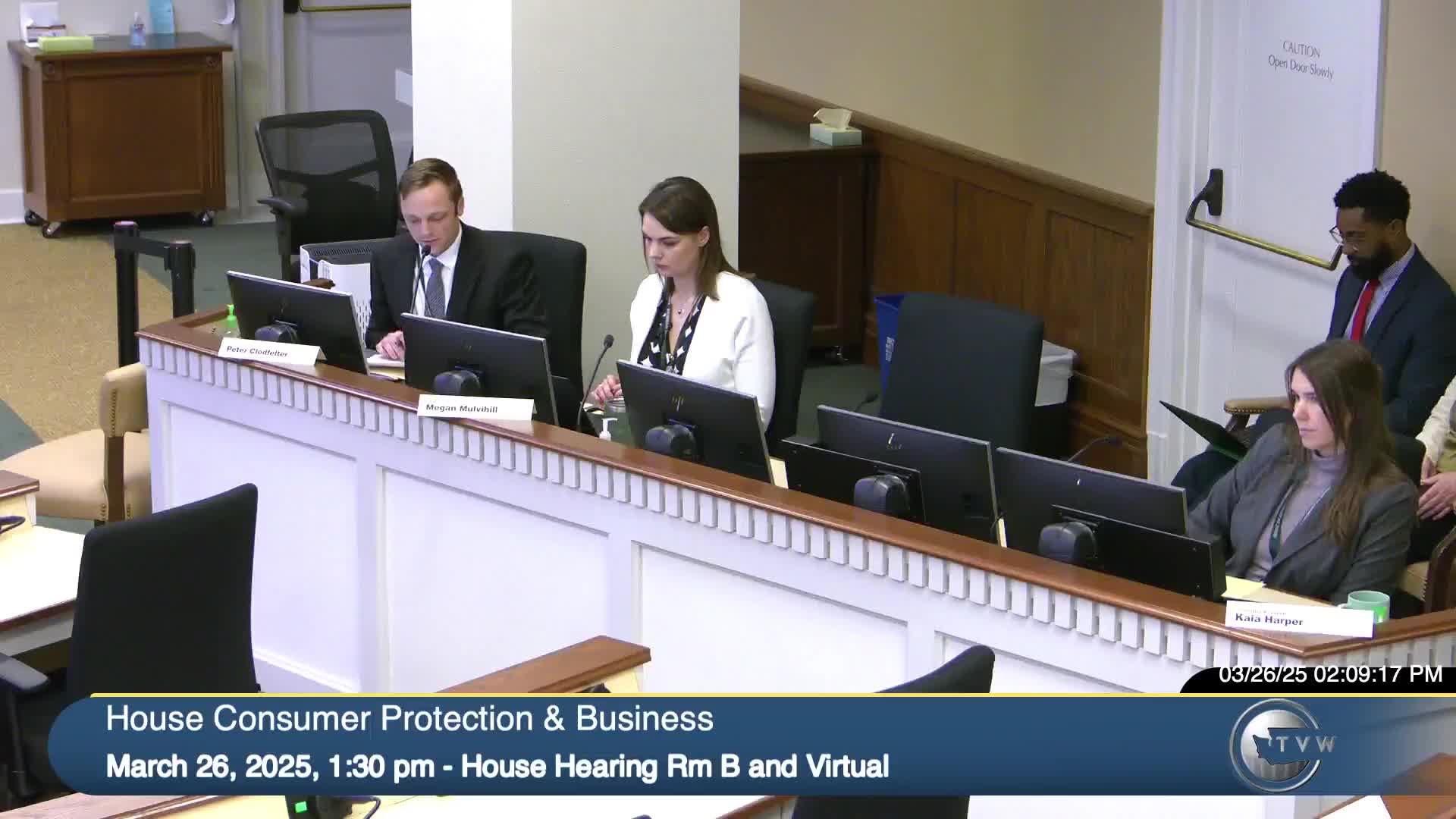
The Consumer Protection & Business Committee held a public hearing Wednesday on Engrossed Substitute Senate Bill 5403, a measure aimed at preventing large operators from using management, trademark or similar agreements to exert control over more than five retail cannabis licenses.
Peter Clodfelter, staff to the committee, explained that Washington law currently limits an individual cannabis retail licensee and related owners to an aggregate of five retail licenses, and separately authorizes certain agreements (for trademarks, trade names, trade dress, services, etc.) that must be disclosed to the Liquor and Cannabis Board (LCB). Clodfelter said the bill would prohibit a licensee and its owners from entering agreements that confer a "financial interest" in more than five retail licenses; the bill defines financial interest to include negotiating purchases, operational control, profit sharing, marketing cost-sharing, and shared hiring decisions.
Industry witnesses — including the Washington Cannabis Licensee Association, the Cannabis Alliance and numerous small retailers and producers — testified strongly in favor. Trent Mattson of the Washington Cannabis Licensee Association said the industry has "seen a rise in chain operations with 10 or more stores circumventing the spirit and intent of the law and regulations," and told the committee those arrangements have driven down prices, threatened small retailers and pressured producers with deep discounts.
Producers and family farms described the local impact. Amy Ross, a producer, said her family's farm and similar small producers are being pressured by discounting and buy-back demands tied to large retail operators. Nate Loving, owner of Loving Farms in Mount Vernon, described becoming the only local store after competitors closed and said large chains' pricing practices have made it difficult to remain viable.
Supporters said the measure clarifies existing statutory intent and gives LCB clearer authority to address market consolidation. Micah Sherman, who said he authored the original bill draft, framed the issue as one of market structure and referred to federal antitrust considerations in limited-license systems. Some witnesses urged the committee to balance near-term protections for small businesses with longer-term planning for interstate competition should federal policy change.
No committee vote occurred at this hearing; the public hearing concluded with offers to provide additional materials and testimony. Several witnesses noted the bill had broad support in the industry but also advocated parallel steps to ensure Washington businesses can scale responsibly if and when federal policy changes.
Ending: Committee staff will accept additional submissions and proposed language; no final action was taken at this meeting.