Get Full Government Meeting Transcripts, Videos, & Alerts Forever!
Get email alerts on the Fire Loss Reporting topic
No spam. Unsubscribe anytime.
Committee hears bill moving fire-loss reporting from State Patrol to Insurance Commissioner
Summary
A public hearing on Substitute Senate Bill 54-19 focused on moving insurer fire-loss reporting to the Office of the Insurance Commissioner, confidentiality protections, and immunity for insurers reporting suspected criminal activity.
Members of the Consumer Protection & Business Committee heard a staff briefing and public testimony Wednesday on Substitute Senate Bill 54-19, which would change who receives insurer reports of fire losses and add confidentiality and immunity provisions.
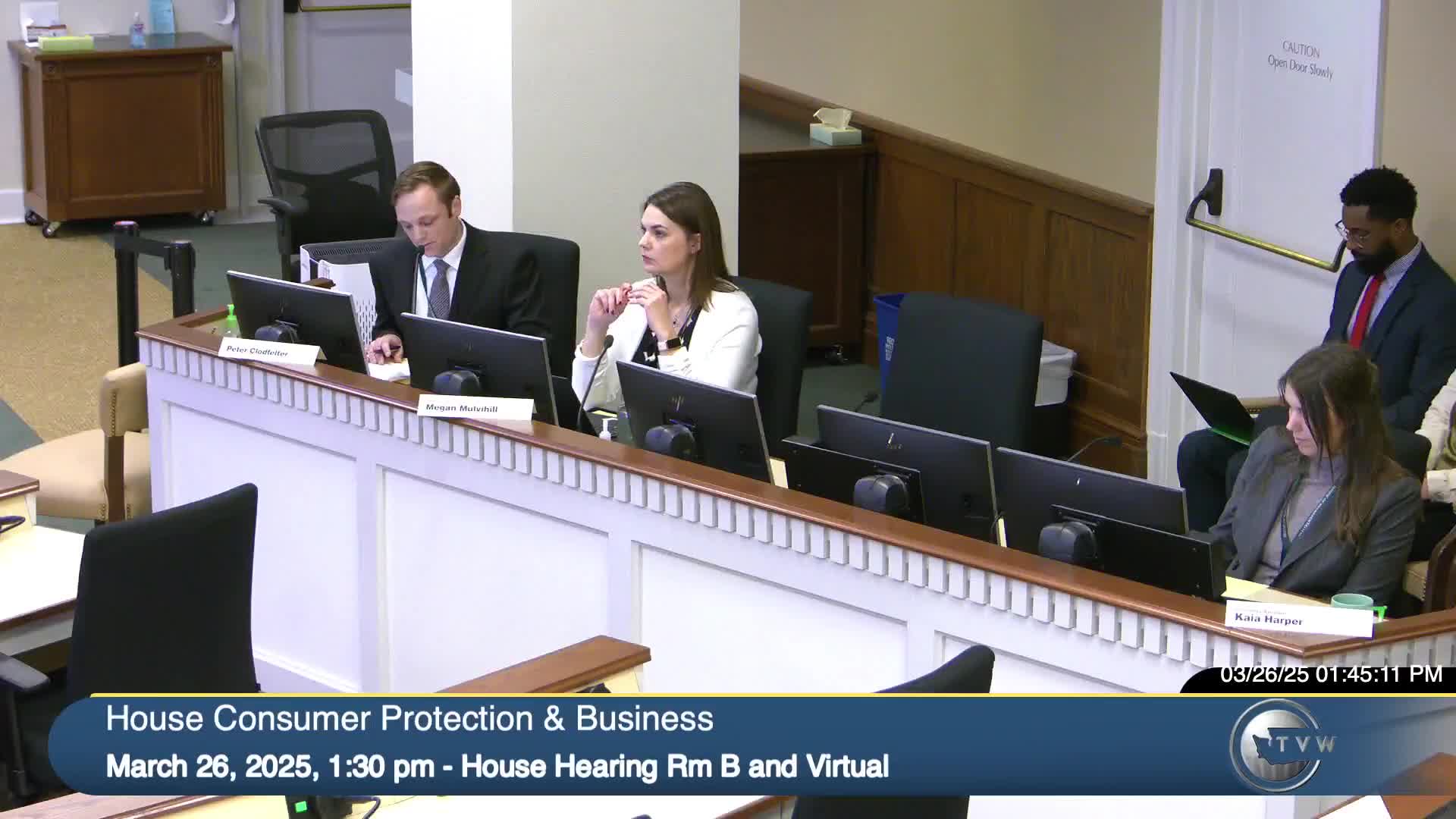
Megan Mulvihill, staff to the committee, summarized the bill, saying current law requires insurers to report fire losses to the Washington State Patrol chief and transmit copies to the insurance commissioner. Under the substitute Senate bill, "within 90 days of closing a claim or investigation related to fire loss or damage, an insurer must report the fire loss to the office of the insurance commissioner rather than the chief of the Washington State Patrol," Mulvihill said.
The bill would also require that when an insurer "knows or suspects that a fire loss or damage may be due to criminal activity, [the] insurer must immediately report to the local or tribal law enforcement agency and the insurance commissioner the details of the loss or damage and the basis for the insurer's knowledge or suspicion of criminal activity," Mulvihill added. The measure would allow the insurance commissioner to receive copies of claims investigations on request and would require law enforcement to share such information with designated fire officials.
Supporters who testified included local fire officials and the Office of the Insurance Commissioner (OIC). Brian Welch of the OIC said the proposal reflects years of discussion between the OIC, the State Patrol and the State Fire Marshal's Office and noted that the data currently are not being collected consistently. Welch said the OIC and fire agencies "have all been very supportive of this process" and that the OIC supports narrowing the data to be collected and allowing up to a year after rulemaking for industry to prepare.
Insurance-industry testimony reflected mixed concerns. Jean Leonard, representing Washington insurers, said amendments to the House companion bill narrowed the scope of data but that the bill "still retains a lot of sensitive information" and urged the committee to preserve confidentiality protections. Roland Thompson of Allied Daily Newspapers urged keeping certain categories public, saying access to origin and cause information is important to affected citizens and to assess insurer performance after large wildfires.
The bill would provide insurers immunity from civil liability for reporting known or suspected criminal activity unless actual malice is shown, and it would make reports and related materials confidential and exempt from public disclosure, with enumerated sharing exceptions (for example, to the National Association of Insurance Commissioners, law enforcement, the state fire marshal and certain state agencies). Mulvihill noted several provisions that appeared in a substituted House version — permitting reporting via third-party vendor, delaying enforcement until one year after OIC rulemaking, and limiting required reporting of origin and cause to determinations — are not included in the substitute Senate bill.
No formal action was taken in committee on SSB 54-19 at this hearing; the committee received testimony and closed the public hearing.
Ending: The record on SSB 54-19 will remain open for review by members; staff and witnesses said they would provide additional materials to the committee.