Get Full Government Meeting Transcripts, Videos, & Alerts Forever!
Get email alerts on the Childcare Military Providers topic
No spam. Unsubscribe anytime.
Bill would exempt federal‑military‑certified family‑home childcare from duplicate state licensing; supporters say it eases access near bases
Summary
Substitute Senate Bill 5545 would exempt family‑home child care providers in the surrounding metropolitan area of federal military reservations that are overseen and certified by a federal military service from DCYF licensing; witnesses said the change would reduce redundant regulation and expand care options for military and civilian families.
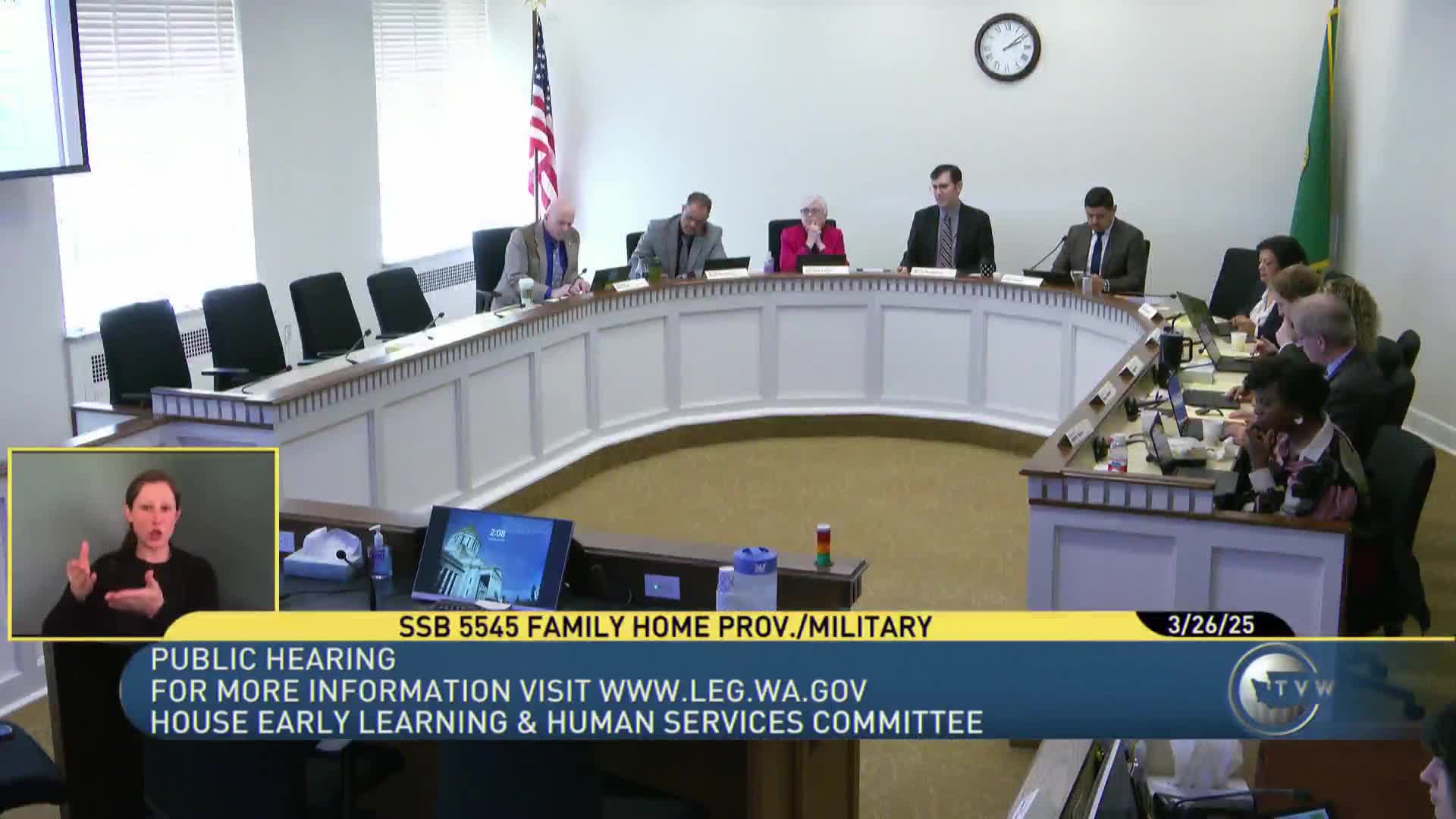
House committee staff described Substitute Senate Bill 5545 as an exemption from Washington state Department of Children, Youth and Families (DCYF) licensing for family‑home childcare providers that are in the surrounding metropolitan area of a federal military reservation and already overseen and certified by a federal military service. Staff told the committee DCYF would still be required to investigate any referrals of child abuse or neglect occurring at those sites.
Witnesses who testified in support told lawmakers the change would reduce redundant regulation for providers near military installations and expand access to care slots. Sam Loberg of Upwards, a nationwide child‑care network serving military families, said federal military oversight is rigorous and that the bill would streamline requirements for providers already meeting federal standards. Jake Mason of Greater Spokane Incorporated said the bill would help address child‑care shortages near installations such as Fairchild Air Force Base by allowing military‑certified providers to operate off base without carrying two separate licenses; he said the bill preserves safety oversight by keeping DCYF investigatory authority for abuse and neglect referrals.
Committee staff outlined licensing basics for family‑home providers in current law: family‑home providers may serve up to 12 children, maintain an annual licensing fee (stated in testimony as $30), comply with licensing rules, submit background checks, and meet inspection and reporting requirements. Staff described existing licensing exemptions (relatives, parent cooperatives, tribal‑licensed programs and others) and said the proposed exemption applies only where a federal military service currently certifies the provider and the provider is located in the surrounding metropolitan area of a federal installation.
Witnesses urged the committee to pass the bill to expand viable care options near military bases and to reduce administrative burdens that can discourage providers from operating off base. No committee vote took place during the public hearing; staff closed the hearing and moved on to the next agenda item.