Get Full Government Meeting Transcripts, Videos, & Alerts Forever!
Get email alerts on the Long Term Care Memory Care topic
No spam. Unsubscribe anytime.
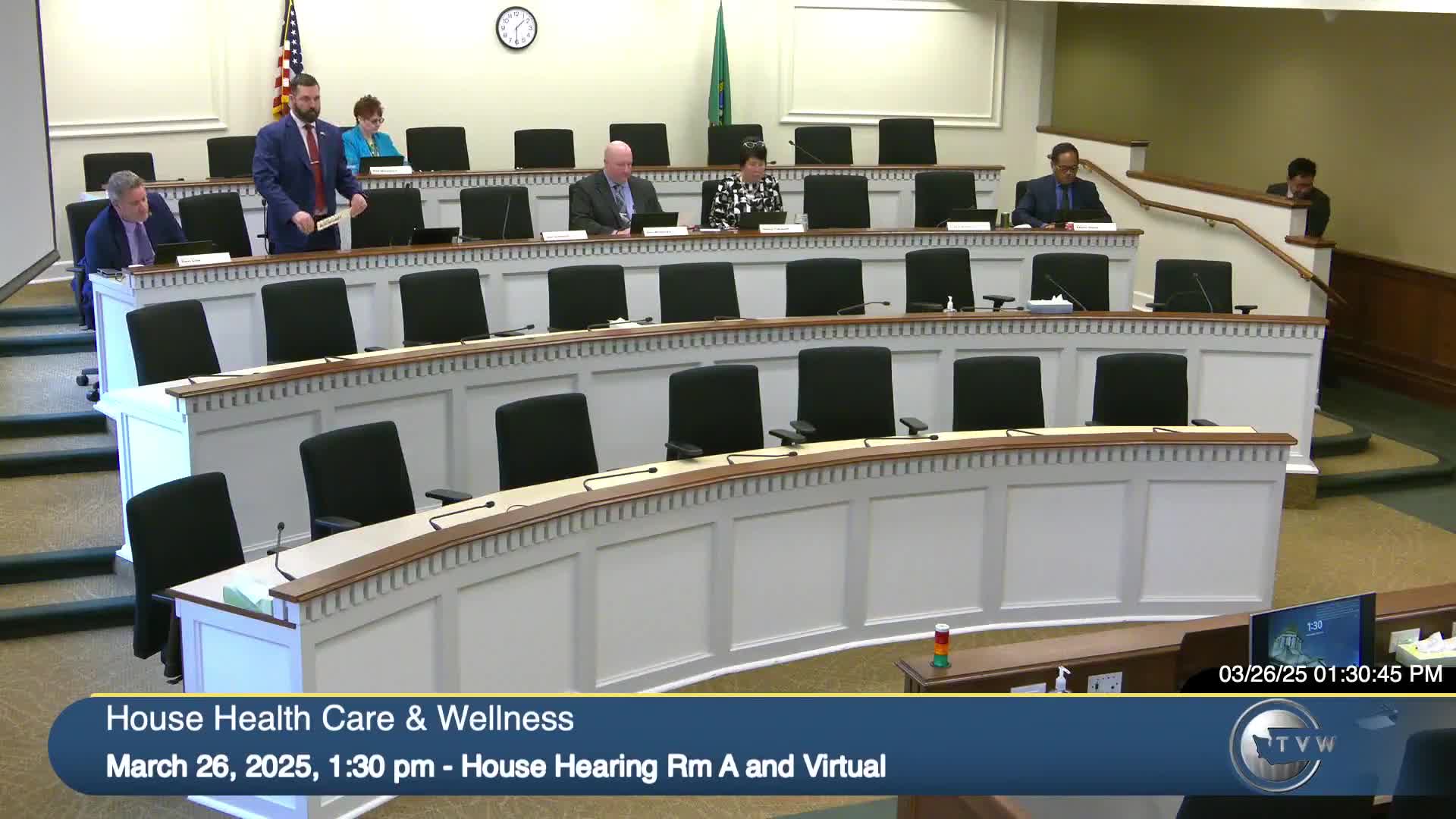
Committee hears testimony on bill to require certification, disclosures for memory care units
Summary
Engrossed Second Substitute Senate Bill 5,337 would require assisted living facilities that operate memory care floors or units to obtain certification from the Department of Social and Health Services beginning July 1, 2026, and would prohibit facilities from marketing themselves as memory care unless certified.
Engrossed Second Substitute Senate Bill 5,337 would require assisted living facilities that operate memory care floors or units to obtain certification from the Department of Social and Health Services beginning July 1, 2026, and would prohibit facilities from marketing themselves as memory care unless certified.
The bill, introduced to the House Healthcare & Wellness Committee, defines memory care as assisted living that markets itself as dedicated to persons with dementia or that uses restricted egress to prevent residents with cognitive impairment from leaving. Chris Blake, committee staff, summarized the measure and said certification requirements include a staffing plan, semiannual resident assessments, mandated staff dementia training, outdoor areas and disaster preparedness that accounts for dementia residents.
Sponsor Senator Tina Orwell (Sen.) said the bill grew from constituent reports of poor care. "The bill before you is about providing protections and services to some of our most vulnerable seniors," Orwell said, adding a stakeholder work group included industry, family members, AARP, advocacy groups and DSHS.
Family members, caregivers and advocates gave extended testimony supporting the bill and described care problems at several facilities. Anthony Ledesma, a former worker at Aegis Living in Greenwood, said, "I've seen understaffing lead to serious risks for memory care residents at facilities like Aegis." He described shifts with too few certified nursing assistants, inexperienced replacements called in when staff were absent, falls and residents left outdoors at night.
Other witnesses described similar concerns: Ginger Jackson said her father lacked a functioning call button and was left without help; Theresa Matthews said her visits showed one nurse assigned to dozens of residents; Dimas Nistorenko of SEIU 775 testified, "There is no group of residents more vulnerable than memory care residents," and recounted accounts of missed medications, unresolved hygiene needs and alleged company settlements and NDAs related to complaints.
Provider and advocacy groups also testified in support with caveats. Brad Forbes of the Alzheimer’s Association said standardizing the definition and allowing DSHS oversight "gives families a clearer understanding of what they can expect." Glenn Meline of LeadingAge Washington urged careful rulemaking to avoid unintended consequences such as reduced access. Kathleen McCall of AARP called the bill a "critical first step" to create a baseline for memory care.
Committee members asked about staffing standards and funding. Witnesses and providers underscored that training and facility standards alone will not resolve systemic workforce shortages; several speakers urged parallel workforce and wage policy work.
No motion or formal committee vote was taken on SB 5,337 during the hearing; testimony was closed and the committee moved on to other bills.
The bill would also apply the state Consumer Protection Act to facilities that market unlicensed memory care services and allows DSHS to impose enforcement actions or grant conditional exemptions to prevent service disruption or resident displacement.
Supporters asked the committee to consider the bill as part of a broader conversation on workforce and oversight; providers agreed to participate in rulemaking if the measure passes.