Get Full Government Meeting Transcripts, Videos, & Alerts Forever!
Get email alerts on the Community Safety Places Of Worship topic
No spam. Unsubscribe anytime.
Committee hears testimony on bill making interference with places of worship a gross misdemeanor
Summary
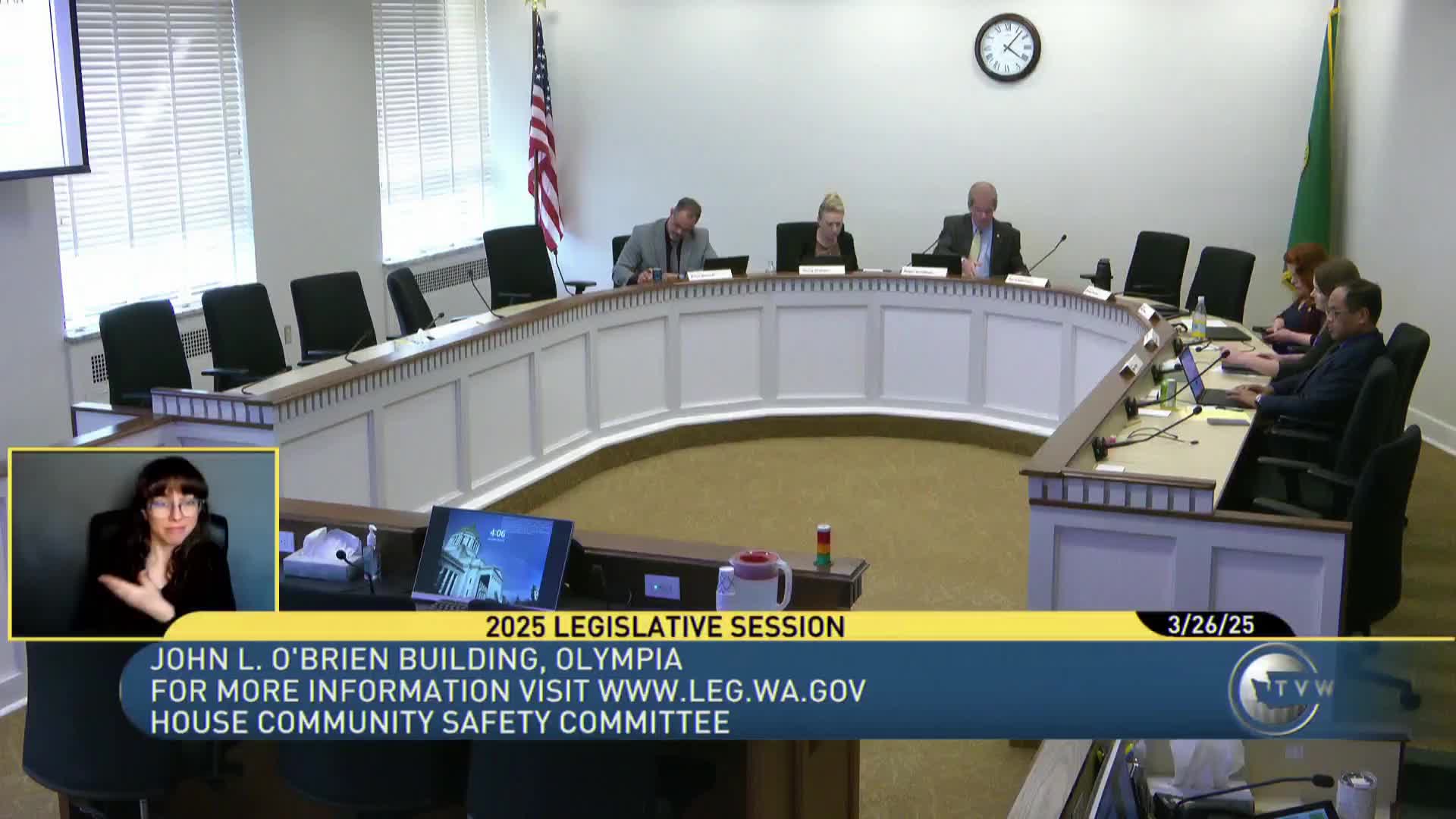
Substitute Senate Bill 54‑36 would create a new criminal offense for willfully or recklessly interfering with access to a place of worship, the House Community Safety Committee heard March 26 during a virtual public hearing.
Substitute Senate Bill 54‑36 would create a new criminal offense for willfully or recklessly interfering with access to a place of worship, the House Community Safety Committee heard March 26 during a virtual public hearing.
The bill, summarized for the committee by Lena Langer, staff to the committee, would bar actions such as physically obstructing ingress or egress immediately before, during, or after religious services; trespassing on the place of worship or its common areas; repeated electronic or telephone communications that harass the facility; and threats against attendees or property. The proposal classifies the offense as a gross misdemeanor and would permit aggrieved persons and religious organizations to seek civil damages, costs and attorney fees, and daily statutory damages in specified amounts.
Why it matters: Proponents said the measure fills a gap in state law for protecting congregants and places of worship from targeted obstruction and harassment. Opponents said the bill’s definitions could sweep in peaceful protest and chill free expression unless narrowed.
Kristen Eng, policy director for Faith Action Network, told the committee the bill “affirms the basic right of individuals to access their places of worship without fear, obstruction, or intimidation,” and said the measure “does not restrict free speech. It upholds the rights of all Washingtonians to practice their faith safely.”
Kenneth Kosai, director of policy for the Anti‑Defamation League Pacific Northwest, described the bill as modeled on a 1993 Washington law protecting health‑care facilities from obstruction and said it is “focused on conduct, not speech.” Kosai and other supporters said incidents of harassment, vandalism, and threats targeting religious communities have increased and that legal clarity and remedies are needed.
Opponents raised constitutional and practical concerns. Greg Thiesen, a church lay leader, said he was not aware of a broad stakeholder process and warned the bill’s criminal penalties and civil remedies could “place freedom of speech and assembly at odds with freedom of religion.” Reverend Amy Marie Epp and Reverend Megan Raymer, pastors representing small congregations, urged additional consultation with communities the bill intends to protect and warned the language on “place of worship” and “impeding” is vague and could be used against peaceful protesters.
Care Washington speakers proposed narrowing the bill’s civil compensation language. Katie Walker of Care Washington argued that the current “aggrieved person” definition could allow many people who were not directly harmed to claim compensation and urged limiting recovery to those directly affected by interference.
Puneet Kaur, senior state policy manager at the Sikh Coalition, and Kelsey Adams, speaking from her synagogue, described specific incidents of vandalism and harassment affecting Sikh and Jewish communities and said clearer statutory protection would help ensure congregants can worship without fear.
What was not decided: The hearing ended without executive action on SB 54‑36. Committee staff answered questions about the bill’s definition of “place of worship,” which the bill text defines as a location where persons regularly assemble for religious worship and which is maintained or controlled by a religious organization. Langer told members that language in the bill mirrors existing statute protecting access to health‑care facilities but that the bill itself concerns only places of worship.
The committee did not take a vote on the bill; public testimony concluded and the committee moved on to a second bill on the day’s agenda.