Lifetime Citizen Portal Access — AI Briefings, Alerts & Unlimited Follows
Newcastle planners consider voluntary inclusionary options; $13/square‑foot fee‑in‑lieu and 10% set‑aside among proposals
Loading...
Summary
Commissioners discussed draft affordable‑housing measures that could accompany upzones, including a 10% on‑site set‑aside at 80% area median income and an in‑lieu fee of $13 per square foot. Staff and ARCH offered to model feasibility; commissioners and public asked for more analysis and public outreach.
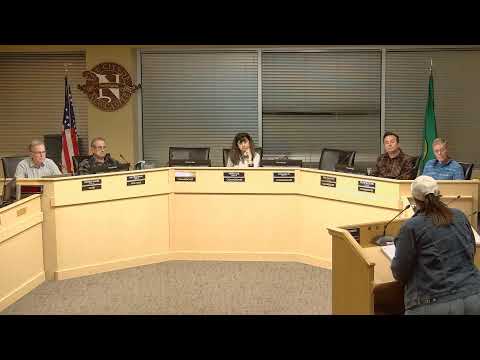
At the March 26 Newcastle Planning Commission meeting commissioners spent an extended portion of the agenda discussing voluntary affordable‑housing tools staff proposed to pair with state‑driven zoning changes.
Associate Planner Tyler Coyle framed the options as voluntary choices the city could make while it implements required middle‑housing and ADU code changes. Coyle described two principal approaches presented to the commission: (1) an inclusionary‑style requirement that would require developers to make a portion of new units affordable, and (2) a fee‑in‑lieu option that would let developers pay to satisfy the requirement instead of building affordable units onsite.
Key proposal summarized
- Inclusionary target: staff presented a draft framework that would require 10% of units in qualifying developments to be affordable at 80% of area median income (AMI) with rounding rules so whole units are built onsite and fractional shares handled by fee‑in‑lieu or other options. Staff used 80% AMI as the workforce‑housing benchmark and noted that 100% AMI for the region was roughly $160,000 as an example during the meeting.
- Fee in lieu: staff cited an illustrative in‑lieu fee of $13 per square foot (a figure developed with ARCH modeling assistance). Staff and commissioners gave a numerical example during discussion: at that rate the fee would be approximately $26,000 on a $1,000,000 home (the meeting included back‑of‑the‑envelope arithmetic used to illustrate scale and distribution).
- Exemptions and carve‑outs: staff proposed exempting developments smaller than four units or units under roughly 1,600 square feet from the requirement, reflecting a policy choice to focus the requirement on larger or more intensive profit‑oriented projects and to avoid applying it to small‑scale owner projects and most ADU changes.
- Use of funds: staff suggested in‑lieu fees could be deposited in ARCH’s trust fund and earmarked for projects that benefit Newcastle; ARCH staff said their organization could track and administer deed restrictions and financing but noted funds deposited to regional pools are sometimes deployed across jurisdictions and that the city may want to specify how funds should be prioritized.
Questions and concerns raised
Commissioners and members of the public raised feasibility and distributional questions. Several commissioners expressed concern that in‑lieu fees are typically passed to buyers and that inclusionary requirements must be calibrated so they do not make projects infeasible or substantially raise market prices. One commissioner asked whether developers would simply pay the fee rather than build affordable units onsite and whether the fee would materially increase the cost to purchasers.
ARCH consultant Mike Stanger (on the call) said, as recorded in the meeting, “We could definitely do that analysis,” when asked whether ARCH could model a townhouse scenario with one affordable unit at 80% AMI to test project feasibility. Commissioners asked staff to bring modeling and visuals back to the commission; staff and ARCH agreed to return with feasibility analysis for a three‑unit/townhouse scenario as well as other examples.
Public comment
Public speakers emphasized the difference between headline AMI numbers and lived affordability. A resident, Steven Vimes, described household finances and said that even households earning around $110,000 per year may struggle to purchase local housing; he told commissioners his current rent is below market and that a $400,000–$500,000 purchase price would be out of reach even with modest down payment.
Next steps
Commissioners did not adopt a final policy at the meeting. Staff and ARCH were asked to return with modeling, example layouts and visuals (including examples of three‑unit townhouses), clearer arithmetic on how a $13/sq ft fee translates into monthly payments, and proposed draft code language for consideration at a future meeting (staff suggested April/May return timelines). Commissioners emphasized the need for public hearings and outreach before any final recommendation to council.