
Luzerne County Council approves LERTA tax exemption for Hazel Township development after amendment fails
Get AI-powered insights, summaries, and transcripts
Sign Up Free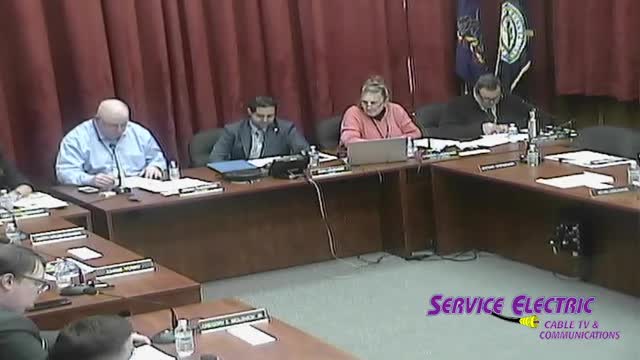
Summary
After debate over the size and conditions of a proposed tax abatement, Luzerne County Council adopted a Local Economic Revitalization Tax Assistance (LERTA) resolution for a Hazel Township development. An amendment to reduce the abatement amount failed 5–6; the underlying resolution passed in a roll-call vote, with at least one dissenter.
Luzerne County Council on the evening vote session approved a resolution providing a tax exemption for new construction in Hazel Township under the Local Economic Revitalization Tax Assistance (LERTA) program after a floor amendment to reduce the abatement schedule failed.
The discussion focused on the length and percentage of the proposed abatement and whether the developer should be required to prioritize hiring local workers. Councilman John Haas proposed an amendment that would lower the abatement percentages in the early years (years 1–7) from 90% to 70%, then step down to 60%, 50% and 40% in years 8–10; that amendment was debated and then put to a roll-call vote and failed 5–6. Council members who spoke during debate asked for revenue estimates, clarification on lump-sum payments the developer offered, and confirmation that the abatement applies to improvements (not land value).
A second, separate proposal to add language requiring priority for Luzerne County workers during construction was also offered and discussed at length on the floor. County staff and the project’s developer representatives told council they already seek to use local labor “when possible,” and the developer representative said the company would continue to prioritize local hiring. Council attempted to craft a nonbinding preamble or recommendation encouraging local hiring, but that amendment failed for lack of a second and did not change the final text.
Supporters of the resolution said the county currently receives little or no tax revenue from undeveloped parcels and argued the abatement would incentivize immediate development and bring well‑paying jobs to the area. Opponents questioned whether the length and level of the abatement were too generous and raised concerns about fairness and the county’s role in steering development.
After the debate the main resolution providing the LERTA exemption was adopted in a roll-call vote with the majority in favor and at least one recorded dissent. Council also recorded an unsuccessful attempt earlier to amend the abatement schedule (5 yes, 6 no).
The council record shows the action moves the LERTA exemption forward; council discussion made clear that certain financial terms — including lump-sum payments tied to building permits and occupancy — were part of the negotiated package presented to council for approval. The resolution and the failed amendment were discussed during the council’s voting session and will appear in the council minutes.
The council’s action does not itself create detailed hiring or enforcement mechanisms; council members and staff noted that specific procurement, contracting and enforcement details would be handled through subsequent agreements and committee oversight.
Votes at a glance: amendment to abatement schedule — failed, 5 yes, 6 no; LERTA resolution — adopted by roll call, majority yes, at least one no recorded.
The council moved on to other items after the vote; proponents emphasized the intent to spur development and job creation, while critics urged caution about abatement terms and parity with other developers.