Get Full Government Meeting Transcripts, Videos, & Alerts Forever!
Get email alerts on the Farm Bill Fluoride topic
No spam. Unsubscribe anytime.
Committee advances comprehensive farm bill after hours-long debate over water additives and fluoridation
Summary
The Appropriations Committee advanced CS/CS/SB 700, a broad agriculture and consumer-services package, after lengthy debate and extensive public testimony focused on provisions that would prohibit adding health-related substances, including fluoride, to public water supplies.
TALLAHASSEE — The Appropriations Committee on Agriculture, Environment, and General Government on Wednesday reported favorably CS/CS/SB 700, a comprehensive agriculture and consumer-services “farm bill,” after extended debate and more than two hours of public testimony focused largely on proposed restrictions on adding health-related substances, including fluoride, to public water systems.
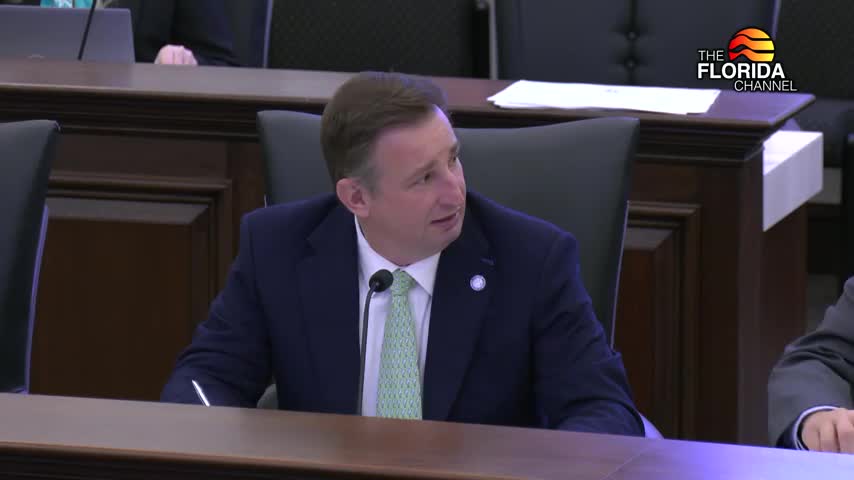
The bill sponsor, Senator Truenow, told the committee the bill contains technical modernizations across the Department of Agriculture and Consumer Services’ statutory duties and a set of larger policy changes. "The bill can be divided into two categories, technical changes that modernize and streamline agency processes," Truenow said when he introduced the measure, and he summarized broader provisions including labeling requirements, updates to disaster-recovery programs and a new registry restricting certain foreign donations to charities.
Why it matters: Committee members and dozens of citizens, dentists and public-health advocates spent the bulk of the hearing on sections 31 and 32, which would preempt local decisions by prohibiting the addition of “health-related additives” to public water supplies. Supporters argued the prohibition protects individual choice; opponents warned it would remove a long-standing, population-level oral health tool used to prevent tooth decay, especially in underserved communities.
Committee debate and public testimony: Supporters of the water-additive prohibition included Bailey Kuykendall, operations director of Stand for Health Freedom, who said, "Water should hydrate, not medicate," and urged lawmakers to end fluoridation as a matter of medical-consent rights. Michelle Schneider, a Pensacola resident who testified she has campaigned on the issue, said the measure is about "medical freedom," not the scientific merits of fluoride.
Dental and medical professionals urged caution. Brandon Edmondson of the Florida Dental Association called community water fluoridation "one of the greatest scientific achievements of the twentieth century," and asked that the decision remain at the local level. Oral and maxillofacial surgeons warned removing fluoride would increase cavities and more serious infections; Dr. Russell Walther told the committee that in his practice fluoride reduction correlates with higher rates of severe dental disease requiring hospitalization.
Committee members pressed sponsors on specifics. Vice Chair Berman asked whether the bill would bar insurers from using climate or flood risks in underwriting; Truenow said the bill contains language aimed at limiting certain ESG-driven denials of service for agricultural producers, but did not point to a single line‑item restriction in committee debate. Multiple senators asked whether naturally occurring fluoride levels would be affected; Truenow replied the proposal addresses added additives rather than naturally occurring minerals.
Amendments and voting: The committee adopted two amendments during the floor presentation that the sponsor described as technical and as establishing a Florida beef-marketing program. After debate and testimony, Chair Bridal called the roll on the committee substitute as amended. The roll-call exchange recorded several explicit votes during the transcript (for example, Senator Arrington was recorded as voting "No," Senator Burton "Yes," and Senator Sharif "No"). By voice and roll call, the committee reported CS/CS/SB 700 favorably.
What the bill would do (as discussed in committee): Truenow said the bill removes any additive to a public water supply that is not related to water purity; requires transparent labeling for meat, milk, poultry and egg products; creates crimes for drone harassment over certain farmland; creates or updates state disaster-recovery loan and grant programs for agriculture and aquaculture; establishes an honest‑service registry limiting some foreign donations to charities; extends an FFA scholarship and allows schools to build supporting infrastructure; and allows state purchase of formerly agricultural land converted to solar once decommissioned, with the state able to remove development rights and re‑offer it for agricultural use.
Next steps: With the committee’s favorable report, CS/CS/SB 700 advances toward the full Senate appropriations process. The sponsor asked for members’ support and characterized the bill as advancing Florida agriculture and consumer protection priorities.
Ending note: The hearing drew unusually high public turnout on a single issue inside a much broader bill; committee members repeatedly referenced the need for local engagement and additional technical review as the measure moves forward.