Get Full Government Meeting Transcripts, Videos, & Alerts Forever!
Get email alerts on the Firearms topic
No spam. Unsubscribe anytime.
House approves bill lowering minimum firearm purchase age from 21 to 18
Summary
After hours of structured debate, the Florida House passed House Bill 759 by a vote of 78-34 to lower the minimum age to purchase a firearm from 21 to 18. Supporters said the bill restores consistency in adults’ rights; opponents cited Parkland, brain-development research and public-safety concerns.
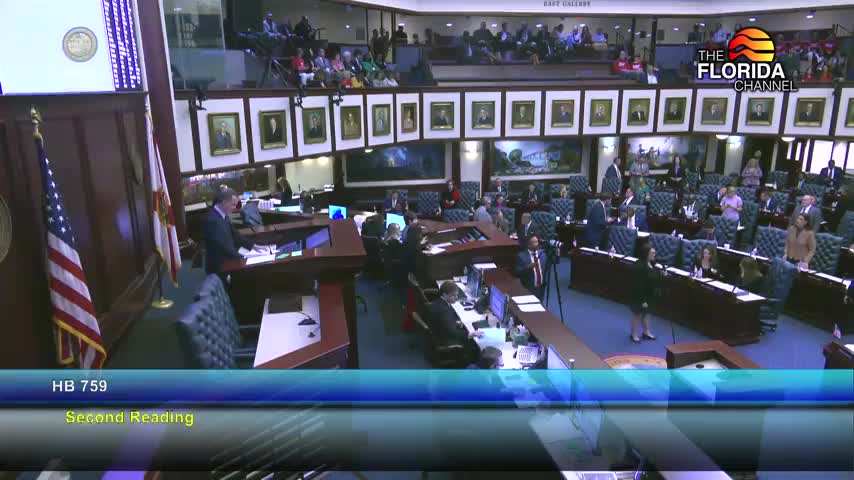
TALLAHASSEE — The Florida House on Wednesday approved House Bill 759, lowering the minimum age to purchase or receive a firearm from 21 to 18, after nearly four hours of structured debate and a final vote of 78 yays to 34 nays.
Supporters said the change aligns firearm-purchase rules with other rights granted at 18 and gives adults who are single or supporting families the ability to legally buy firearms for self-defense. Representative Salzman, the bill sponsor, said in closing, “To me, this bill is about the right to defend yourself, the right to keep and bear arms, the right to a well armed militia.”
Opponents — including lawmakers who lost constituents in mass shootings — said the 2018 law that raised the minimum age to 21 followed the Marjory Stoneman Douglas shooting and subsequent bipartisan review and that evidence and court precedent support keeping the age at 21. Representative Daley recounted his experience at Parkland: “In a matter of minutes, a 19 year old with a long gun walked into my high school, my alma mater, killed 17.” Representative Eskamani said the measure “does not advance freedom. In contrast, it endangers lives.”
The House’s debate included repeated references to an Eleventh Circuit decision affirming that an age floor of 21 for certain firearm purchases is constitutional and to the policy choices made in 2018 after the Parkland shooting. Advocates for the bill pointed to legal consistency for 18-year-olds, including the ability to vote, serve in the military and sign contracts. Opponents cited brain-development research and statistical analyses presented on the floor suggesting that 18–20 year-olds account for a disproportionate share of certain gun-related offenses.
The debate was conducted under structured time limits set on the floor; members debated in multiple timed blocks and yielded time for every side to speak. The House did not identify a Senate companion during debate.
The bill now goes to the Senate for consideration; a companion bill or the Senate’s position was not specified during House debate.