Get Full Government Meeting Transcripts, Videos, & Alerts Forever!
Get email alerts on the Short Term Rentals topic
No spam. Unsubscribe anytime.
Ohio local officials urge rejection of SB 104, say bill strips home rule over short‑term rentals
Summary
Mayors, township and tourism officials testified in a Senate Local Government Committee hearing that Senate Bill 104 would preempt local zoning and inspections of short‑term rentals; many supported platform collection of lodging taxes but said a $20 fee and preemption are inadequate or harmful.
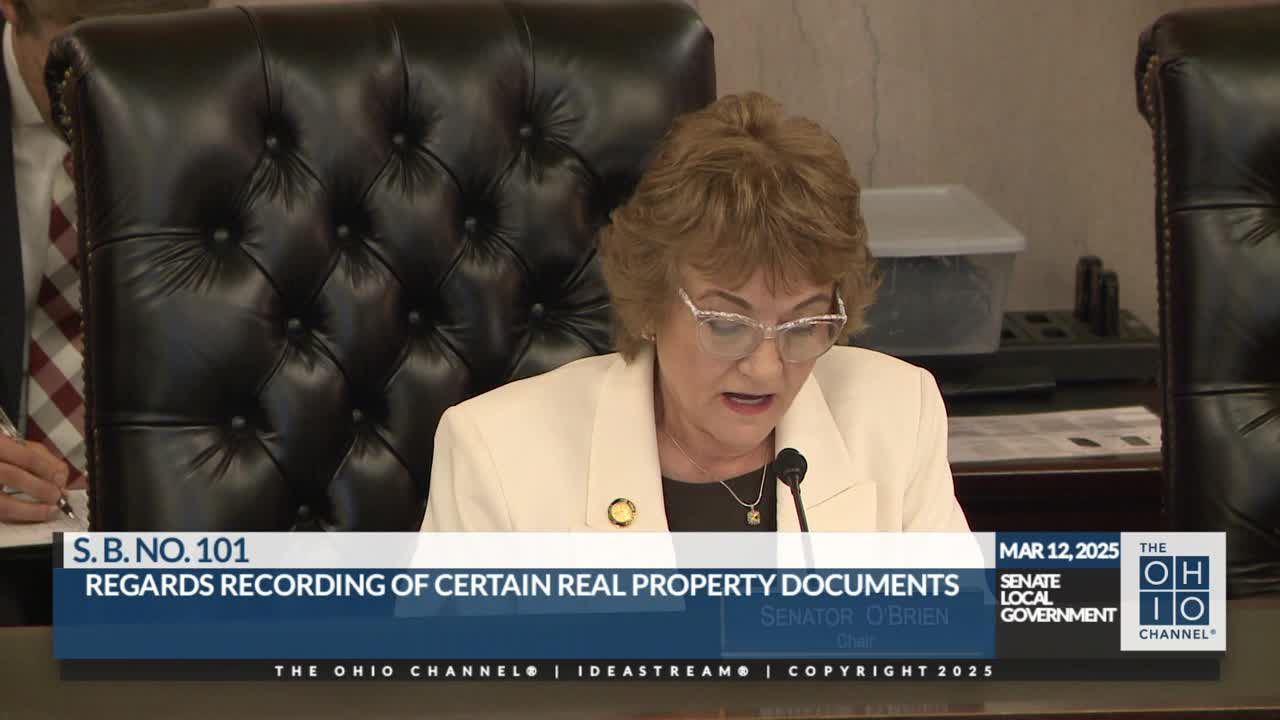
Chairwoman Cheryl O'Brien convened a March committee hearing on Senate Bill 104, which would limit local governments' ability to regulate short‑term rentals (STRs). Scores of city, township and tourism officials testified in opposition, urging the Senate to reject the bill in its current form while many also supported requiring booking platforms to collect and remit local lodging taxes.
Why it matters: Witnesses said SB 104 would remove tools local governments use to protect neighborhood safety, housing supply and infrastructure. They urged state lawmakers to preserve municipal home‑rule zoning authority, allow local inspection and nuisance enforcement, and craft a solution that ensures tax parity with hotels without eliminating local discretion.
Testimony from municipal leaders and tourism officials filled the committee over more than three hours. Bevin Schneck, director of public affairs for the Ohio Municipal League, said the league opposes what she called a statewide preemption that would “keep local decision makers from making these local decisions” and asked senators to preserve “the Municipal Home Rule Authority found in Article 18 of the Ohio Constitution.” Kyle Brooks of the Ohio Township Association said the bill would “effectively strip over half of Ohio's townships of their zoning authority.”
Mayors and council members described local experiences they said motivate the need for regulation. Paul Kumar, mayor of Bay Village, recounted a fall 2019 event when an absentee owner listed a lakefront house and “close to 500 people showed up for the birthday party,” creating noise, parking problems and calls for state patrol assistance; Bay Village later adopted an ordinance banning rentals under 29 days. Patrick Ward, mayor of Lyndhurst, said his city uses registration, fees and inspections to protect tenant safety and neighborhood character. Ben Kessler, mayor of Bexley, said his city allows owner‑occupied rentals capped at 30 days per year to preserve neighborhoods and cited the difficulty of enforcing noise ordinances against transient tenants.
Tourism and destination groups urged a balanced approach. Beth Carmichael of Trumbull County Tourism and the Ohio Association of Convention and Visitors Bureaus said STRs are “an important part of Ohio's travel economy” but warned that unchecked growth can “turn homes into de facto hotels” and reduce housing availability. Several CVB and regional economic development witnesses, including Larry Fletcher (Shores and Islands Ohio) and Eric Wobser (Greater Sandusky Partnership), said they support platform remittance of lodging tax but opposed removing local regulatory authority because communities in resort and lake regions have seasonal infrastructure and workforce housing needs.
Regulatory and enforcement concerns: Multiple witnesses pointed to life‑safety and infrastructure issues. Ron Ehrbar, mayor of Kelly's Island, said his village requires transient rental permits and inspections because summer populations can surge and septic systems are vulnerable; he warned SB 104 could undermine those protections. Catherine Dale, Danbury Township zoning and planning administrator, told senators the bill would undercut established building‑fire‑safety rules by allowing large homes with five or more sleeping rooms to operate without the hotel‑level inspections and fire‑marshal oversight she said currently apply in those circumstances.
Taxes and registration: Several witnesses supported requiring booking platforms to collect and remit lodging taxes. The bill's proposed $20 annual registration fee drew repeated criticism as too low to cover administrative and enforcement costs; witnesses said fees should be calibrated to local enforcement burdens. Kyle Brooks (Ohio Township Association) and others said the remittance provision is a step forward but the $20 cap and the preemption text would leave local governments unable to enforce standards.
Varied local approaches: Testimony described a range of local responses — outright bans, owner‑occupancy limits, registration plus inspection, conditional‑use permitting and fee schedules. Examples provided to the committee: - Bay Village: ban on rentals under 29 days after disruptive events. - Lyndhurst: $100 annual registry fee for rentals. - Gahanna: $150 rental registration fee (biennial) and local enforcement tied to inspections. - Bexley: owner‑occupancy requirement and 30‑day annual cap; noise misdemeanor fine cited as $150. - Shores and Islands / Erie & Ottawa counties: region relies on diverse lodging inventory including 347 STR properties representing 1,761 rooms; STRs generated significant lodging tax revenue in 2024.
No committee action was taken at the hearing stage. Witnesses repeatedly urged the committee to preserve local zoning and enforcement authority while addressing tax collection and marketplace parity. Several said they would work with sponsors on compromise language that protects local control, funds enforcement, and requires platforms to remit taxes.
The hearing record includes dozens of written statements submitted to the committee and additional local officials who testified that community differences — housing stock, seasonal visitation, infrastructure limits and neighborhood density — make a single statewide zoning rule infeasible. Senator questions during the hearing repeatedly sought a middle ground between tax collection and preserving local decision‑making.
What happens next: The committee did not vote on SB 104 at the hearing. Multiple witnesses asked the Legislature to either leave zoning authority with local governments or, if the state intervenes, to provide clearer enforcement tools, calibrated fees, and carve‑outs for areas with distinct tourism or infrastructure constraints. The transcript and written testimony will remain part of the committee record as deliberations continue.