Get Full Government Meeting Transcripts, Videos, & Alerts Forever!
Get email alerts on the Kinship Care topic
No spam. Unsubscribe anytime.
Supporters tell committee Senate Bill 58 would let non‑grandparent kin care for children without costly custody actions
Summary
Proponents testified the bill expands existing grandparent power-of-attorney and caregiver authorization affidavits to other kinship caregivers, easing school enrollment and health‑care consent for children being raised by relatives or close caregivers.
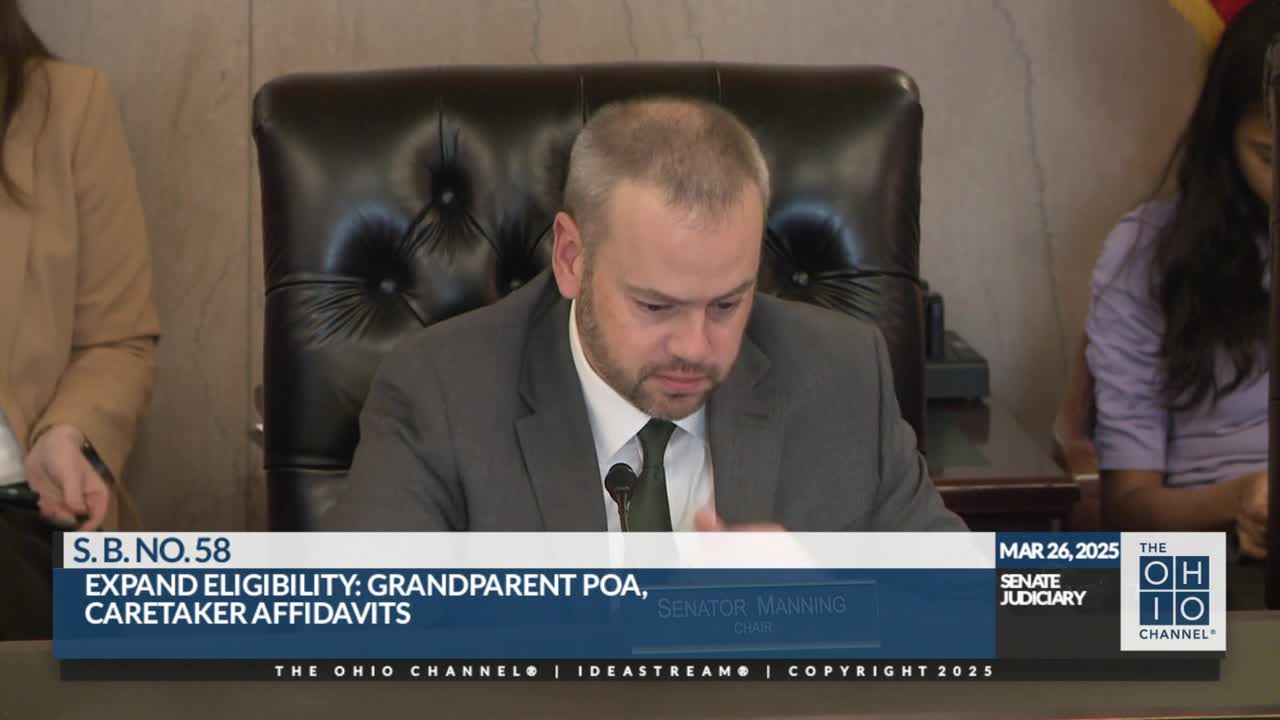
The Senate Judiciary Committee heard proponent testimony on Senate Bill 58, which would expand Ohio’s grandparent power-of-attorney and caregiver authorization affidavit so other kinship caregivers can use the documents to enroll children in school and consent to medical care.
Larry Bresler, speaking for Northern Ohioans for Budget Legislation Equality (NOBLE), urged passage and described kinship care benefits, saying expansion would permit relatives who are caring for children to participate in education and health decisions without undertaking costly court custody proceedings. Tim Johnson of the Ohio Poverty Law Center and Mary Wachtel, director of public policy for the Public Children Services Association of Ohio, echoed the point that many kinship arrangements are informal and that the change would reduce barriers to care.
Latrice "Yaya" Lumpkin of the Ohio Grandparent Kinship Coalition described kinship families’ scope and use of the existing grandparent documents and urged the committee to expand access beyond grandparents. Wachtel told the committee informal kinship care constitutes the majority of kinship arrangements and cited census data her testimony said showed 81,400 Ohio grandparents were raising grandchildren in 2023 and that 297,000 children live in relative caregiver homes in Ohio.
Proponents contended the change would help place children with relatives rather than in foster care, reduce trauma and costs to the state, and align Ohio with other states that permit a broader set of kin to execute caregiver authorization documents.
Committee members did not take a vote; the chair recorded the hearing as the second hearing on Senate Bill 58.