Get Full Government Meeting Transcripts, Videos, & Alerts Forever!
Get email alerts on the Faithful Delegate Legislation topic
No spam. Unsubscribe anytime.
House Bill 67 would create state procedures, eligibility rules and criminal penalties for Ohio delegates to an Article V convention
Summary
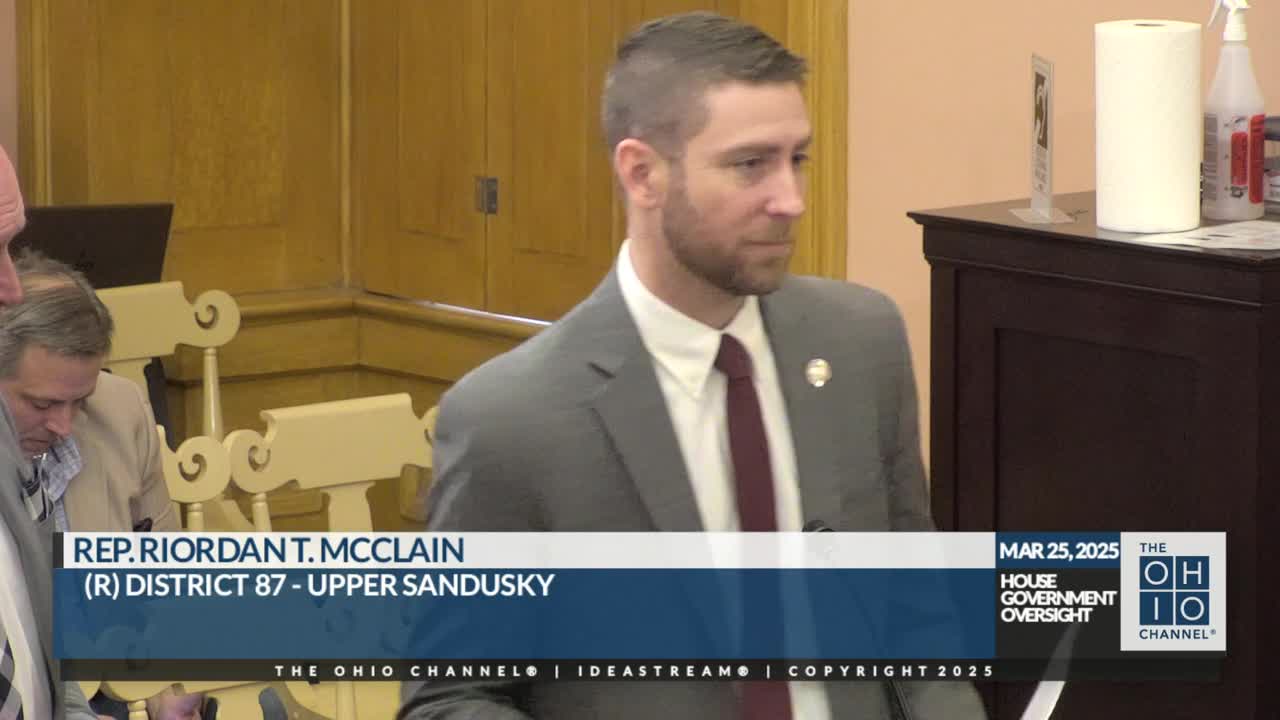
Representative McLean, presenting House Bill 67, said the bill creates state statutory procedures and penalties for any Ohio delegates to a constitutional convention called under Article V.
Representative McLean, presenting House Bill 67, said the bill creates state statutory procedures and penalties for any Ohio delegates to a constitutional convention called under Article V.
The bill would define the number of delegates (an odd number), set eligibility and selection procedures, require an oath, allow compensation, create an advisory commission to oversee delegates, establish recall authority, and create criminal penalties (a third‑degree felony) for delegates who vote or act outside the scope defined by the General Assembly, sponsors said.
Sponsors emphasized the bill is intended to address concerns voiced by committee members about delegates acting contrary to state instructions. Representative McLean said the bill spells out “the delegate roles at a convention” and lists prohibitions including any changes to the Bill of Rights and specific later amendments; the sponsors read a list of amendments they would place off‑limits for delegates to consider (the 13th, 14th, 15th, 19th, 23rd, 24th and 26th amendments were named in committee testimony).
Committee members pressed sponsors on legal authority and enforceability. Representative Gross asked what legal basis would bind a delegate at a national convention; sponsors said HB67 would create Ohio Revised Code provisions establishing selection, oversight and recall authority and would include criminal penalties for violations. Several members asked why the bill gives appointment authority primarily to chamber leaders and raised concerns about minority‑party representation; sponsors said the proposal reflects the legislature’s prerogative and that amendment proposals are possible.
Lawmakers also asked whether Ohio could bind only its own delegates while other states’ delegates might not be bound, and sponsors answered that Ohio can set its own statutes but cannot directly control how other states structure their delegations. Sponsors agreed to provide comparative examples of laws in other states and to supply additional documentation to the committee.
Ending: The committee held the first hearing on HB67 and took no vote; sponsors said they would provide a list of other states' faithful‑delegate measures and legal analyses to the committee.