Lifetime Citizen Portal Access — AI Briefings, Alerts & Unlimited Follows
Bill would bind Ohio Article V delegates with oath, oversight and third-degree-felony penalty
Loading...
Summary
House Bill 67, presented in the same committee, would create statutory rules for Ohio delegates to an Article V convention: an odd number of delegates, a selection procedure, an advisory commission, an oath, recall authority and a third-degree felony for violations. Sponsors said the measure aims to prevent a "runaway convention."
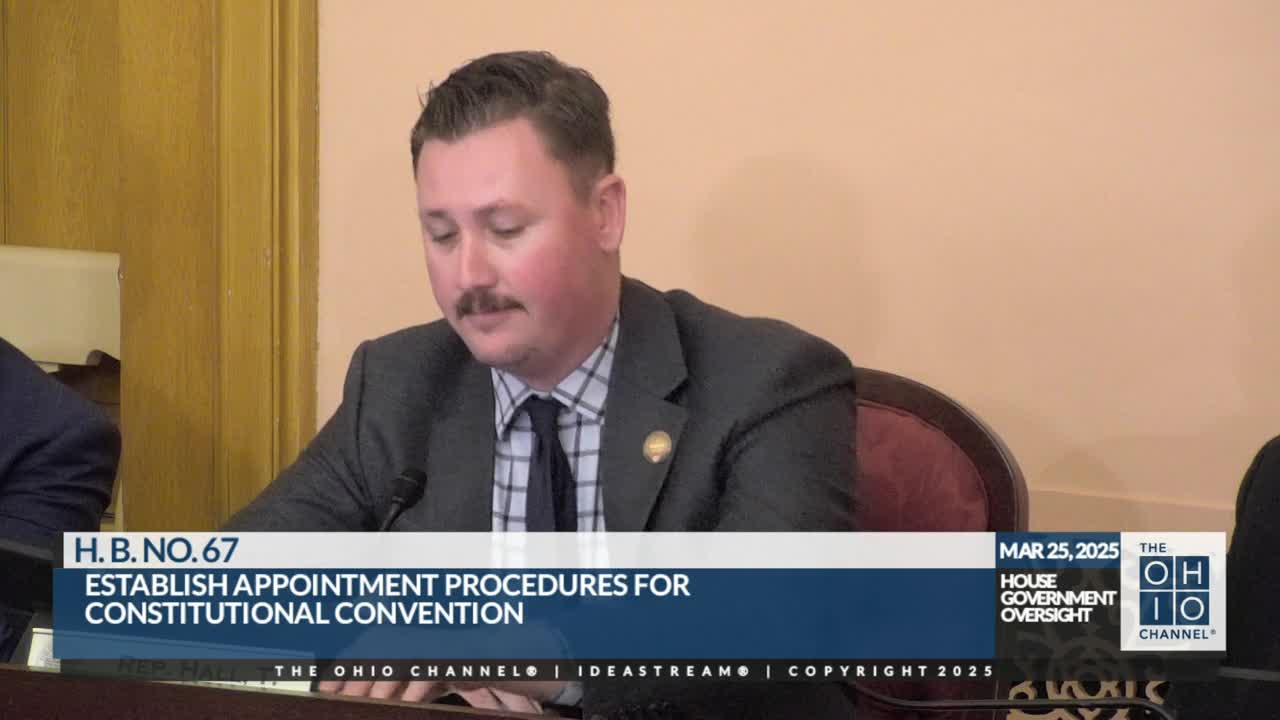
Committee sponsors introduced House Bill 67 as a companion to the Article V resolution to address member concerns about how Ohio would select and control delegates to any convention of states.
The bill would establish procedures in state law for selecting delegates, set eligibility requirements, allow compensation and require an oath and recall mechanism, sponsors said. Representative McLean described the proposal as a set of "belts and suspenders" protections: an odd number of delegates, a state advisory commission to vet nominees, defined roles for delegates and committee oversight while delegates are serving at a convention.
Sponsoring legislators told the committee the bill would create criminal penalties if a delegate votes or advocates outside Ohio's instructed subject matter. "These being violated, the delegate would be guilty of a felony of the third degree," a sponsor said during testimony. The sponsors also said the bill would bar Ohio delegates from proposing or voting to change the Bill of Rights and would bar votes outside the scope of the General Assembly's original application for a convention; the transcript lists specific amendment references that were unclear in wording and sponsors said they would supply statutory language in the bill text.
Members questioned the bill's allocation of appointment power and minority representation. Representative Rader and Representative Troy asked why the advisory commission appointments are framed to be made by the majority leaders of each chamber and whether that would exclude minority-party input. Sponsors replied the commission as drafted reflects the legislature's authority as constituted by the chamber majorities but acknowledged the selection language could be amended.
Other questions focused on enforceability. Representative Gross asked what legal authority would permit Ohio to bind a delegate when other states may not adopt similar rules; sponsors said HB 67 would create Ohio Revised Code provisions to authorize recall, oversight and criminal sanctions for delegates acting outside state law but acknowledged legal disputes may arise and said they would invite legal experts to testify in subsequent hearings.
Ending: Sponsors asked for further hearings and said HB 67 is intended to give the Ohio legislature tools to hold delegates accountable and to reduce the risk of a convention exceeding its stated subject matter.