Get Full Government Meeting Transcripts, Videos, & Alerts Forever!
Get email alerts on the Delegate Selection And Oversight topic
No spam. Unsubscribe anytime.
House bill would bind Ohio delegates to Article V convention with oath, recall and felony penalty
Summary
House Bill 67 would create state law governing selection, oath, recall, compensation and criminal penalties for Ohio delegates to an Article V convention; sponsors said the bill aims to prevent a "runaway" convention by making delegates legally accountable to the legislature's instructions.
House Bill 67, presented to the House Government Oversight Committee after testimony on House Joint Resolution 2, would create Ohio code provisions to govern selection, duties, oversight and penalties for delegates the state might send to an Article V constitutional convention.
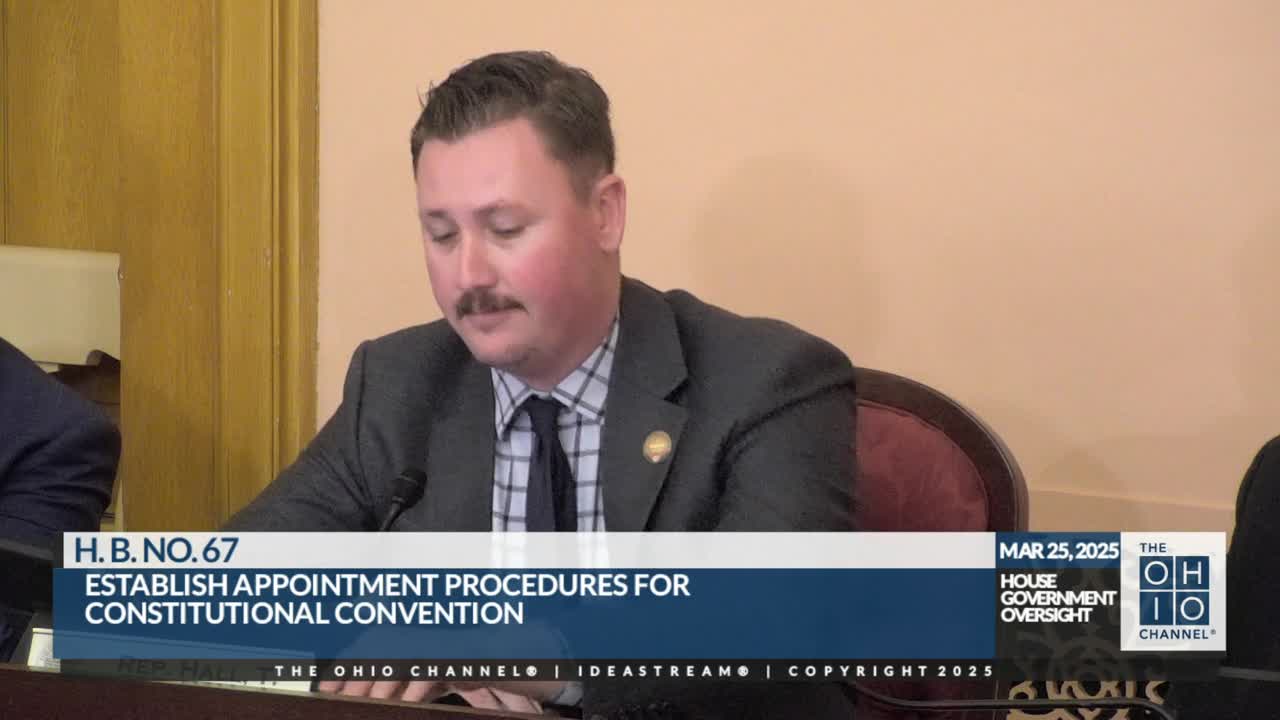
Representative MacLean and a joint sponsor described HB 67 as a "faithful delegate" law that would set an odd number of delegates, establish eligibility and selection procedures, require an oath, create an advisory commission to oversee the delegation, allow compensation and provide a recall mechanism. The bill would also define certain actions as criminal if taken by an Ohio delegate outside the legislature's instructions.
"It creates state statute, procedures and penalties for delegates while fulfilling their duty on behalf of Ohio at the constitution," Representative MacLean said during sponsor testimony. He described specific features the bill would establish: an odd number of delegates, an advisory committee to monitor the delegation, reimbursement for time, an oath and a recall process.
Sponsors said the bill would also identify categories of matters Ohio delegates cannot change. The sponsor read aloud that delegates would not be allowed to alter the Bill of Rights and listed additional amendments that would be off limits. In committee discussion sponsors identified the 13th, 14th and 15th amendments and several later amendments protecting voting rights as examples of provisions the bill would protect from alteration.
Sponsor testimony also described criminal penalties for delegates who violate the statute. The bill text, as presented to the committee, would make voting on or otherwise promoting amendments outside the scope of the legislature's subject-matter call a third-degree felony and would allow the legislature to recall a delegate.
Committee members questioned the legal authority for imposing such state-law limits on delegates who would act in a multi-state convention and asked for citations and legal analysis. Representative Gross asked what specific legal authority would bind a delegate; sponsors said HB 67 would create Ohio Revised Code provisions that provide selection, oversight and recall authority and attached criminal penalties for violations.
Representative Rader and others raised concerns that the proposed selection process gives appointment power largely to chamber leaders and might exclude minority-party input; sponsors said the proposed commission is intended to reflect the legislative majority but acknowledged amendments to the selection process could be considered.
Sponsors said they will provide comparative drafts and lists of similar laws in other states and invited outside legal experts to testify in future hearings. No vote was taken on HB 67 during the committee hearing.
Ending: The hearing on HB 67 ended after extended questioning; sponsors said they will supply additional materials and the committee will schedule further testimony.