Get Full Government Meeting Transcripts, Videos, & Alerts Forever!
Get email alerts on the Constitutional Amendment topic
No spam. Unsubscribe anytime.
Sponsors present Article V call for convention to seek balanced budget, limit federal power and consider term limits
Summary
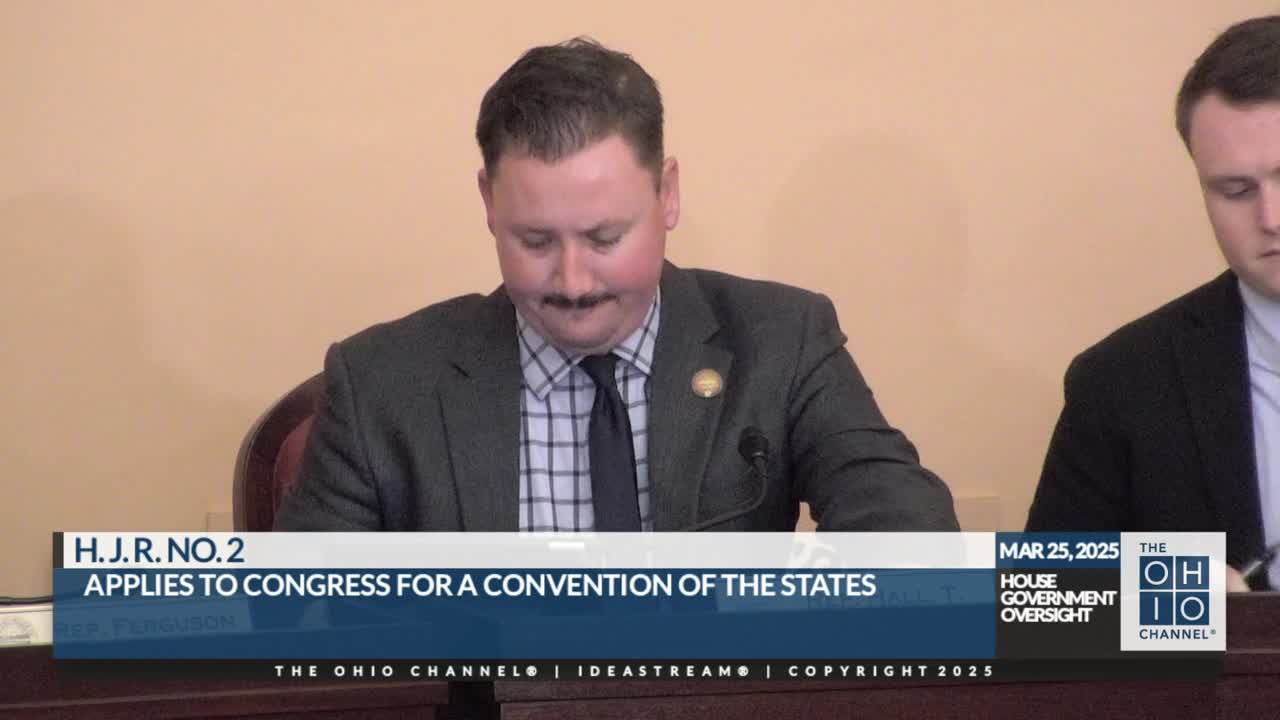
Representative McLean and Representative Willis presented sponsor testimony to the House Government Oversight Committee on House Joint Resolution 2, which urges Congress to call a convention of the states under Article V of the U.S. Constitution to consider amendments limited to three subjects: imposing fiscal restraints including a balanced budget amendment, limiting federal power and jurisdiction, and establishing term limits for federal officials.
Representative McLean and Representative Willis presented sponsor testimony to the House Government Oversight Committee on House Joint Resolution 2, which urges Congress to call a convention of the states under Article V of the U.S. Constitution to consider amendments limited to three subjects: imposing fiscal restraints including a balanced budget amendment, limiting federal power and jurisdiction, and establishing term limits for federal officials.
The resolution’s sponsors said the Article V path is a last-resort mechanism the states may use when they judge Congress unwilling to act. "This resolution issues a call for a convention of states under Article 5 of the US constitution to propose amendments regarding limited subjects," Representative McLean told the committee. He later argued the measure is intended to restore federalism and constrain what he described as unchecked federal spending: "It allows our military to be used without declaring war and recklessly prints and spends citizens' taxes to the point where we're now $36,000,000,000,000 in debt," McLean said.
Why it matters: If 34 states submit similar calls, Congress must convene a convention; any proposed amendments would then require ratification by 38 states to become part of the Constitution. Sponsors framed the resolution as an instrument to pressure federal officials to act and as a constitutionally provided check on perceived federal overreach.
Committee members questioned sponsors on multiple risks and details that the resolution does not specify. Representative Gross asked whether delegates at a convention could exceed the stated subjects, and McLean replied there is a legal debate and that states would need to raise objections if delegates acted outside the parameters. Representative Rader and others pressed whether returning to the established Congress-led amendment process would be preferable; Rader noted that the congressional route has been used for the 27 amendments already in the Constitution.
Members also raised concerns about protecting existing federal entitlements. Representative Keene and Representative Rader asked how programs such as Social Security and Medicare would be insulated if delegates sought to limit federal jurisdiction or spending. Sponsors pointed to the constitutional ratification requirement as a safeguard: even if a convention proposed amendments, three-quarters of the states must ratify them before they take effect.
Other questions covered delegate selection and accountability. Several members asked how delegates would be chosen, reimbursed and bound to state instructions; sponsors said those procedural details are not set by Article V itself and previewed separate legislation to define Ohio’s delegate selection, oversight and penalties.
Sponsorship and next steps: McLean told the committee he does not claim expertise on every legal question around Article V and welcomed expert testimony from both proponents and opponents in future hearings. Representative Willis said the resolution is intended to encourage other states to join a coordinated call. No committee vote or formal action on HJR 2 occurred at the hearing; the sponsors said they expect additional testimony and debate in coming months.
Ending: The committee hearing moved from sponsor testimony into extended member questions; sponsors emphasized the long process and high ratification thresholds that would follow any Article V convention.