Get Full Government Meeting Transcripts, Videos, & Alerts Forever!
Get email alerts on the Katherine Johnson Academy topic
No spam. Unsubscribe anytime.
Board to consider reimagining Katherine Johnson Academy; schedules special meeting for action
Summary
The Green Bay Area Public School District board debated three options for Katherine Johnson Academy — closure, a one-year enrollment freeze, or converting the school into a districtwide virtual program — and voted to hold a special meeting before the April work session to take formal action.
The Green Bay Area Public School District Board of Education debated the future of Katherine Johnson Academy of Enriched Virtual Learning on March 17, considering three options: immediate closure, a one-year enrollment freeze, or converting the school into a districtwide virtual program. Board members scheduled a special meeting before the district’s April work session to take a formal vote.
Board members spent more than an hour on the item, with district staff presenting enrollment trends, funding implications and three staff-drafted options. The discussion centered on whether to preserve KJ’s school identity or transform it into a virtual learning program co‑enrolling students with their neighborhood schools.
District presenter David Johns summarized the options and data for the board, noting KJ served a mix of short‑term and full‑year students and that middle‑school enrollment had grown. “Option 3 … reimagine KJ not as much as a school, but as a program,” Johns said, describing a model that could allow co‑enrollment and expand virtual offerings for secondary students.
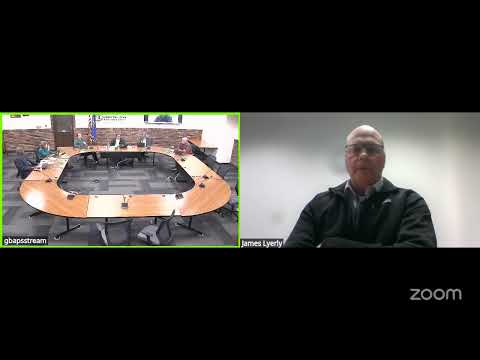
Several board members urged caution about closing the school. Board member Crossan said that converting KJ into a program would “cut the heart out of the program” and stressed the importance of school identity and belonging for students who choose a full virtual pathway. Board member Lyerly asked for a financial break‑even analysis specific to KJ’s operational model rather than a straight comparison with traditional brick‑and‑mortar class sizes.
Other board members expressed support for Option 3 if the district preserves the benefits that make KJ valuable, including high levels of individualized teacher contact and pathways for students who need flexible scheduling. Board member Mills volunteered to serve on a reimagining team to help design the programmatic changes.
The board directed staff to provide additional information before the April decision, including: a detailed break‑even analysis that accounts for KJ’s virtual instructional model and on‑site supervision patterns; a compare‑and‑contrast chart showing what KJ would look like as a school versus a program; and options for expanding secondary virtual course offerings.
To allow time for that work and to ensure the current board membership votes on a final plan, the board approved a motion to hold a special meeting immediately prior to the April work session to act on Katherine Johnson Academy. The motion passed on a voice vote (ayes: Crossan, Gerlach, Mills, Lyerly, McCoy, Becker). The formal action will return to the board at that special meeting.
The district did not make a final decision at the March 17 meeting; staff will return with the requested analyses and comparisons to inform the April vote.