Get Full Government Meeting Transcripts, Videos, & Alerts Forever!
Get email alerts on the Convention Of States topic
No spam. Unsubscribe anytime.
Ohio sponsors ask committee to back Article V convention focused on balanced budget, federal limits and term limits
Summary
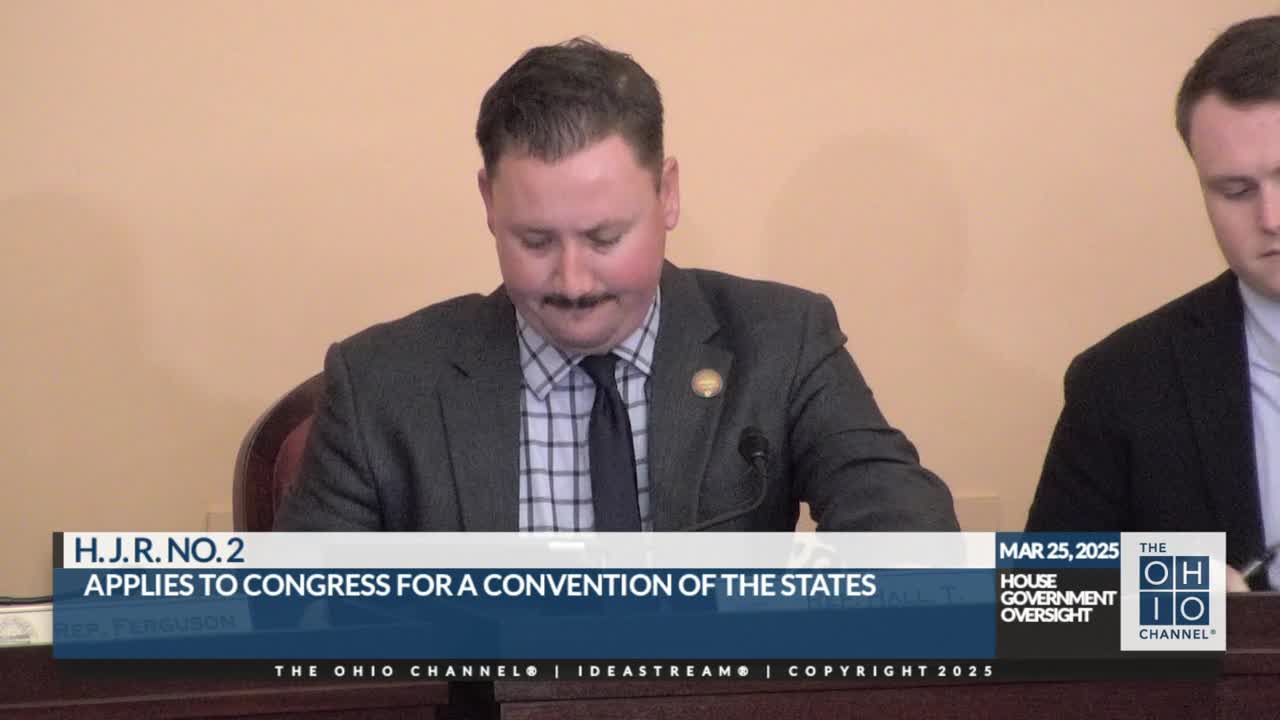
Representative MacLean, sponsor of House Joint Resolution 2, told the House Government Oversight Committee that the resolution calls on the state to join other states in urging Congress to call a convention of states under Article V limited to three subjects: imposing fiscal restraints (including a balanced-budget amendment), limiting federal power and jurisdiction, and establishing term limits for federal officials.
Representative MacLean, sponsor of House Joint Resolution 2, told the House Government Oversight Committee that the resolution calls on the state to join other states in urging Congress to call a convention of states under Article V of the U.S. Constitution limited to three subjects: imposing fiscal restraints (including a balanced-budget amendment), limiting federal power and jurisdiction, and establishing term limits for federal officials.
"This resolution issues a call for a convention of states under article 5 of the US constitution to propose amendments regarding limited subjects," Representative MacLean said in sponsor testimony. He said the path is available under Article V and that the proposal would be limited to the three subject areas he described.
The sponsors argued the move is aimed at reining in what they called expansive federal authority and unsustainable spending. "It allows our military to be used without declaring war and recklessly prints and spends citizens' taxes to the point where we're now $36,000,000,000,000 in debt," MacLean said.
The nut grafs: Sponsors told the committee they view an Article V convention as a last-available constitutional tool to address broad federal policy and fiscal practices that they say states cannot otherwise correct. Under Article V, the sponsors noted, 34 states must apply for a convention before Congress calls one and any amendments would require ratification by 38 states.
Members of the committee pressed sponsors on legal and practical risks, including whether a convention could be limited to the three subjects in practice, safeguards against a so-called "runaway" convention, and potential effects on federal programs such as Social Security and Medicare.
Representative Burrows asked, "How would the convention then, in your knowledge, change, the stated goals once they got there?" MacLean replied that the convention would be called on "specific subject matter terms" and said objections could be raised if delegates moved outside those bounds. He acknowledged legal debate on the point and said the committee would receive expert testimony on competing legal views.
Representative Rader and others asked why sponsors were pursuing the Article V path instead of pressing Congress to propose amendments, which has been the route used 27 times in U.S. history. Representative Willis said state action can create pressure on Congress and that prior pushes by many states in the 1980s helped spur federal action.
Several members said they were concerned about protections for federal entitlements and emergency powers. Representative Rader asked how programs such as Social Security and Medicare would be protected; sponsors pointed to the two-step federal process—convention and then statewide ratification by three-fourths of the states—as a protective check, noting any amendment would still require broad state approval.
Other practical questions from the committee addressed how delegates would be chosen, reimbursed and held to instructions from the Ohio legislature. Sponsors said those details are not specified in Article V and previewed a separate bill, House Bill 67, that would set selection, eligibility, oath, recall procedures and potential penalties for Ohio delegates.
Committee members asked for legal materials and historical precedents. Sponsors said they would provide lists of prior state actions and legal analyses, and requested proponent and opponent testimony to address unresolved legal questions.
The committee took sponsor testimony and then proceeded to consider related legislation on delegate selection. No formal vote was taken on House Joint Resolution 2 during the hearing.
Ending: The committee concluded the HJR 2 hearing after extended questions and moved on to hear House Bill 67, which would specify Ohio procedures for delegates if a convention were called.