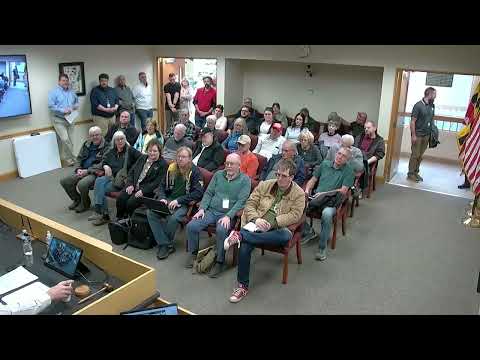
Garrett County commissioners say they will not seek charter change or tax increases now, outline housing plan
Loading...
Summary
Board members told the Feb. 3 meeting they will not petition the state to change the county commissioner election method or ask the legislature to raise the transfer or accommodations tax at this time; commissioners described a three-phase attainable housing plan already underway.
Garrett County commissioners told residents on Feb. 3 they will take no action to seek a change to the county charter’s method for electing commissioners and that the board is not petitioning the legislature to raise the transfer or accommodations tax at this time.
During a lengthy opening statement, a commissioner reviewed the county charter language governing commissioner elections and said the current countywide primary/general system is the method on file with the state. "We will take no action on that," the commissioner said regarding a resident request to pursue charter changes.
On the transfer and accommodations tax, the commissioners said any change would require state legislative action and that, after reviewing the county’s current housing projects and funding, "we are not going to seek to raise transfer tax or the accommodations tax at this time or any other tax for that matter." The board left open the possibility of revisiting funding options once preliminary engineering work and cost estimates are completed.
Why it matters: Residents and several meeting speakers urged the board to consider new local revenue streams to fund housing and services, while commissioners described a multi-site, multi-phase attainable housing strategy they say has minimal county taxpayer exposure so far.
Commissioners described a three-phase plan for attainable housing: a project in Grantsville (ground broken and accepting reservations for homes), a second project in McHenry (preliminary engineering under way), and a third planned for Oakland. The board said these projects, plus additional local projects, could total roughly 1,000 new homes over the coming decade if all phases proceed.
At the meeting, resident Len Shindell proposed a draft bill to target higher-value real-estate transfer tax revenue to housing and related supports; he said a similar proposal had been submitted to the county’s state delegates but was judged too late for the current legislative session. Shindell asked the commissioners to host a public forum on revenue options; commissioners said they will meet with stakeholders but gave no immediate commitment to sponsor local enabling legislation.
The board reiterated it had braided state and federal grants into housing projects to limit required county taxpayer funding and highlighted Grantsville’s project as actively taking reservations online. Commissioners said they will revisit funding conversations after engineering estimates are clearer.
Ending: Commissioners invited continued public engagement during the budget process and cautioned that legislative changes would require state approval. Several residents who spoke urged a focused public discussion on revenue and housing priorities prior to next year’s legislative deadlines.