Get Full Government Meeting Transcripts, Videos, & Alerts Forever!
Get email alerts on the Land Development East Stuart Zoning topic
No spam. Unsubscribe anytime.
City of Stuart pauses vote on East Stuart zoning changes after hours of public comment
Summary
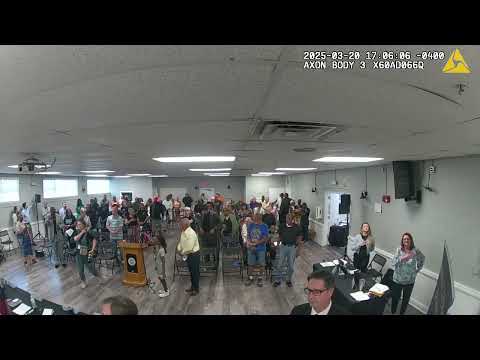
The City of Stuart commission opened a community meeting in East Stuart on a proposed rewrite of the city development code but paused final action after hours of public comment about whether the East Stuart overlay (ESN-08) should allow mixed-use and other intensive development "by right" or require conditional-use review.
The City of Stuart commission opened a community meeting in East Stuart on a proposed rewrite of the city evelopment code, but stopped short of adopting the ordinance that would finalize the neighborhood—hanges after several hours of public comment.
City staff and residents focused on a single contested element: whether the East Stuart overlay (ESN-08) should allow mixed-use development, hotels, multi-family housing and other more intensive uses "by right" or require a conditional-use (public hearing) process. Planning staff framed the question as a narrow one about whether those uses should require additional public notice and commission review; residents and some commissioners said the change could reshape a long-established neighborhood.
Why it mattered: The debate tied land-use technicalities to long-standing concerns about displacement, affordability and community history. Supporters of keeping by-right approval said the code encourages reinvestment and makes development cheaper and faster. Opponents said the community needs a formal review step so neighbors will be notified and can weigh in on projects that could be much larger or more intensive than the surrounding single-family blocks.
Most of the technical presentation came from Karen McEwen of the planning staff, who explained the land-use categories in the proposed form-based code and how they had evolved from earlier plans in 1978, 2002 and later studies. Staff showed maps and a table (Section 3.02.0.03, ESN-08) that list which uses would be allowed in each subdistrict, and noted the changes adopted earlier in the citywide form-based code aside from the East Stuart table.
Speakers raised concrete details that shaped the discussion. Staff and several speakers noted that some zoning already allows three-story, 35—40-foot buildings "by right" in places shown as mixed-use on the map, while conditional use triggers public meetings, signs and commission review. One planning clarification repeated during the meeting: parcels created before a specified cut-off remain buildable under their existing lot sizes, but new parcelizations would be subject to a new minimum lot-size standard (6,000 square feet) included in the update.
Residents voiced opposing views in lengthy public comment. Darcy Weir, a longtime East Stuart resident and member of St. Marys Episcopal Church, told the commission, "I would not like to see E Stewart changed," and urged that the neighborhood—e preserved and see targeted reinvestment rather than broad intensification. By contrast Aaron Hawkins, who identified himself as a resident with experience in economic development, told the commission, "If affordable housing is a priority, then we need to keep the current code," arguing that requiring conditional-use review would raise costs and slow the delivery of duplexes, triplexes and other missing-middle housing types.
Other residents raised related concerns: several speakers asked how families without access to capital could upgrade or rebuild; one speaker described repeated unsuccessful attempts to access a community block grant and banking help; another described building small, low-income apartments and said the city had told him some permits or impact fees were missing.
Commission discussion and next steps: Vice Mayor Collins moved to adopt the pending ordinance (recorded in the meeting as Ordinance 25399), with a second from Commissioner Keogh. Commissioners and staff then discussed alternatives: several members said they wanted more time to go block-by-block through the map and to reconcile where single-family housing should remain protected and where mixed-use or higher-density development might be appropriate. The commission did not complete a final adoption vote on the East Stuart portion. Staff recommended recording the larger citywide ordinance as written while separating the East Stuart map and language into a separate ordinance and sending that segment back for more localized review and a street-by-street workshop.
The meeting produced two formal, recorded actions before the zoning vote was paused: the commission approved the evening agenda and earlier approved a motion (originated by a commissioner) to allow commissioners to ask follow-up questions of public speakers during this meeting. Commissioners agreed to schedule additional public workshops focused specifically on the East Stuart map and the conditional use question before making a final decision on whether to require conditional-use review there.
The commission emphasized that the broader form-based code remains in place for other neighborhoods and that the single remaining, unresolved question is whether East Stuart—SN-08 will be treated as "by right" or subject to conditional-use review. Staff and several speakers said additional neighborhood-level work is needed to identify where single-family character should be prioritized and where more intensive uses could be allowed without surprising neighbors.
A list of next steps the commission outlined included: a street-by-street public workshop for East Stuart, follow-up reports that clarify the lot-size grandfathering and ADU (accessory dwelling unit) rules, and a recommendation from staff on how to separate the East Stuart language from the rest of the ordinance for separate review.
Ending: Commissioners asked staff to return with a schedule for neighborhood-level meetings and with the procedural steps needed to split the East Stuart segment for separate consideration. That timetable and any revised ordinance language will be put on a future agenda for additional public hearings before the commission took a final vote.