Get Full Government Meeting Transcripts, Videos, & Alerts Forever!
Get email alerts on the Land Use Economics topic
No spam. Unsubscribe anytime.
NC State economist tells commissioners residential development often costs counties more than it brings in
Summary
Professor Jeff Dorfman told commissioners that most community cost‑of‑service studies find single‑family residential development consumes more county resources than it generates in local taxes, while commercial development and preserved farmland typically produce net surpluses for local governments.
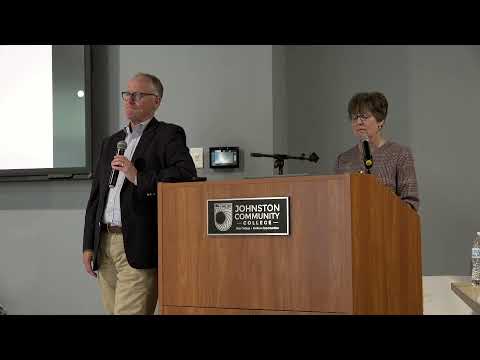
Jeff Dorfman, professor of agricultural and resource economics at NC State University, told the Johnston County Board of Commissioners that counties seeking balanced budgets should consider how different land uses affect local public finances. "On average nationally, residential development pays in 87¢ for every $1 it gets back," Dorfman said. "Businesses are paying in over $3 for every $1 they get back, and Farm and Forest Land is paying in over $2 for every dollar it gets back."
Dorfman summarized three policy levers that change the fiscal equation: density, location and mix. Denser development — short cul‑de‑sacs, smaller lots, clustered conservation subdivisions and multifamily housing — lowers per‑unit road, sewer and emergency‑service costs. Locating new housing where infrastructure already exists or encouraging infill redevelopment reduces service costs compared with leapfrog development that extends utilities and maintenance costs across miles.
He also addressed farmland and green space as economic assets: beyond environmental benefits, preserved green space can raise surrounding property values and reduce stormwater and infrastructure expenses. "Green spaces increase property values of land by an average of 10 percent," Dorfman said, and trees can lower stormwater costs in urban settings by thousands of dollars per acre annually.
Fiscal tools and choices: Dorfman recommended counties use cost‑of‑service and fiscal‑impact models when evaluating rezonings, tax‑incentive requests and large development proposals. He described such models as Excel‑based tools county staff and planning commissions can run to estimate a 20‑year fiscal outcome for a proposed project. He also described policy options to pair housing growth with job creation — for example, requiring a developer or the state to ensure a given share of affordable housing when the county provides large inducements to employers.
What commissioners asked: Commissioners asked whether multifamily housing always reduces school children per unit and how infill or clustered development affects long‑term infrastructure needs. Dorfman said two‑bedroom units generally yield fewer schoolchildren than three‑bedroom houses, which changes a project’s fiscal balance.
Ending: Commissioners said they would use Dorfman’s fiscal framing in the county’s UDO update, capital plan and utility planning discussions to seek a mix of uses that minimizes net fiscal cost while supporting economic development.